Category: Japanese Food

Everyday foods from the Japanese kitchen, including pantry ingredients and seasonal specialties.

  • The Soy Sauce in My Kitchen

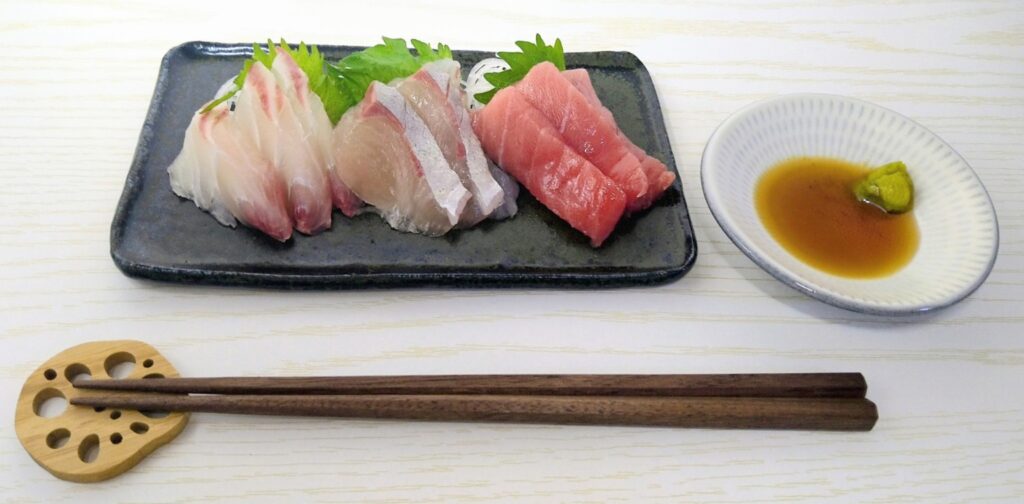
    Sashimi with soy sauce and wasabi.
    From left: sea bream, yellowtail, and tuna.

    A light-colored usukuchi soy sauce
    I use in everyday cooking.


    Why I Use It

    In many Japanese households,
    koikuchi soy sauce is the standard.

    But in my kitchen,
    I tend to use usukuchi soy sauce.

    Its lighter color helps keep
    the ingredients and broth clear,
    while still adding depth of flavor.


    The One I Use

    The one I use is
    Higashimaru’s “Ginshun Hojun”
    Tokusen Marudaizu Usukuchi Soy Sauce.

    It’s made in western Japan
    and is easy to find at a reasonable price.

    Made from soybeans, wheat, salt, and rice —
    all sourced in Japan —
    it feels simple and easy to trust.


    Flavor

    It has a faint sweetness
    and a very clean taste.

    Almost like an extension of salt,
    it enhances the flavor of ingredients
    without overpowering them.

    There’s little bitterness or harshness,
    just a gentle layer of umami.


    Design

    The bottle dispenses one drop at a time
    and helps keep air out,
    so the flavor stays fresh until the last drop.


    How I Use It

    I use it in everyday cooking,
    especially when I want a clean, balanced taste.

    One of my favorite ways to enjoy it is with sashimi.

    I mix a little soy sauce with yuzu kosho,
    dip the fish lightly,
    and place it on warm rice.

    Wrapped in nori,
    it becomes a simple meal
    I never get tired of.


    Closing

    Nothing fancy.

    Just something I feel comfortable
    keeping in my kitchen every day.

  • Nuchimasu

    In the Okinawan dialect,
    “nuchi” means life
    and “maasu” means salt.

    The name reflects the idea
    that salt is something essential to life.

    Nuchimasu is a Japanese sea salt made in Okinawa.

    It is produced using only seawater
    from the Pacific side of Miyagi Island,
    with no additives.

    Instead of being boiled,
    the seawater is turned into a fine mist
    and crystallized in the air.

    Because the process avoids high heat,
    many natural minerals remain,
    creating a very fine, powder-like salt.


    Flavor

    The taste is mild and rounded,
    bringing out the natural flavor of ingredients.

    Because it dissolves quickly,
    it works well with simple dishes such as
    rice balls, sashimi, tempura,
    or light dressings.


    Things to Keep in Mind

    The salt is sensitive to humidity,
    so it’s best stored in an airtight container,
    often with a desiccant.


    Key Details

    • Made from 100% Japanese seawater
    • Rich in natural minerals
    • Produced using an air-crystallization method
    • Fine powder texture that dissolves easily

    Closing

    A small change,
    but one that quietly affects how food tastes.

    If you’re curious about Nuchimasu,
    you can see it here.

    See Nuchimasu on Amazon

    Other Japanese sea salts I use

    Toppenn Salt
    Aguni Salt

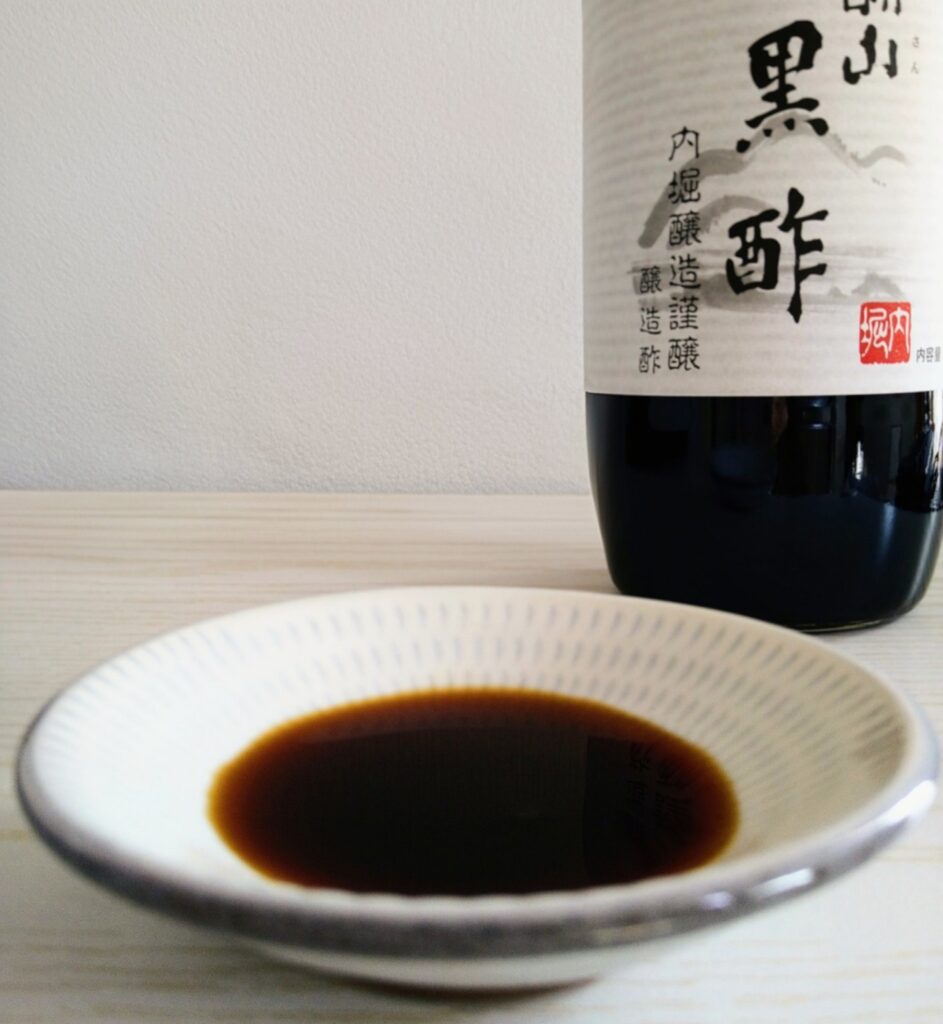
  • Uchibori Rinkosan Black Vinegar

    A Japanese black vinegar
    made from brown rice,
    slowly fermented and aged over time.


    Flavor

    It has a gentle acidity
    with a subtle depth and faint natural sweetness.

    Compared to many black vinegars,
    the sharpness is mild,
    making it easy to use even as a simple dipping sauce.

    When heated,
    the acidity softens and the richness deepens,
    adding a quiet layer of flavor to dishes.


    How I Use It

    On Friday evenings after work,
    I sometimes pick up gyoza and a beer on the way home.

    Once I’m back,
    I mix soy sauce with this vinegar
    and add a little yuzu kosho.

    It’s a simple combination,
    but one that helps me unwind,
    and over time it has become a small weekly ritual.

    It also works well in pickles, dressings,
    and with meat or fish dishes.

    Rather than following recipes,
    I tend to add it in small amounts
    to everyday cooking.


    Why I Keep It

    With its accessible price,
    it’s easy to keep in the kitchen
    and use regularly without hesitation.

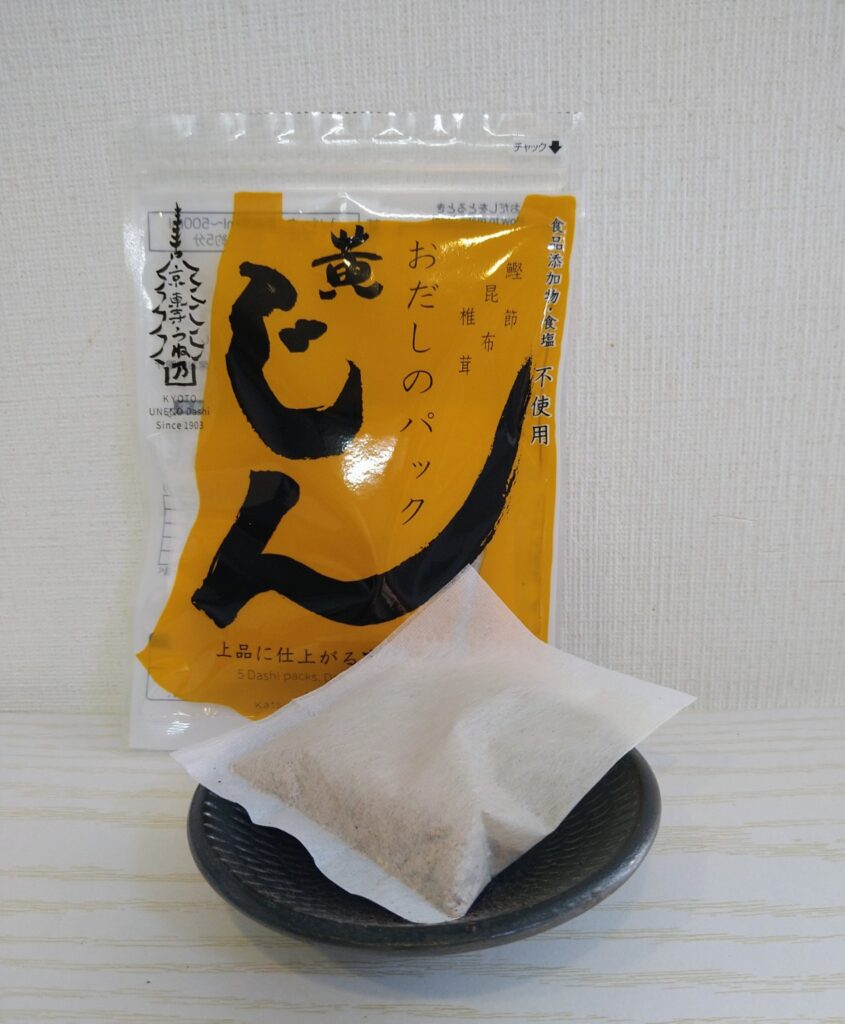
  • Dashi — A Quiet Foundation of Japanese Cooking

    On weekends, when I cook for my family,
    or when I want to gently reset after a long day,
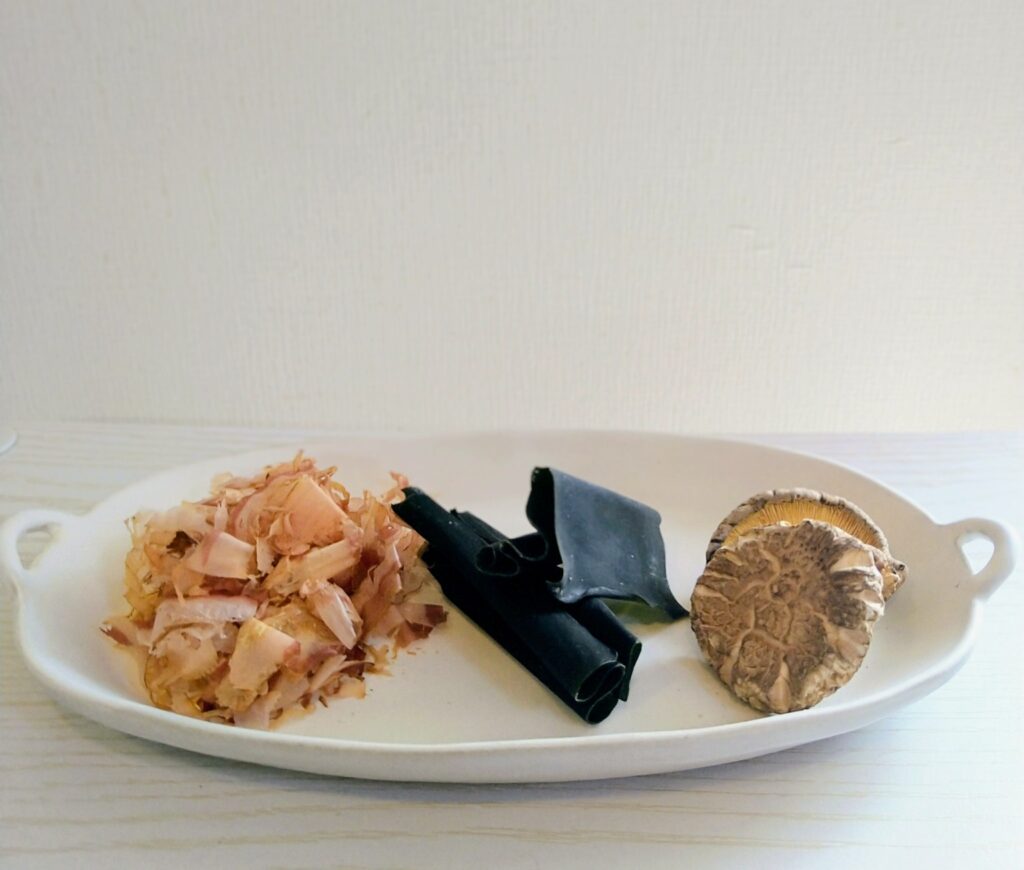
    I make dashi from kombu and bonito flakes.

    A soft, familiar aroma — one I’ve known since childhood —
    quietly fills the kitchen.

    I add a small pinch of salt to the first broth
    and taste it as it is.
    The gentle umami slowly spreads through my body,
    and I can feel myself begin to relax.

    On mornings like this,
    it somehow feels as if the day will go well.

    This kind of gentle aroma and flavor
    has always existed in Japanese kitchens.

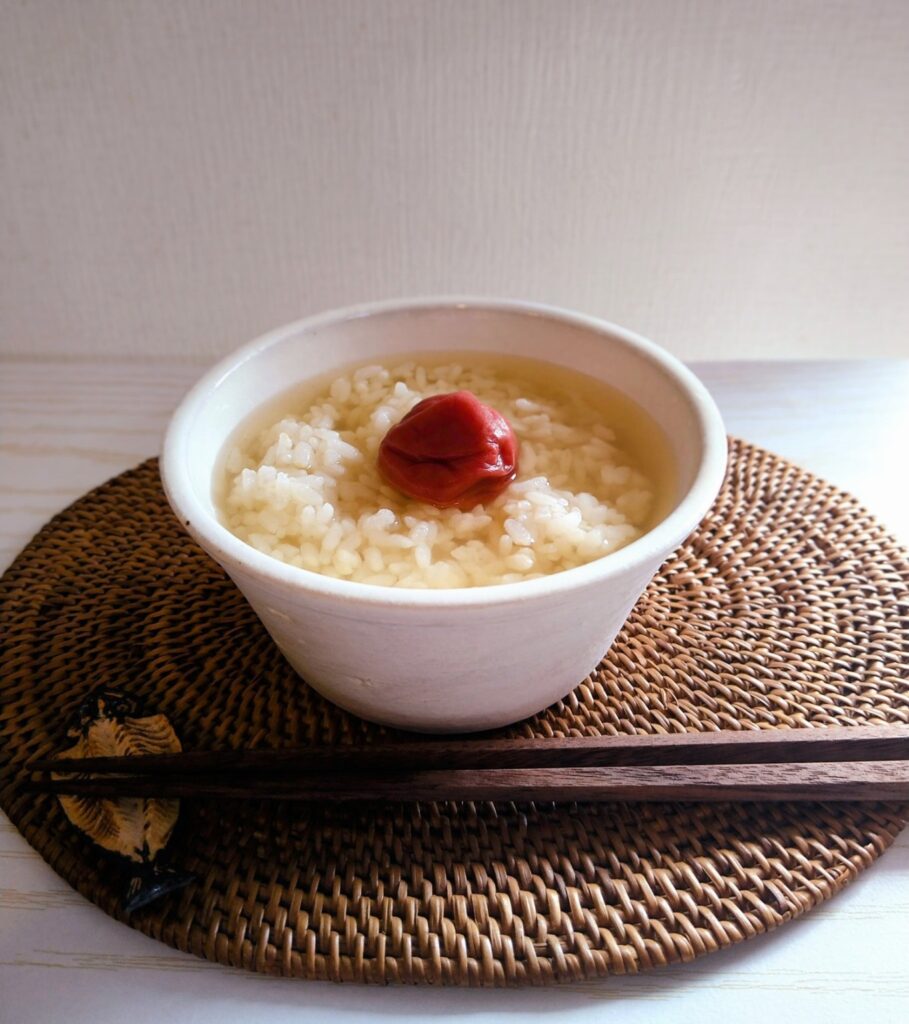
    Sometimes it’s enjoyed simply with rice
    and a single umeboshi.


    What Is Dashi?

    Dashi is the basic broth of Japanese cooking,
    made from ingredients such as
    bonito flakes, kombu, dried sardines,
    and dried shiitake mushrooms.

    It is naturally used in everyday dishes
    like miso soup, tamagoyaki (rolled omelet),
    udon, and rice bowls.


    About Umami

    The true charm of dashi lies in its umami.

    There are three main types of umami:

    Glutamic acid
    (found in kombu, tomatoes, onions, cheese, green tea, and more)

    Inosinic acid
    (found in bonito flakes, dried sardines, and meats)

    Guanylic acid
    (found in dried shiitake mushrooms and other dried fungi)

    Each has its own character,
    but when combined,
    they create a deeper, more rounded flavor.

    With good dashi,
    strong seasoning becomes unnecessary.
    The dish simply feels complete.


    How It Differs from Western Broth

    If Western broths or stocks add richness and strength to a dish,
    dashi works a little differently.

    Rather than standing out in front,
    it supports from underneath.

    Instead of adding intensity,
    it brings balance.

    It highlights the natural flavors of ingredients
    and gently brings the whole dish together.


    Basic Method

    Dashi is much simpler than it may seem.
    In professional kitchens there are probably
    many precise methods,
    but at home it’s far more relaxed.

    Soak kombu in water for several hours —
    ideally up to a day.
    Heat it gently and remove it just before boiling,
    when small bubbles begin to appear along the edges.

    Add bonito flakes to boiling water,
    let them steep for a few minutes,
    then strain.

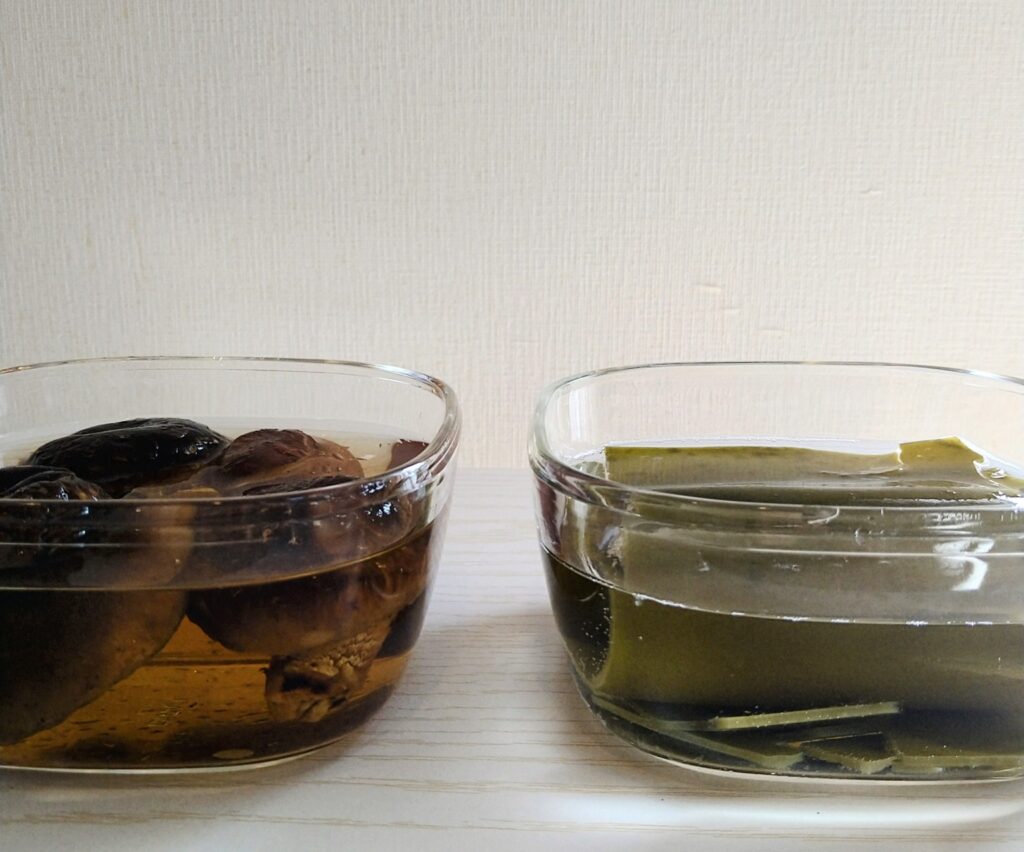
    Dried shiitake mushrooms can also be soaked in water.
    They can be used as they are,
    or gently heated for a deeper, richer broth.


    An Easier Way

    You can keep kombu or dried shiitake
    in water in the refrigerator.
    This way, dashi is always ready to use.

    Simply bring the kombu water to a light boil
    and add bonito flakes to create awase dashi.

    Adding a little shiitake broth
    makes the flavor even deeper.

    You can also freeze dashi in ice cube trays.
    Store the frozen cubes in an airtight container
    so you can use only what you need.

    Bonito-based dashi, however,
    loses its aroma over time,
    so it is best prepared fresh whenever possible.


    An Even Simpler Way

    For everyday cooking,
    dashi packets are an easy option.

    Most packets contain a blend of ingredients
    such as bonito flakes, kombu,
    and sometimes dried shiitake.
    There are also single-ingredient versions,
    and plant-based blends made without fish.


    Closing

    If you are used to stronger flavors,
    dashi may feel subtle at first.

    But after tasting it a few times,
    you begin to notice its quiet depth.

    A gentle flavor that slowly warms
    both body and mind.

    Something reassuring
    to have on the everyday table.
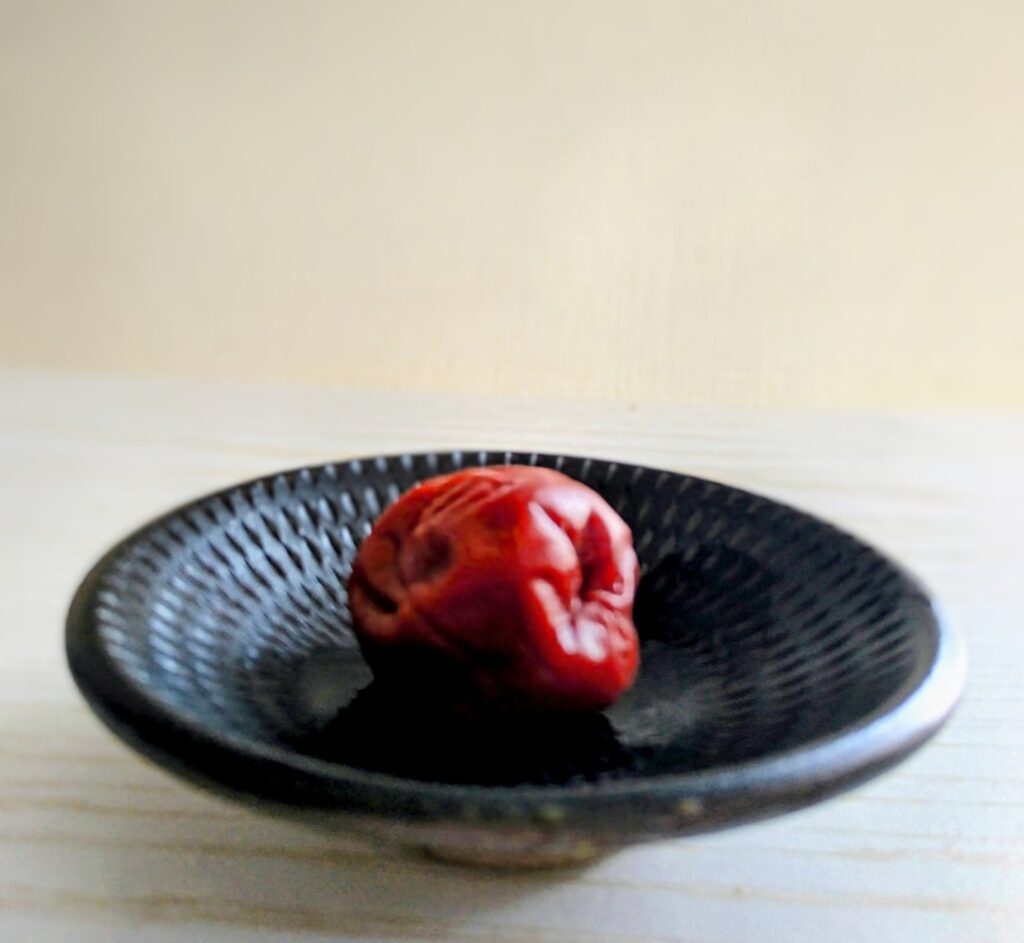
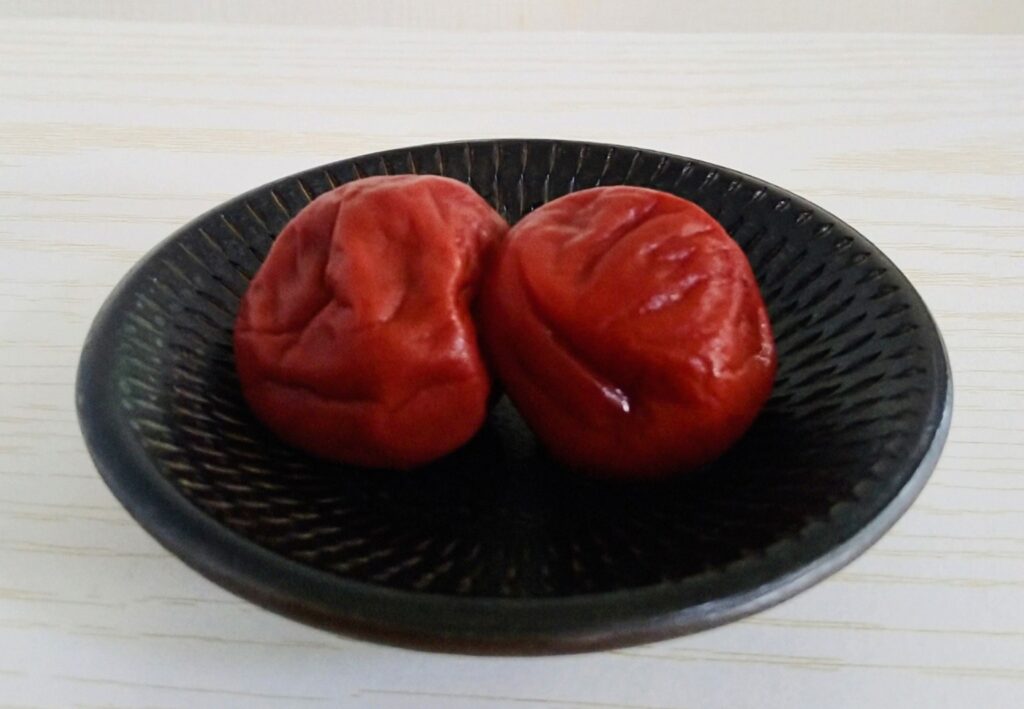
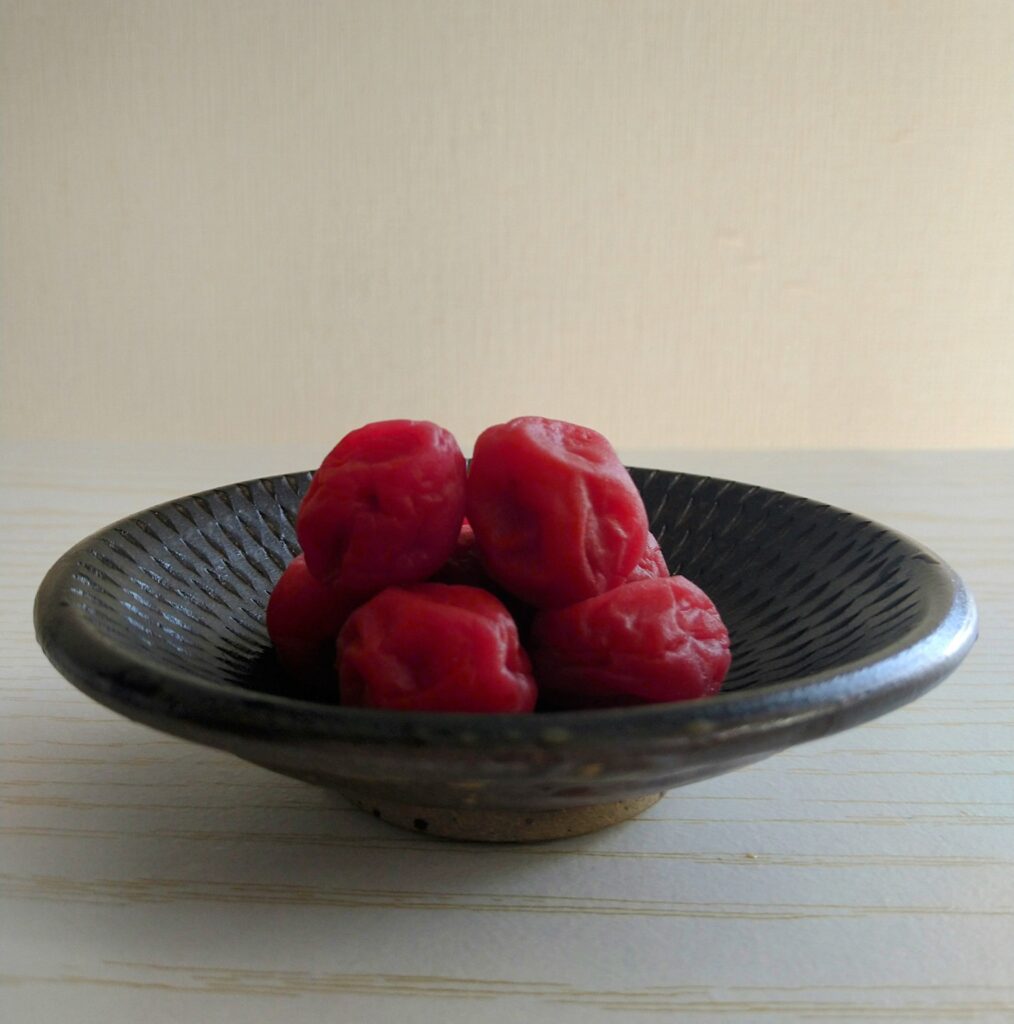
  • Umeboshi

    Salted and sun-dried ume plums,
    a traditional part of everyday Japanese meals.

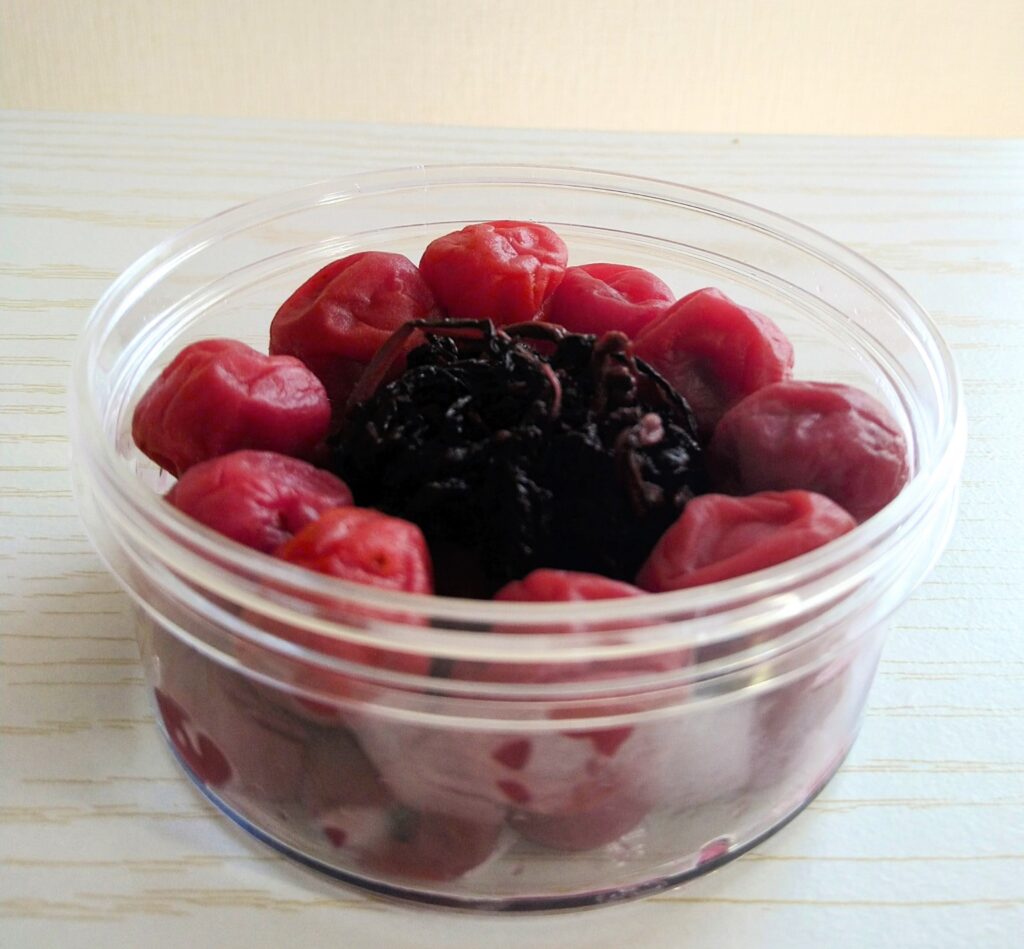
    There is always a small container of umeboshi
    in my refrigerator.

    Not a luxury item.
    Just something that has always been there.

    What They Are Like

    Umeboshi are made from ume,
    salted and dried slowly in the sun.

    Some are gently sweet,
    others intensely sour.

    Over time,
    you naturally find the kind you like.


    Different kinds

    Large Nanko ume are soft,
    with thick, tender flesh.

    Some are made with honey,
    milder and easier to eat.

    Smaller ume tend to be sharper,
    with textures ranging
    from firm and crisp to soft.
    Their size makes them easy to place
    into bento lunches.

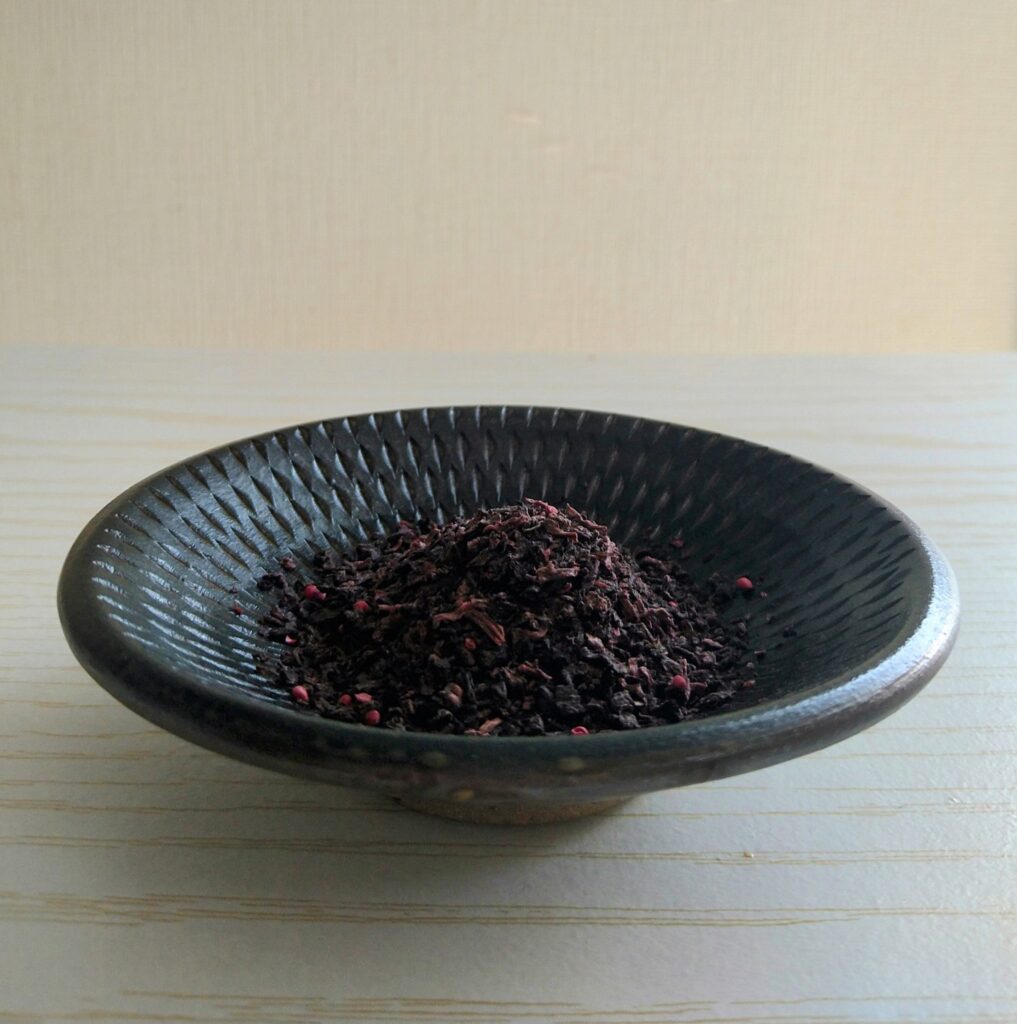
    Red shiso flakes are even simpler —
    just sprinkle them over rice
    when there isn’t much time.


    How I Use Them

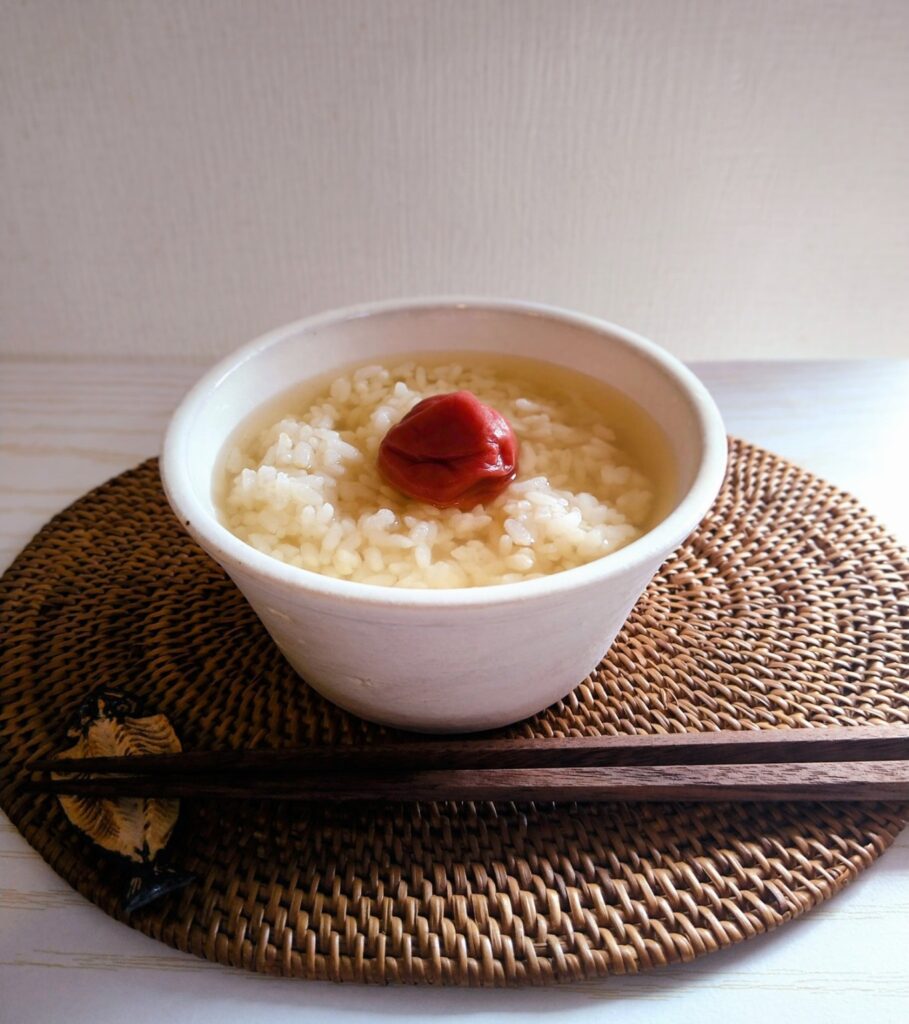
    Most often,
    I place one inside onigiri
    or serve it with warm rice.

    It also works well in ochazuke,
    or finely chopped with chicken or fish.

    Sometimes I roll it inside before cooking,
    or mix it into dressings
    for a bright, sharp note.

    On hot summer days,
    or when I feel slightly tired,
    I often reach for one.

    Closing

    Sometimes the main feature,
    sometimes just a small accent.

    Not flashy.
    Just always there.

    Umeboshi has quietly remained
    on Japanese tables for generations.

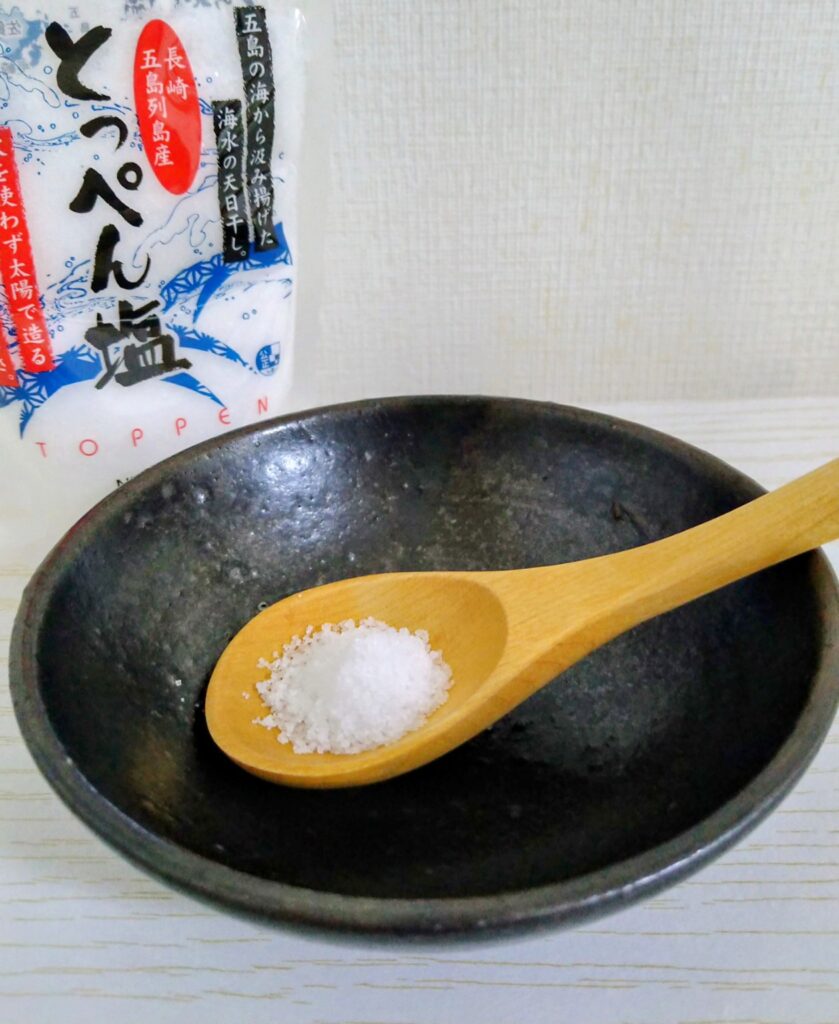
  • A salt used in everyday Japanese cooking

    A traditional Japanese sea salt
    made on the Goto Islands in Nagasaki.

    It is produced slowly,
    using the natural power of the sun and sea breeze,
    rather than relying on high heat or efficiency.

    Seawater is gently concentrated and dried under the open sky,
    following natural rhythms.

    The name “Toppenn” comes from a local dialect,
    meaning “the very top” —
    a quiet wish to create something truly good.


    Flavor and Character

    Rich in naturally occurring minerals,
    the taste is mild and rounded,
    without a sharp saltiness.

    Its character becomes especially clear
    in simple dishes.


    How I Use It

    In my kitchen,
    this is the salt I reach for most often.

    It works well with vegetables, fish,
    and simple preparations
    where the flavor of the ingredients matters.


    Availability

    Because it is produced in small quantities,
    it can be difficult to find.

    If you’re looking for something
    more accessible for everyday use,
    these are two alternatives worth considering.


    Nuchimasu

    A mineral-rich sea salt from Okinawa
    with a very fine, powder-like texture.

    It dissolves quickly
    and is easy to use in everyday cooking.

    → See Nuchimasu on Amazon


    Aguni Salt

    Made from seawater around a small island in Okinawa.
    It has a clean, balanced flavor
    that pairs well with everyday meals.


    Closing

    If you’re looking for a salt
    to use every day,
    this is a good place to start.

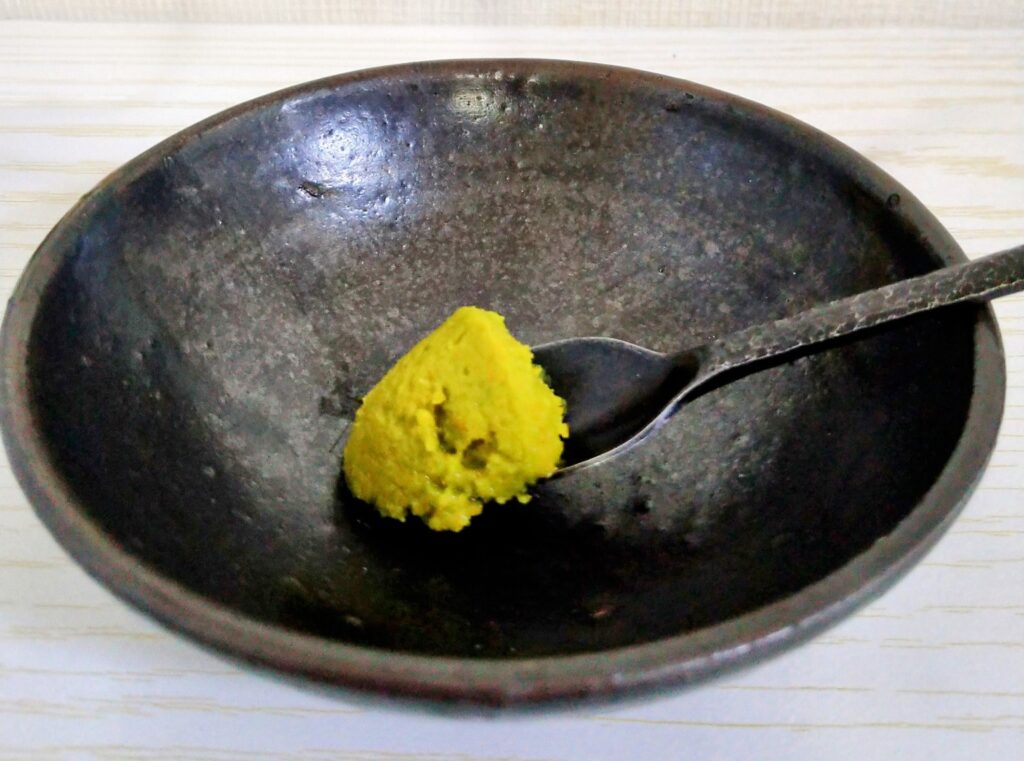
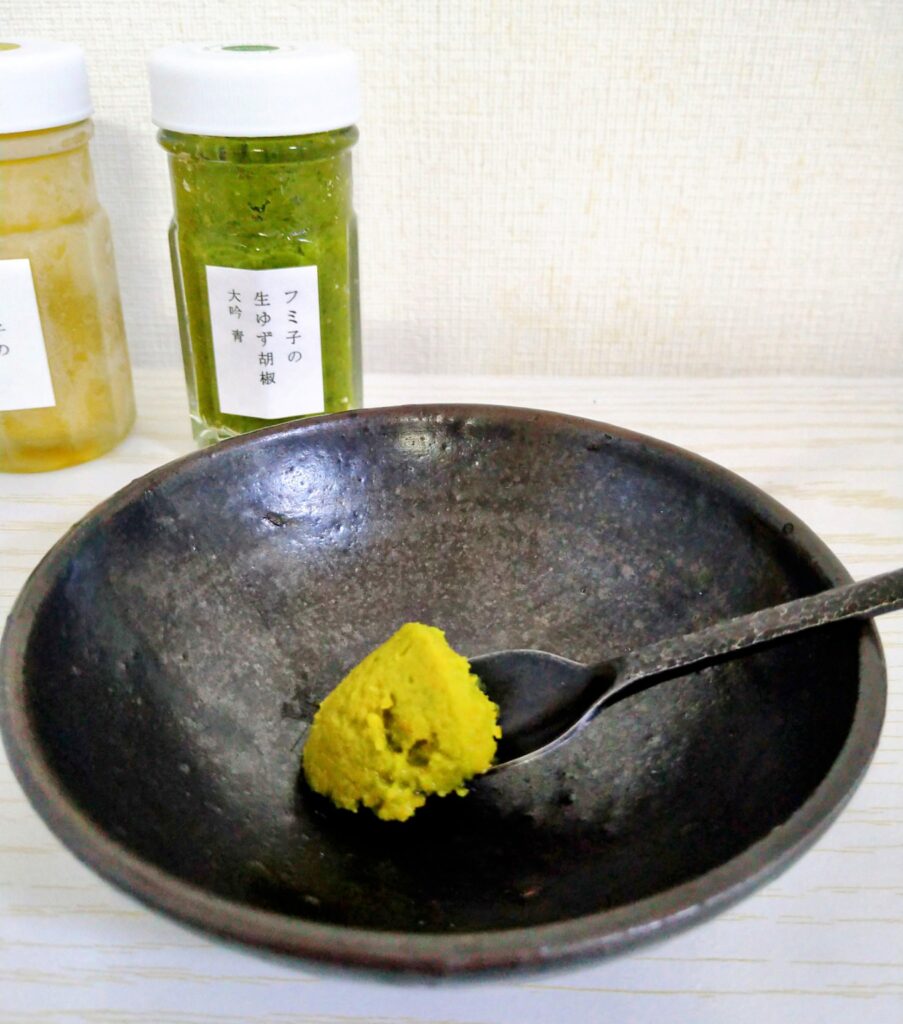
  • Fumiko Fresh Yuzu Kosho — A Traditional Japanese Condiment

    Yuzu kosho is a traditional Japanese condiment
    made from yuzu peel, chili peppers, and salt.

    A small amount can add depth to simple dishes.


    Fumiko Fresh Yuzu Kosho

    What stands out first is its clear, fresh aroma.

    The saltiness is gentle,
    allowing the fragrance of yuzu to open naturally.

    There is no bitterness or harshness,
    and the finish is clean.

    Its bright heat adds depth
    without overpowering the dish.


    Ingredients and Process

    The yuzu and chili peppers
    are grown in Kyushu, Japan.

    Each yuzu peel is checked by hand,
    and only the outer peel —
    where the fragrance is most concentrated — is used.

    After preparation,
    it is quickly frozen
    to preserve its color and aroma.

    Even when frozen,
    it remains soft enough to scoop,
    so you can use only what you need.

    How I Use It

    It pairs well with
    simple meat or fish dishes,
    as well as noodles, soups,
    and even mild cheeses.


    Closing

    Made without additives
    and prepared with care,
    it’s something I feel comfortable
    having in my kitchen.


    Related Articles

    Salt Used in Everyday Japanese Cooking
    A simple salt that quietly supports everyday cooking.
    Read more

    The Soy Sauce in My Kitchen
    A soy sauce I use in everyday cooking.
    Read more