Category: Small Details

Small objects from everyday life in Japan that quietly bring joy to daily moments.

  • Coffee Bean Chopstick Rests from Japan (Mino Ware)

    coffee bean chopstick rest ceramic

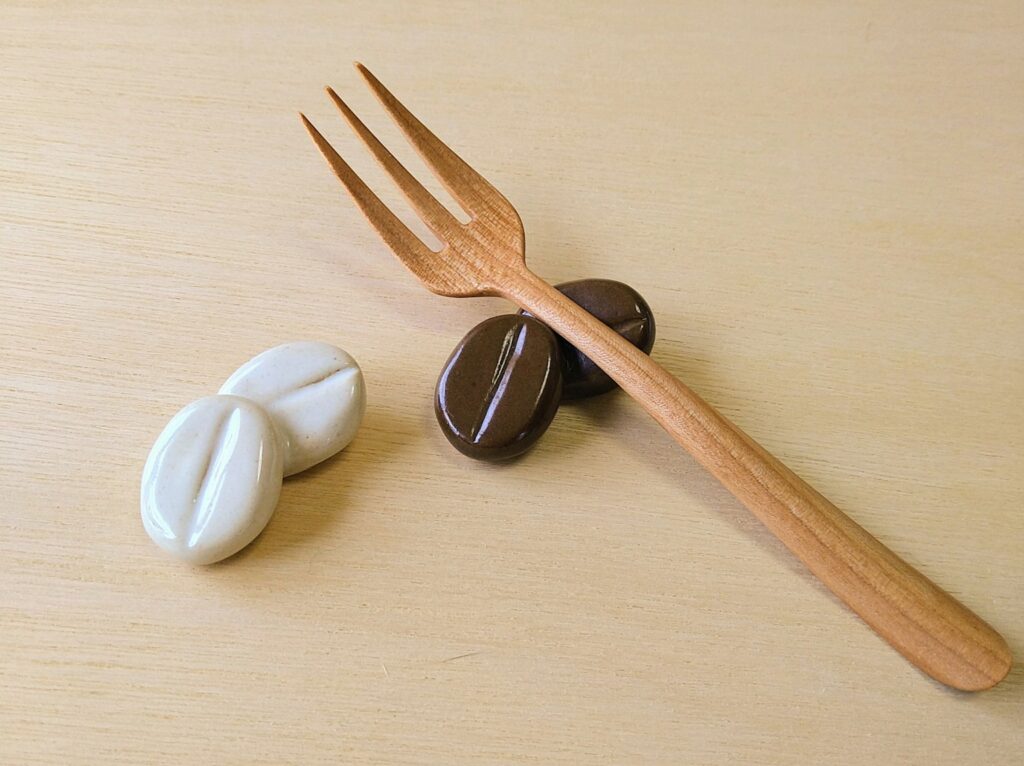
    A coffee bean-shaped chopstick rest, adding a small, playful touch to the table.

    These chopstick rests are shaped like coffee beans.
    They are made of Mino ware, a type of pottery produced in Gifu Prefecture.


    Design and Details

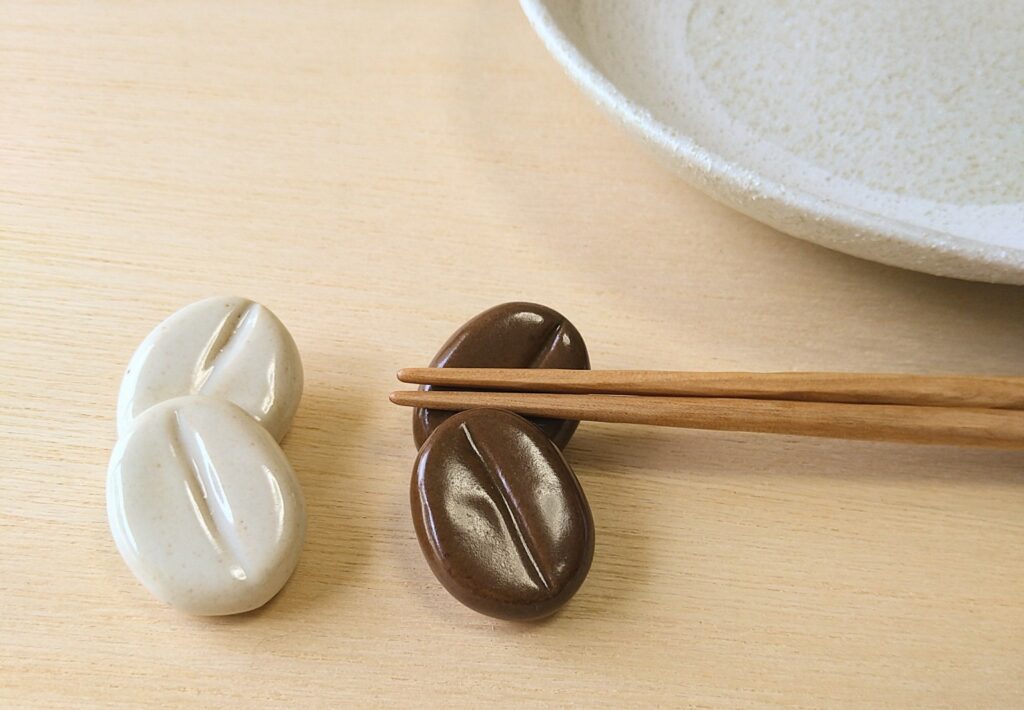
    Two beans sit side by side as one piece, with a small groove between them where chopsticks or a fork can rest.
    They come in three colors — brown, light brown, and cream — each evoking a different stage of the roasting process.
    Simple in form, yet they carry a small moment of humor and warmth.

    coffee bean chopstick rest ceramic

    How I Use Them

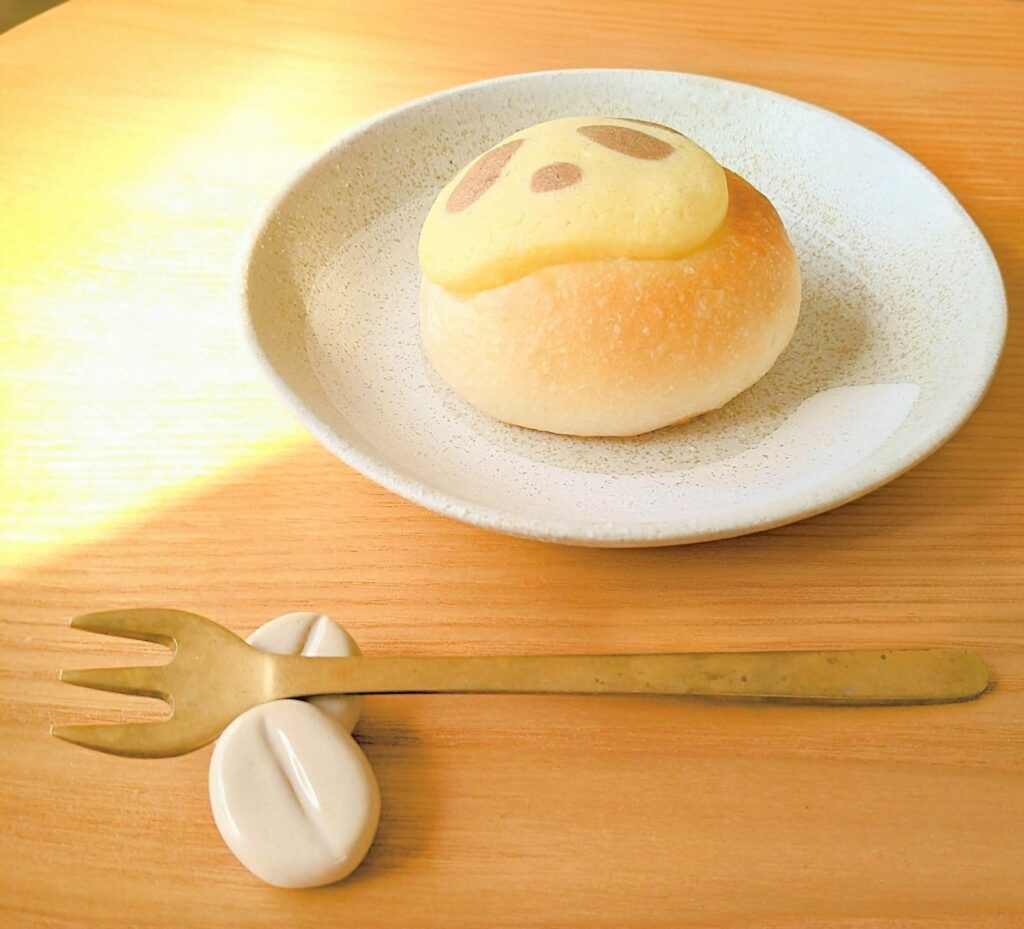
    I often reach for these during a small afternoon coffee break. Placing them beside a coffee cup adds a small, playful touch to the table.


    Who These Are For

    A good fit for anyone who loves coffee, anyone looking for a small and playful Japanese ceramic gift, or anyone who enjoys adding a little personality to the table.


    Where to Buy

    Available on Rakuten


    Key Details

    • Mino ware, Gifu Prefecture
    • Size: approx. 2 × 3.8 × 1.5 cm (H)
    • Single piece: two beans joined together
    • Colors: brown, light brown, and cream
    • Chopsticks or fork rest in the groove between the beans

    Closing

    A coffee bean beside a cup of coffee. Small, but it fits.

    Back to: A Guide to Japanese Chopstick Rests

  • Glass Chopstick Rests from Japan

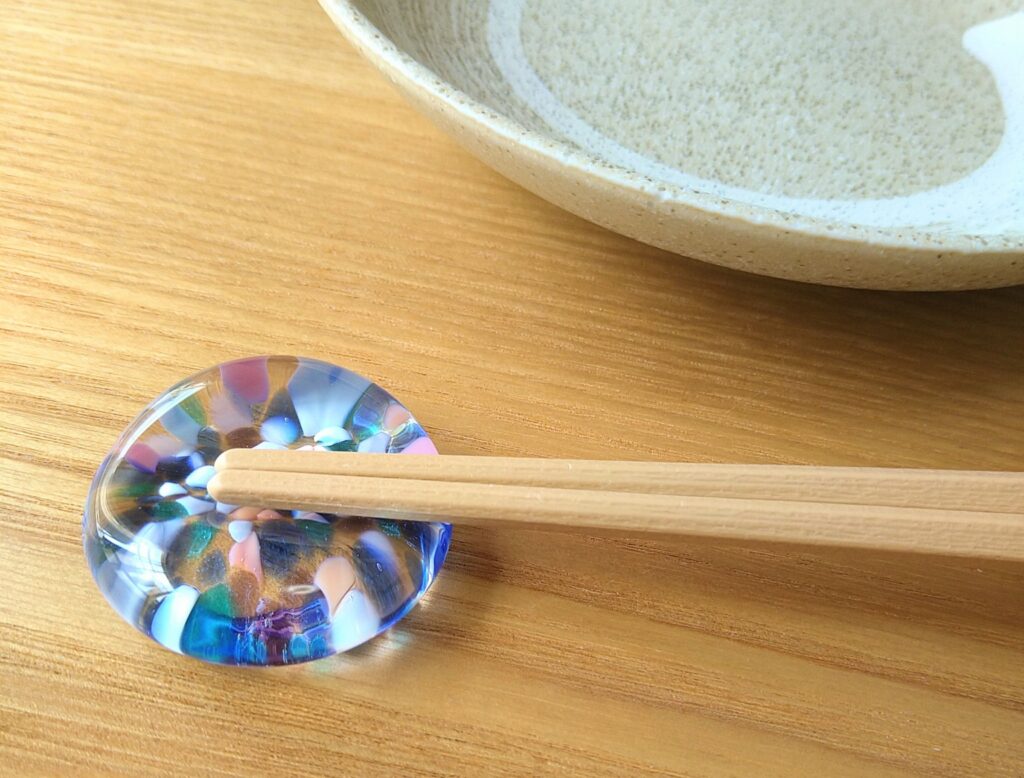
    transparent glass chopstick rest

    Glass chopstick rests have a different kind of charm compared to ceramic pieces.
    Their transparency adds a light, refreshing feeling to the table. Depending on the angle and the way light passes through, their appearance shifts subtly.
    They are also easy to wash, which makes them practical for everyday use.

    I often use them from spring through summer, choosing designs inspired by seasonal flowers and scenery.


    Seasonal Flowers — Ishizuka Glass

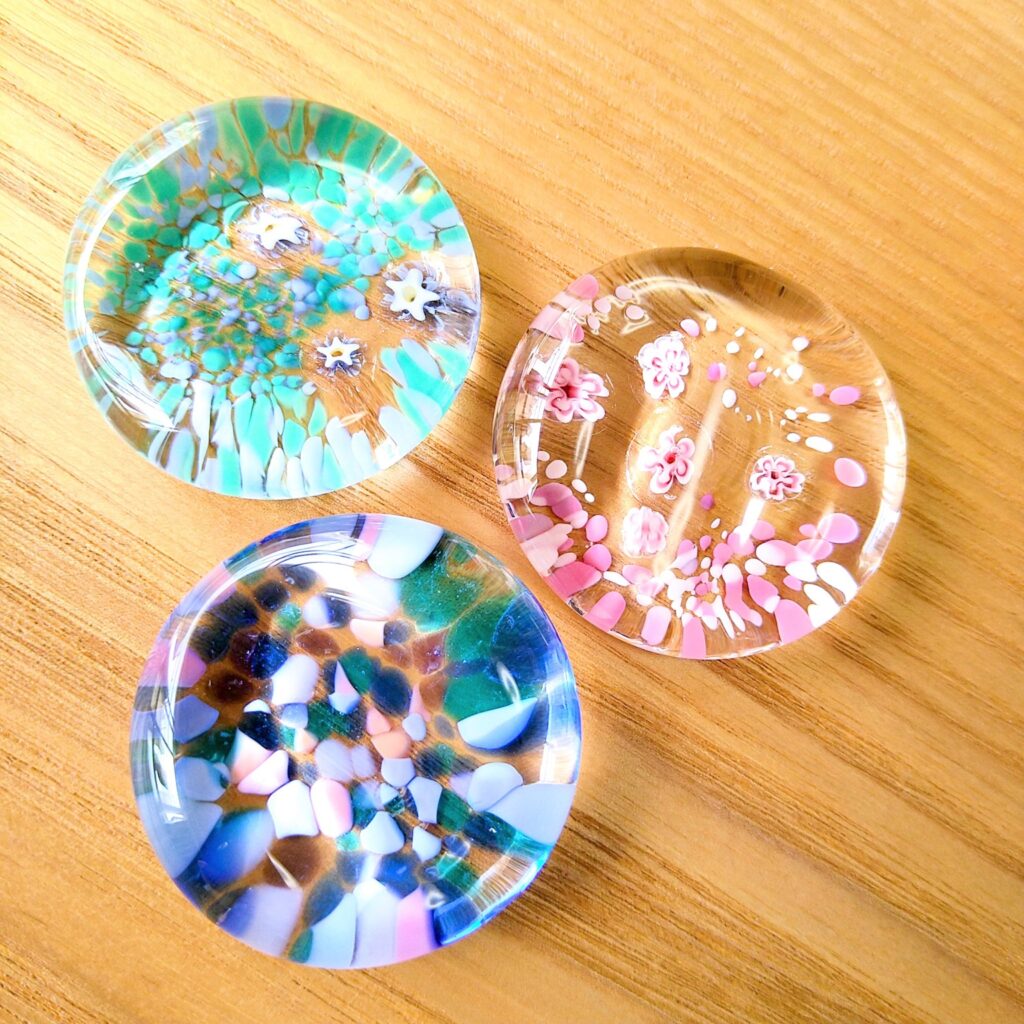
    transparent glass chopstick rest

    Green: kikyo (bellflower) Pink: sakura (cherry blossom) Blue: Yunagi no Sora — a calm evening sky

    From Ishizuka Glass’s Seasonal Flowers series.

    Each piece is inspired by plants across all four seasons — plum and cherry blossoms in spring, morning glory and kikyo in summer, maple leaves and osmanthus in autumn, camellia and nandina in winter.
    When light touches the glass, small flowers and colored specks appear softly within it.


    Where to Buy

    Rakuten


    Key Details

    • Made by Ishizuka Glass, Gifu Prefecture
    • Glass
    • Designs inspired by seasonal plants across all four seasons

    Yunagi no Sora (Evening Calm Sky) — Aderia / Tsugaru Vidro

    This piece is from Aderia’s Tsugaru Vidro series called Nihon no Iro Fukei (Colors of Japanese Scenery).
    The series expresses seasonal landscapes using small pieces of colored glass embedded within each piece.

    Some of the designs include Spring Hill, Dancing Cherry Blossoms, Summer Fields, Sunflowers, Hydrangea, Evening Calm Sky, Fireflies at Dusk, and Winter Lights.

    Yunagi refers to a quiet moment in the evening when the wind settles and the sea becomes calm.
    The soft blend of pale blue, pink, and a touch of orange reminds me of the sky at summer dusk.

    Though small, it feels like placing a piece of scenery on the table.


    Where to Buy

    Amazon Japan

    Rakuten


    Key Details

    • Made by Aderia / Tsugaru Vidro
    • Hand-blown glass with colored glass pieces
    • Series: Nihon no Iro Fukei (Colors of Japanese Scenery)
    • Multiple seasonal designs available

    Closing

    Glass chopstick rests reflect light beautifully — and quietly change with the season.

    → Back to:A Guide to Japanese Chopstick Rests

  • Aji (Grilled Horse Mackerel) Chopstick Rest from Japan — Ihoshiro Kiln, Mino Ware

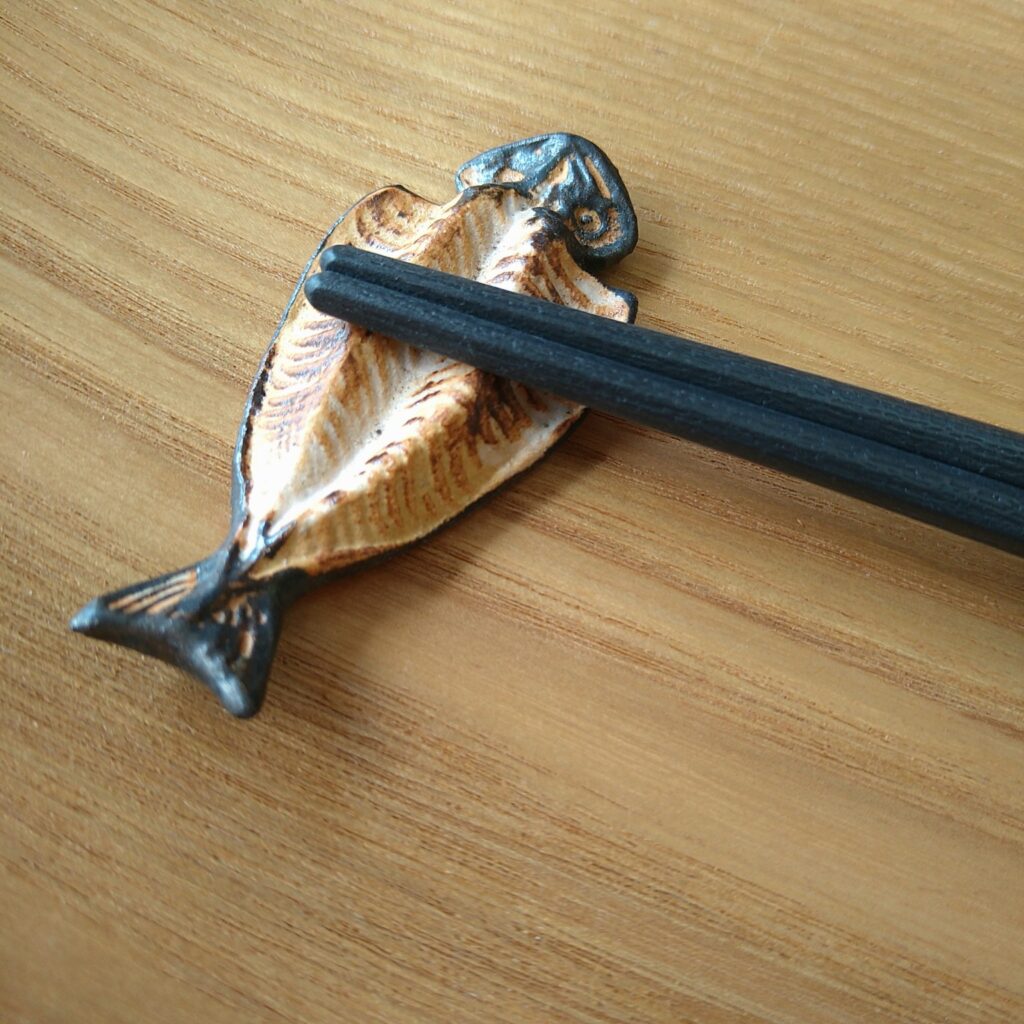
    fish chopstick rest japanese style

    A chopstick rest shaped like aji no hiraki — a butterflied, dried horse mackerel commonly eaten in Japan.


    Design and Details

    The golden tones and subtle texture of a grilled fish are carefully recreated in ceramic — realistic enough to add a slightly surreal, playful touch to the table.

    Each piece is shaped and painted by hand without the use of machinery, so the color and details vary slightly from one to another, giving each one a warmth that only handmade work can carry.


    On the Table

    It pairs naturally with Japanese tableware.
    When placed on the table, it almost feels like a small side dish has been added — which is part of what makes it charming.


    Who This Is For

    A good fit for anyone who loves Japanese food culture, anyone looking for a unique and conversation-worthy gift, or anyone who enjoys a quiet sense of humor on the table.


    Where to Buy

    Available on Rakuten


    Key Details

    • Made by Ihoshiro Kiln, Mizunami, Gifu
    • Mino ware, handmade
    • Each piece varies slightly in color and detail

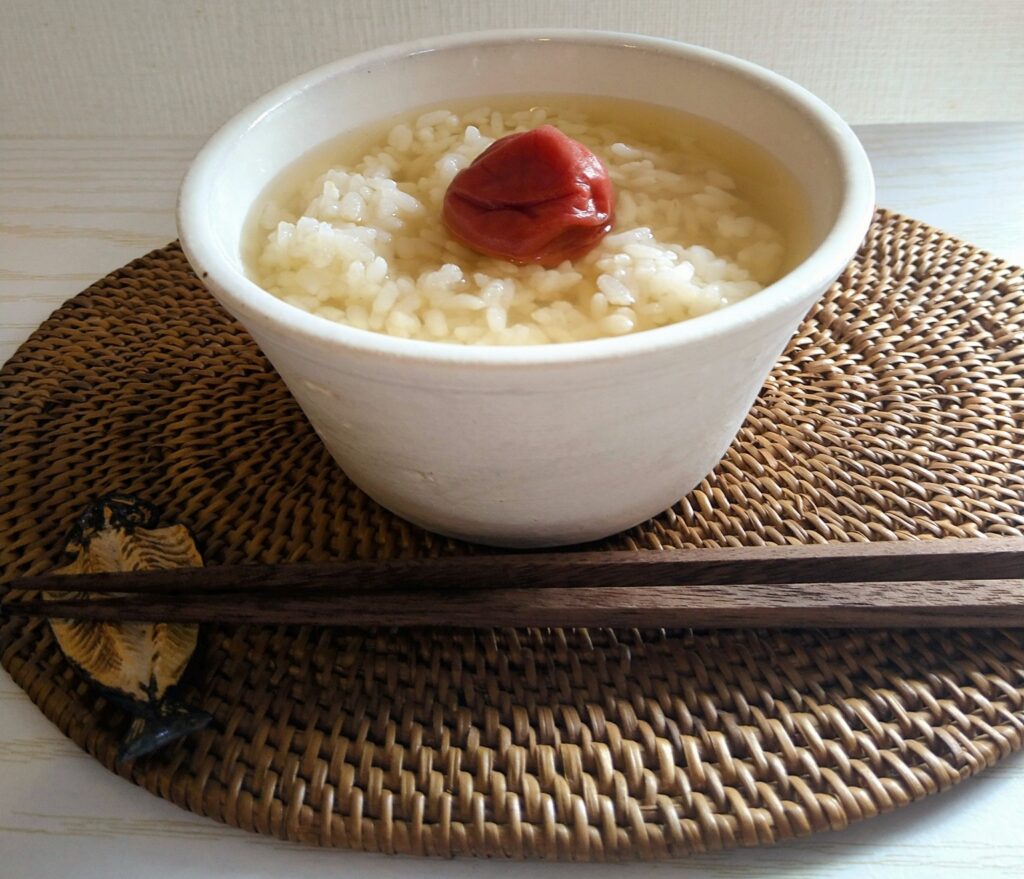
    Ume dashi chazuke — rice with warm broth and pickled plum.

    → Back to:A Guide to Japanese Chopstick Rests

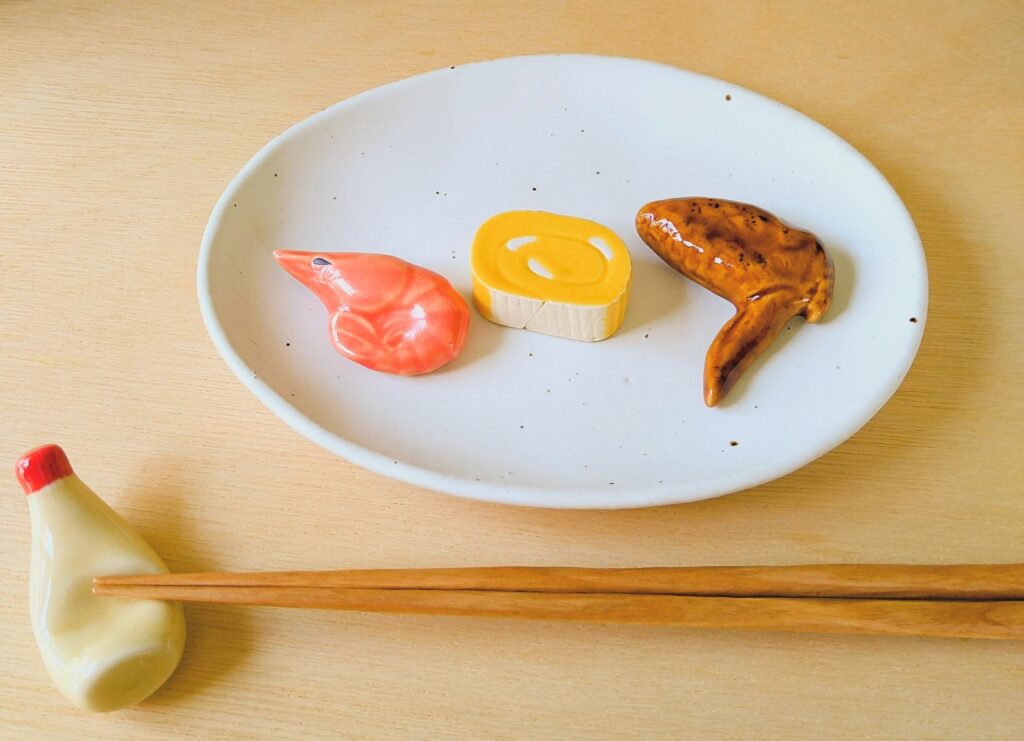
  • Chicken Wing Chopstick Rest from Japan — Ihoshiro Kiln, Mino Ware

    chicken wing chopstick rest ceramic

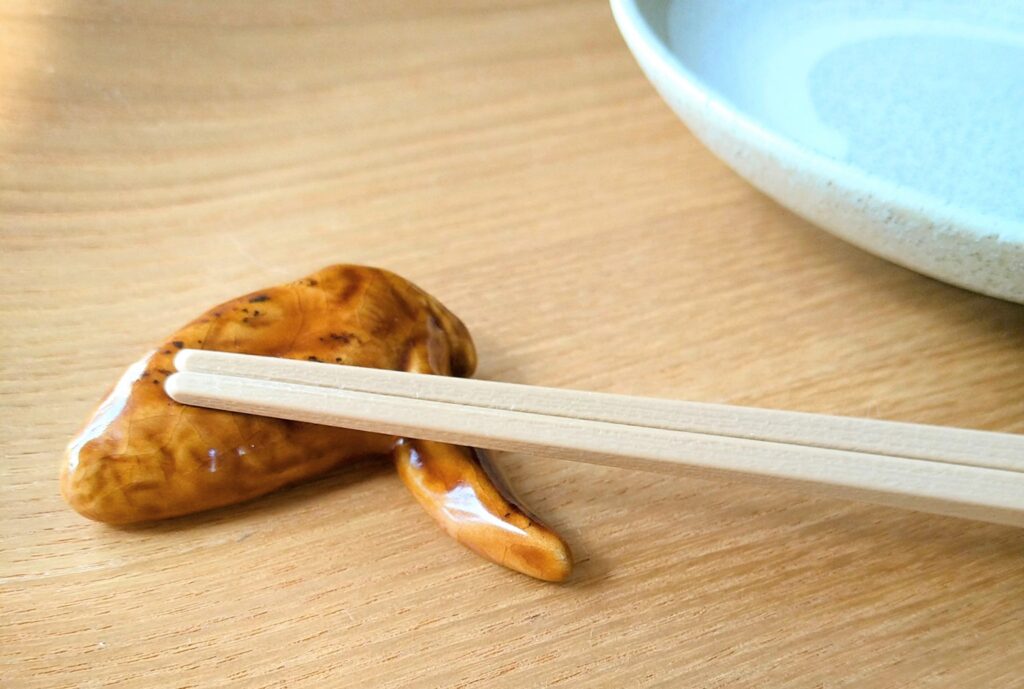
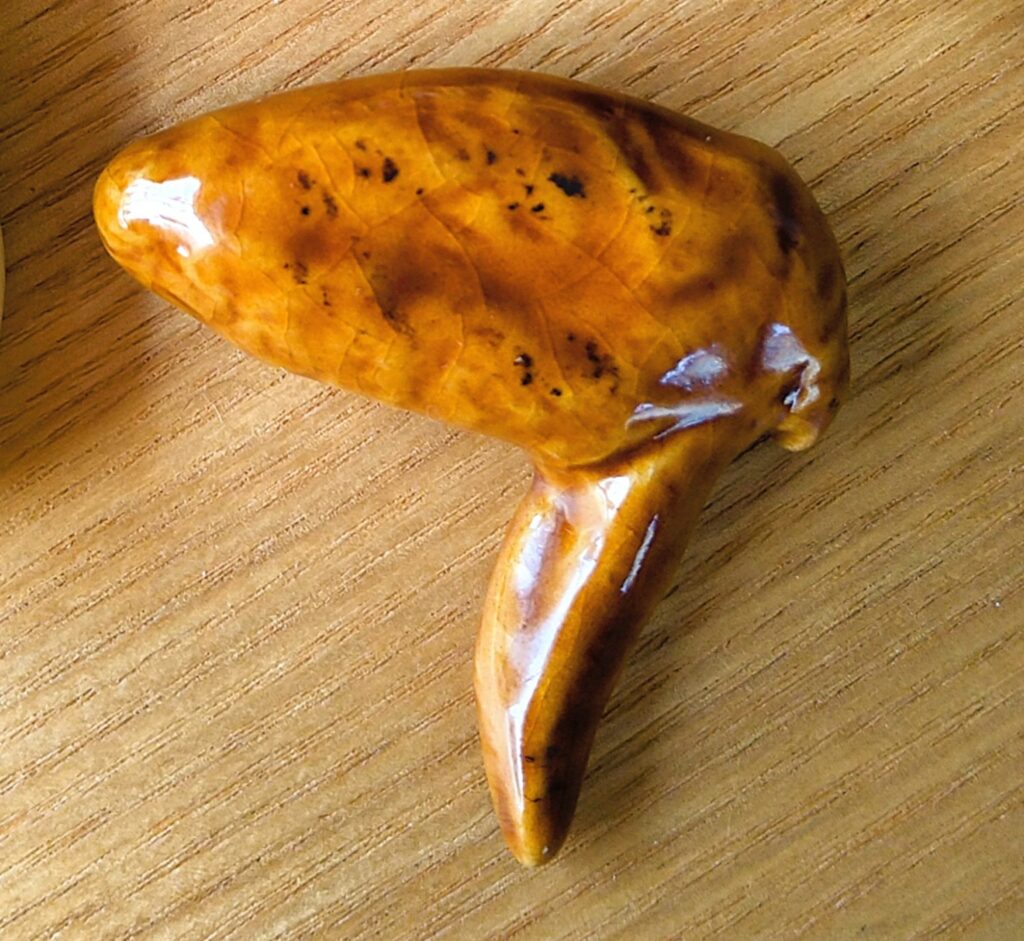
    A chopstick rest shaped like a chicken wing, made by Ihoshiro Kiln in Gifu Prefecture.


    Design and Details

    The color and texture resemble grilled chicken skin, recreated in ceramic with surprising detail.
    Each piece is shaped and finished by hand without the use of machinery, so the color and form vary slightly from one to another, giving each one a warmth that only handmade work can carry.

    chicken wing chopstick rest ceramic

    On the Table

    Familiar in form, but slightly unexpected as a chopstick rest — it adds a subtle, playful touch to the table.
    When placed out, it often becomes a small conversation piece.
    It’s the kind of object that brings a quiet smile each time you reach for it.


    Who This Is For

    A good fit for anyone who enjoys unexpected details on the table, anyone looking for a unique and conversation-worthy gift, or anyone who already owns the grilled fish rest and wants to add to it.


    Where to Buy

    Available on Rakuten


    Key Details

    • Made by Ihoshiro Kiln, Mizunami, Gifu
    • Mino ware, handmade
    • Each piece varies slightly in color and form

    Closing

    It looks like it belongs on the plate.
    It ends up beside the chopsticks.

    → Back to:A Guide to Japanese Chopstick Rests

  • Mayonnaise Chopstick Rest from Japan — Kitagawa Misen Kiln, Arita Ware

    mayonnaise bottle chopstick rest arita ware

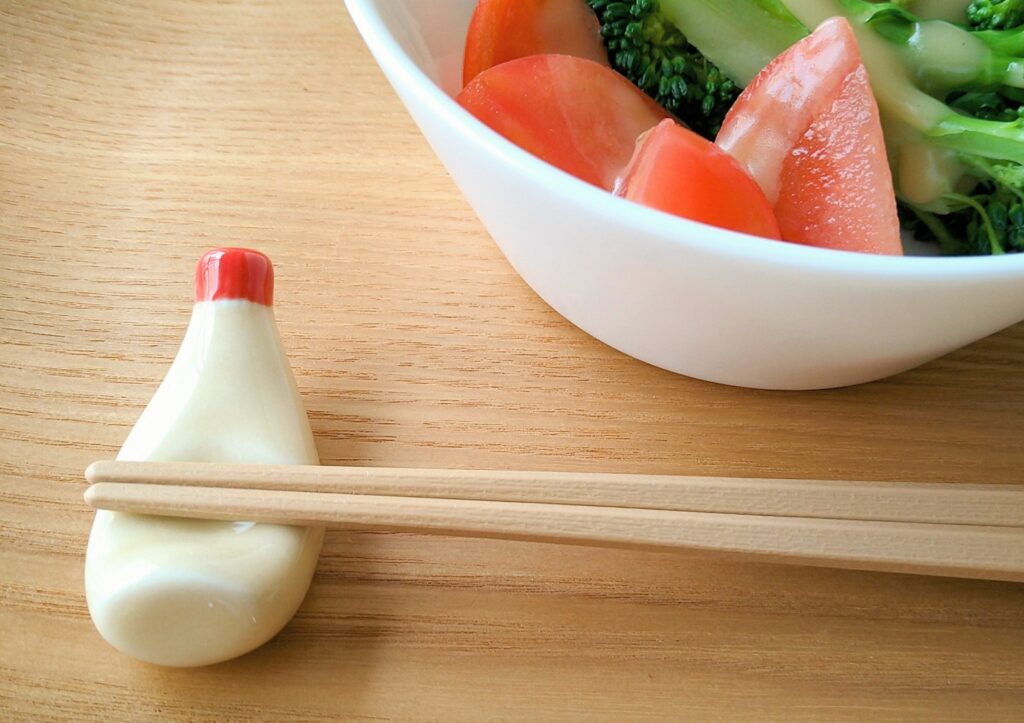
    A chopstick rest shaped like a mayonnaise bottle, made by Kitagawa Misen Kiln in Saga Prefecture.


    Design and Details

    Its red cap and soft cream-colored body closely resemble the familiar Kewpie mayonnaise bottle — a staple in Japanese kitchens.
    The shape looks like mayonnaise just squeezed from a bottle, with a gentle curve in the middle.That small indentation makes it easy to rest chopsticks securely.

    Each piece is part of a series that also includes ketchup, okonomiyaki sauce, and tartar sauce designs.


    On the Table

    With its playful appearance, it adds a light and unexpected touch to the table. Though slightly humorous in design, it feels thoughtfully made when used — both practical and playful.


    Who This Is For

    A good fit for anyone who loves Japanese food culture, anyone looking for a humorous and conversation-worthy gift, or anyone who wants to collect the full condiment series.


    Where to Buy

    Available on Amazon US
    → See: Arita Ware Mayonnaise Chopstick Rest


    Key Details

    • Made by Kitagawa Misen Kiln, Saga Prefecture
    • Arita ware
    • Part of a series: ketchup, okonomiyaki sauce, and tartar sauce also available

    Closing

    It looks like it belongs in the fridge.
    It ends up beside the chopsticks.


  • Cat Chopstick Rests from Japan — Kyocen Kiln, Hasami Ware

    cat shaped chopstick rest ceramic

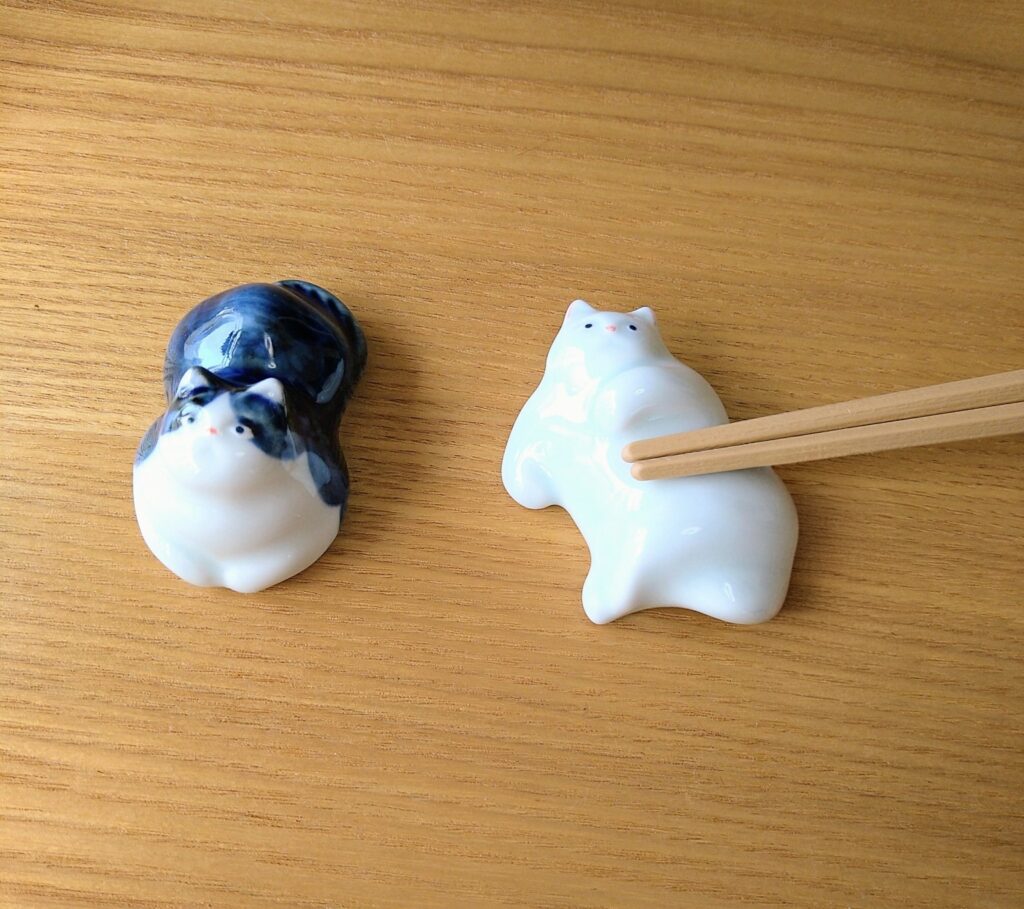
    Small cats resting quietly on the table.

    These cat-shaped chopstick rests are made by Kyocen Kiln, a pottery workshop in Nagasaki.
    They are part of the sen product line, which focuses on everyday objects designed to spark imagination and quiet delight.


    Design and Details

    The series includes two colors — white and a bicolor pattern — each available in five poses.
    The names come from Japanese onomatopoeic words that describe small, cat-like movements.

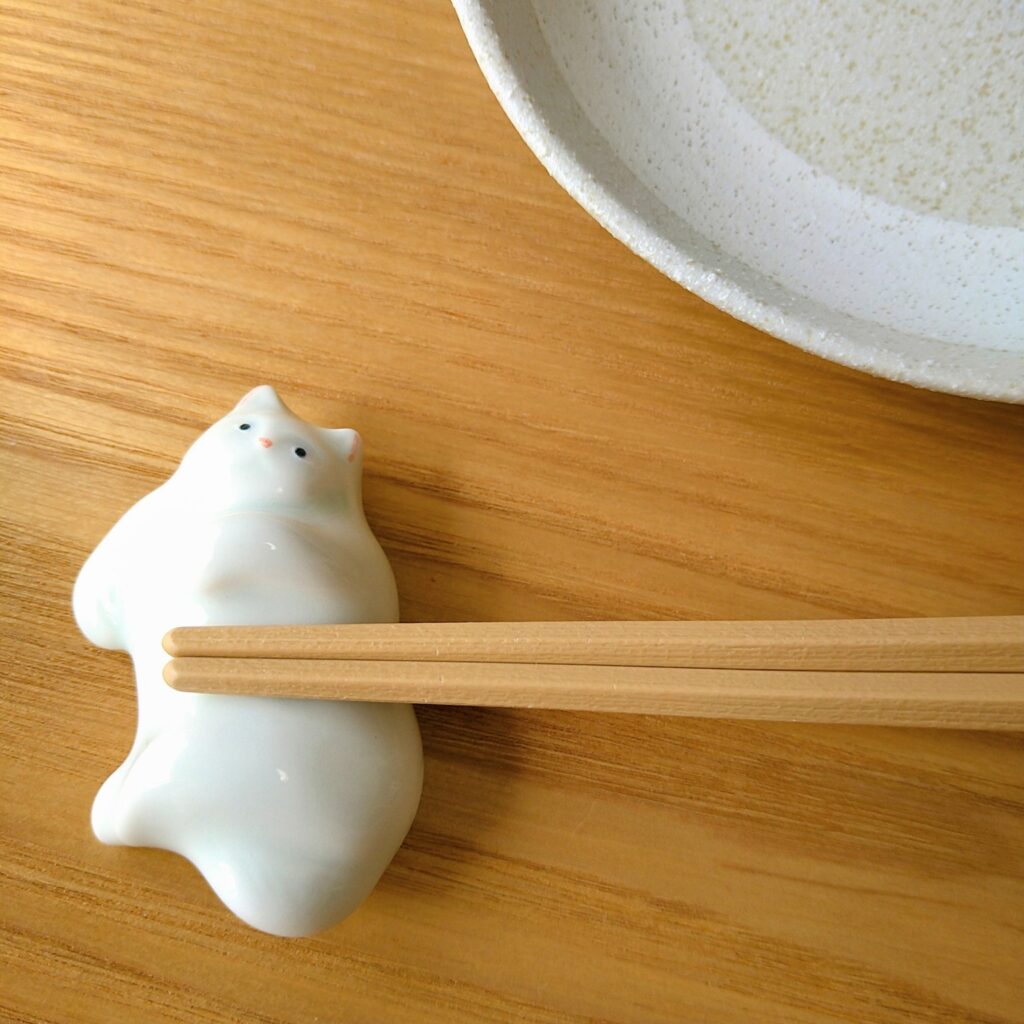
    The two I have are Mukuri, a cat gently lifting its head, and Poteri, a cat lying on its back with its belly exposed.
    Other poses include Kururi (curled up), Jirori (quietly staring), and Gorori (rolling over).

    Each piece is handmade, so the color and expression vary slightly — especially the bicolor version, where the glaze tends to bleed softly, giving each cat its own face.

    cat shaped chopstick rest ceramic

    Poteri,” a small cat-shaped chopstick rest with a softly rounded form.

    On the Table

    Slightly larger and heavier than most chopstick rests, which gives them a pleasant, settled presence. They also work nicely as small decorative objects when not in use.


    Who These Are For

    A good fit for anyone who loves cats, anyone looking for a handmade ceramic gift with quiet charm, or anyone who enjoys collecting pieces that bring a soft, playful presence to the table.


    Where to Buy

    Available at sen no STORE → kyosen-nagasaki.stores.jp


    Key Details

    • Made by Kyocen Kiln, Nagasaki Prefecture
    • Hasami ware, handmade
    • Colors: white and bicolor
    • Poses: Mukuri, Kururi, Gorori, Jirori, Poteri
    • Not dishwasher safe

    Closing

    Five poses, two colors. It’s hard to stop at one.

    → Back to:A Guide to Japanese Chopstick Rests

  • Why Use a Japanese Chopstick Rest?

    A Small Detail That Shapes the Table

    Even the smallest objects can change how a table feels.
    A Japanese chopstick rest — hashioki (箸置き) — is one of those objects. In Japan, it is often placed beside the plate during meals.


    Why They’re Used

    A chopstick rest keeps the tips of chopsticks from touching the table and prevents them from rolling.

    It’s a small detail, but it helps keep the table clean and gently organized. Although they are called chopstick rests, they can also be used to hold forks or spoons.

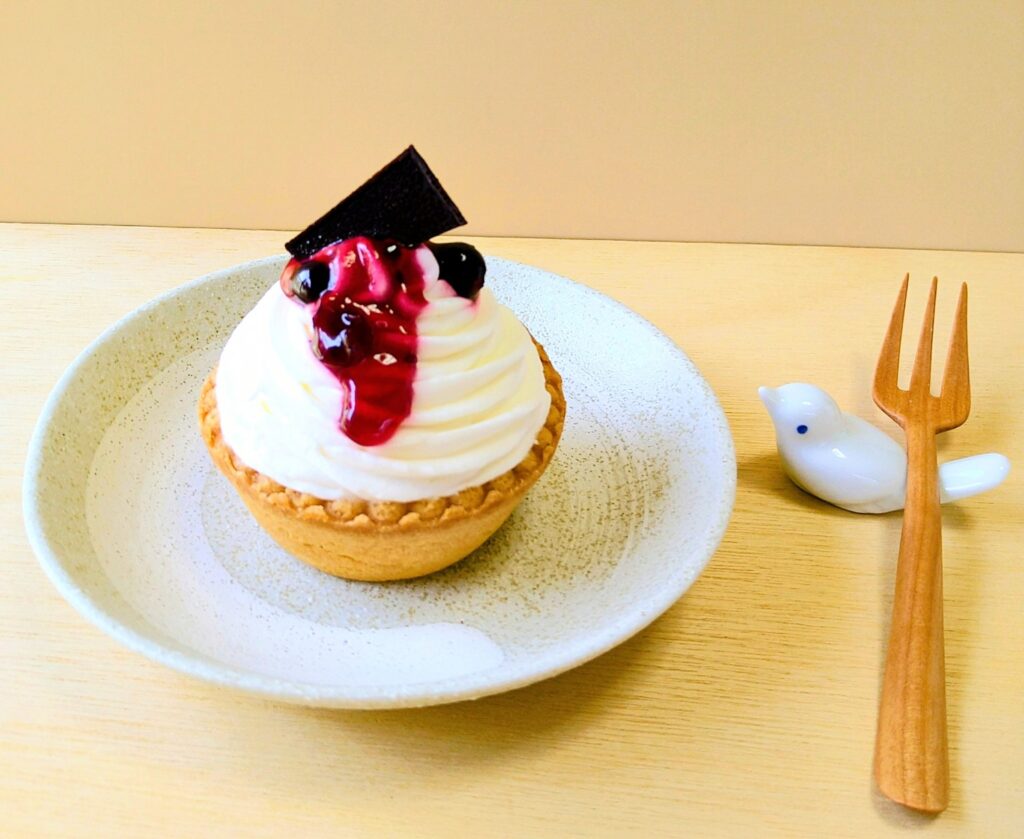
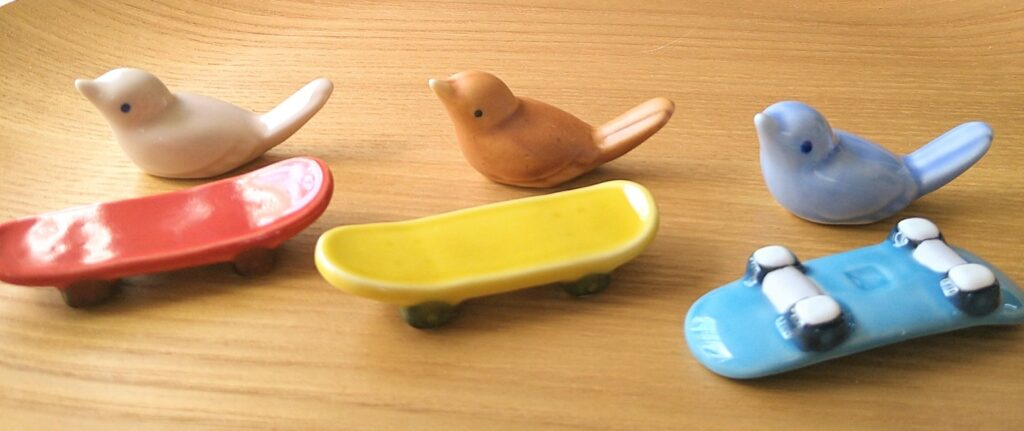
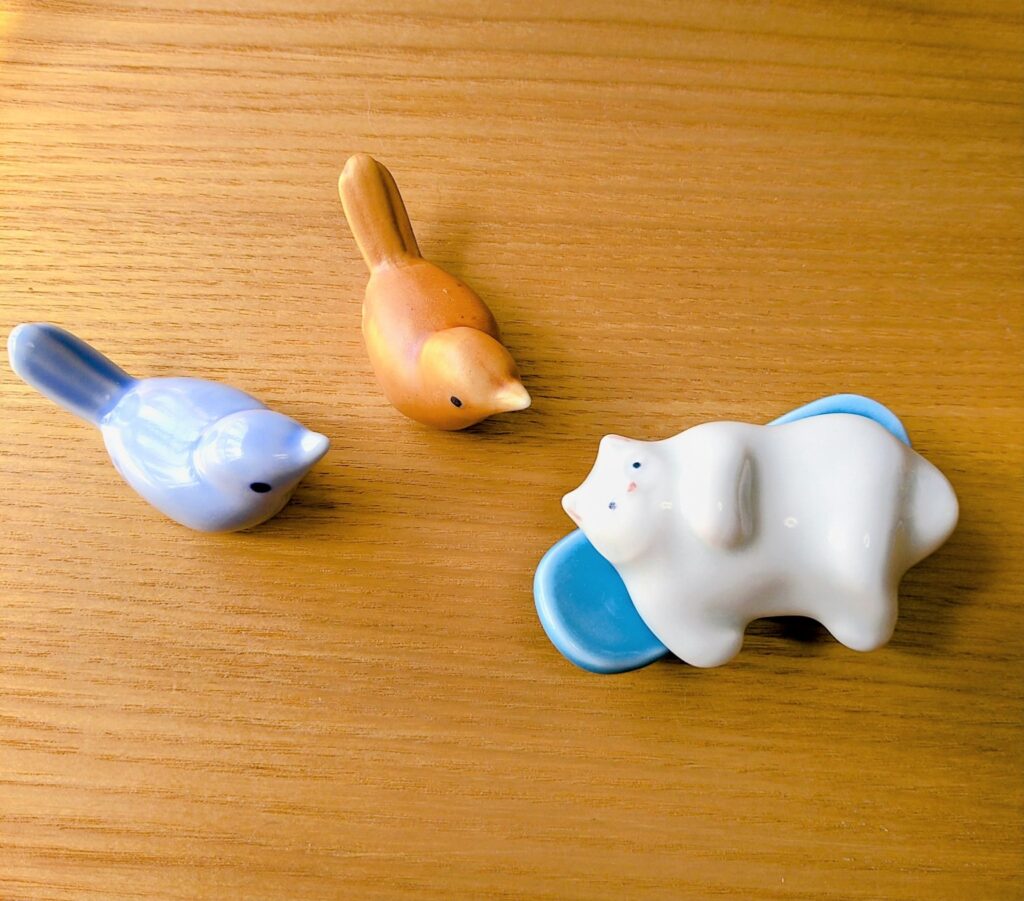
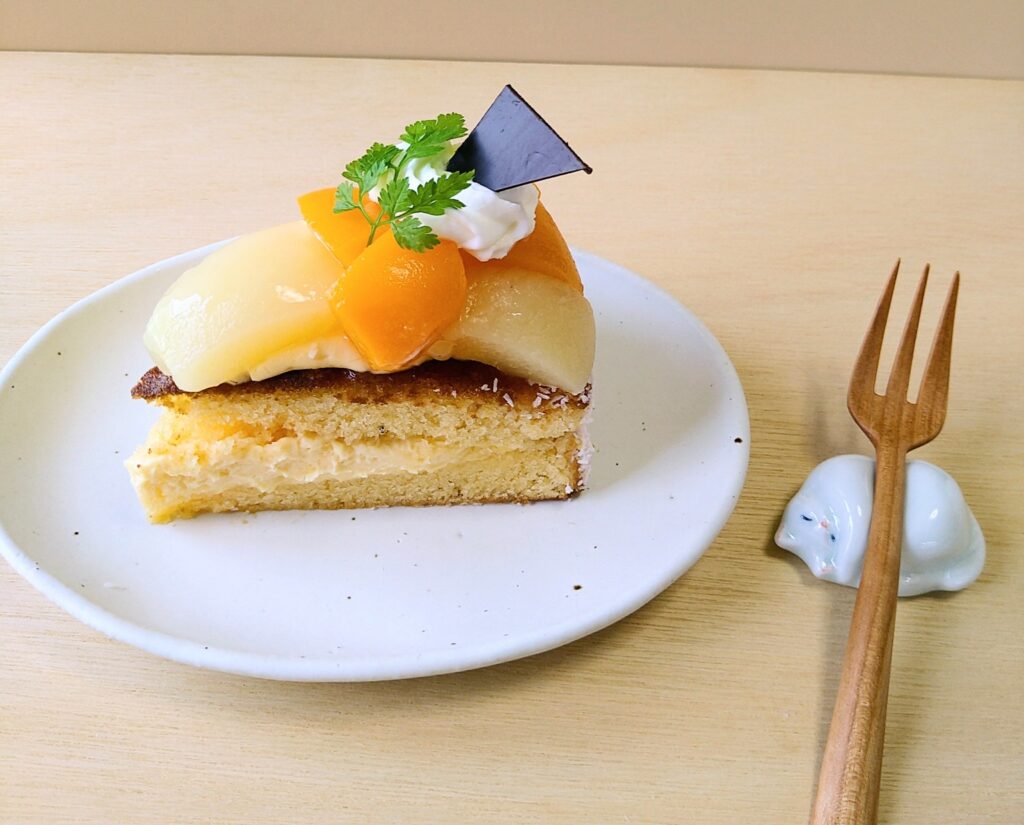
    Small bird-shaped chopstick rests
    paired with simple dessert forks.

    Some people even use them to hold notes like a small paperweight, or simply display them as decorative objects.


    A Variety of Materials

    Chopstick rests come in many different materials.

    Ceramic is one of the most common, often seen in traditional Japanese tableware.

    Glass chopstick rests feel light and cool, making them especially popular in summer.

    Wooden chopstick rests bring a warm, natural feeling to the table.

    There are also stainless steel designs, which give a clean and modern impression.


    A Small Pleasure on the Table

    I enjoy using chopstick rests. Even with a simple meal, having one on the table makes the setting feel just a little more thoughteful.

    Before I eat, I think about which one to use. If there’s shrimp in the dish, I reach for the shrimp-shaped one. Sashimi calls for the wasabi one. If someone who loves cats is coming over, I want to put out the cat one. It takes just a few seconds — but it’s one of the small things I look forward to.

    When eating with family, they can sometimes become a small conversation starter. Eating alone, I noticed something else: a chopstick rest gives the eye somewhere to land. I used to eat while looking at a screen. I do that less now.

    They can also reflect the seasons — glass feels cool and light in summer, while warmer tones feel more at home in winter. Changing them to match the dish or the tableware is one of the small pleasures they bring. A small object, quietly changing how a meal feels.


    Closing

    A chopstick rest is a very small object.
    Not essential, yet quietly pleasing.

    A Guide to Japanese Chopstick Rests

  • Chikazawa Lace Handkerchiefs from Japan

    Delicate in appearance, yet easy to use every day.

    Chikazawa Lace handkerchiefs are not made to be saved for special occasions, but to be carried and enjoyed as part of daily life.

    A playful pizza motif, neatly finished even on the back.

    Pizza and the word “buono,” expressed in lace.

    What makes them special

    Founded in 1901 in Motomachi, Yokohama, Chikazawa Lace has long been known for its craftsmanship.

    While staying true to that solid foundation, they continue to explore new expressions.

    When people think of lace, they often imagine white floral patterns, but Chikazawa Lace offers designs that feel a little unexpected — motifs like food, words, and small touches of humor that gently catch your eye.

    New designs are released regularly, and many people look forward to what comes next.

    Approachable in price and easy to choose, they work beautifully as a small gift or simply something to enjoy for yourself.

    They’re also made to last — even after washing, the lace holds its shape.

    Made from soft cotton, they’re absorbent and easy to use every day.


    From top: smelt fishing, a roll cake, origami (crane), and rock climbing.

    Traditional motifs from Itsukushima Shrine, delicately expressed in lace.

    Closing

    This is what drew me to Chikazawa Lace —
    a quiet kind of beauty that slips naturally into daily life.