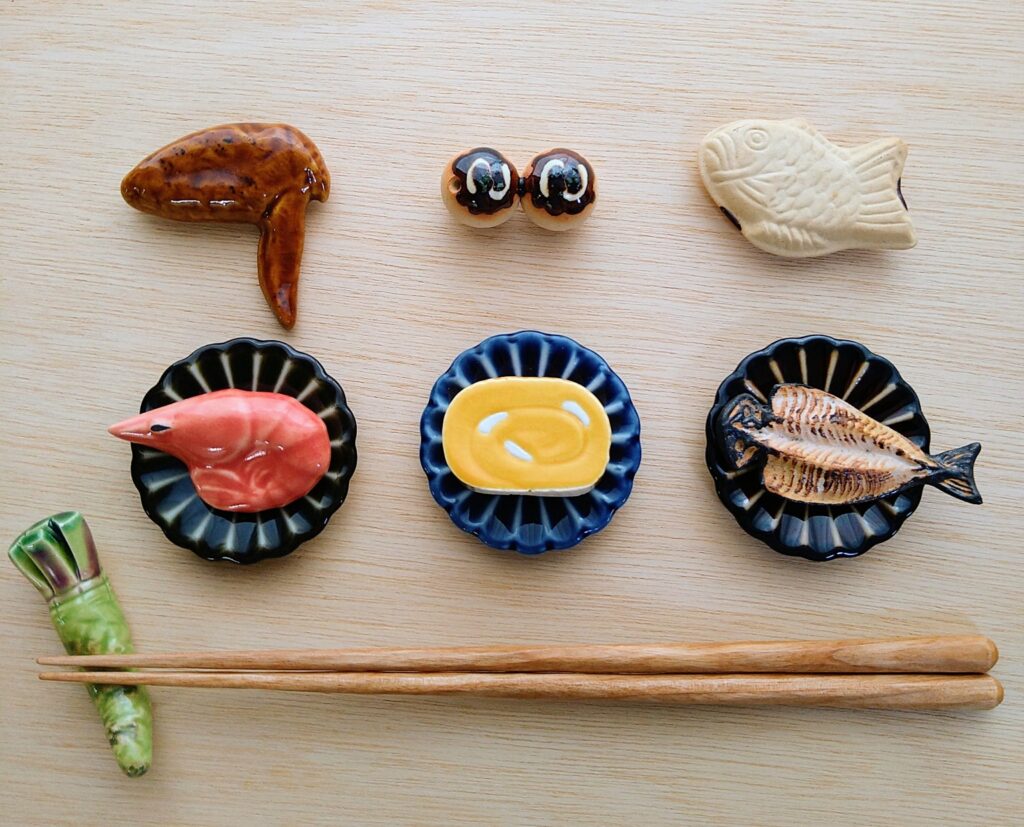
I finally got a chopstick-rest rest.
Of course, each piece is cute on its own.
But when you put a chopstick rest on its rest, the cuteness doubles.
Note: A “chopstick-rest rest” is a plate-shaped chopstick rest.
(That’s just what I call it.)
Small objects from everyday life in Japan that quietly bring joy to daily moments.
I finally got a chopstick-rest rest.
Of course, each piece is cute on its own.
But when you put a chopstick rest on its rest, the cuteness doubles.
Note: A “chopstick-rest rest” is a plate-shaped chopstick rest.
(That’s just what I call it.)
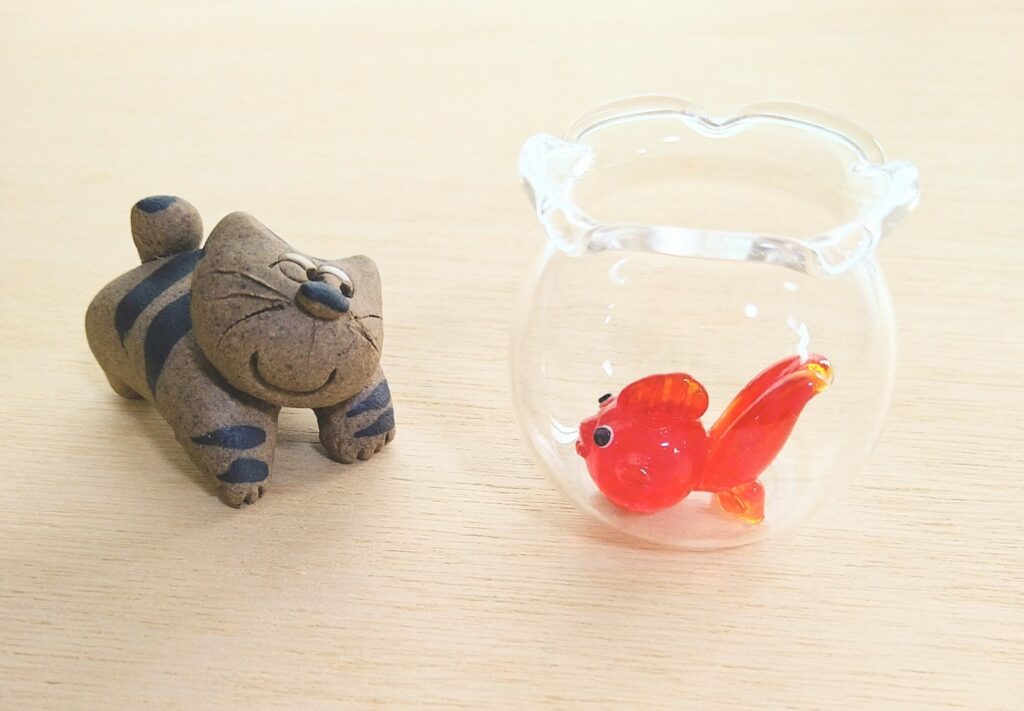
Every little ornament is starting to look like a chopstick rest.
Maybe I’m tired.
If it still looks that way tomorrow, I might put my chopsticks on one.
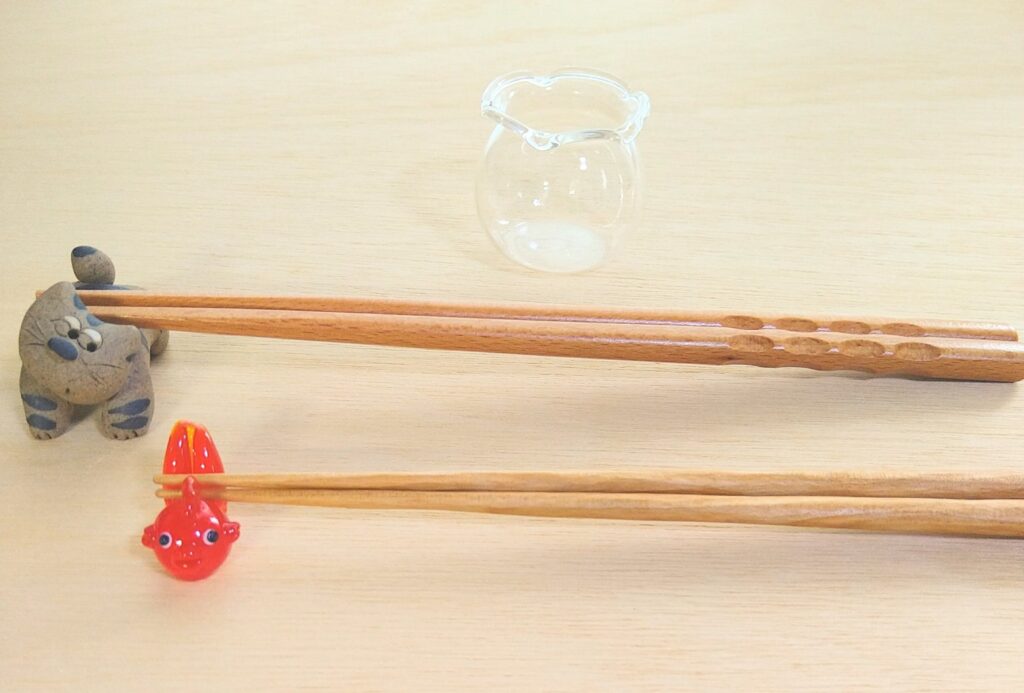
Turns out they were chopstick rests.
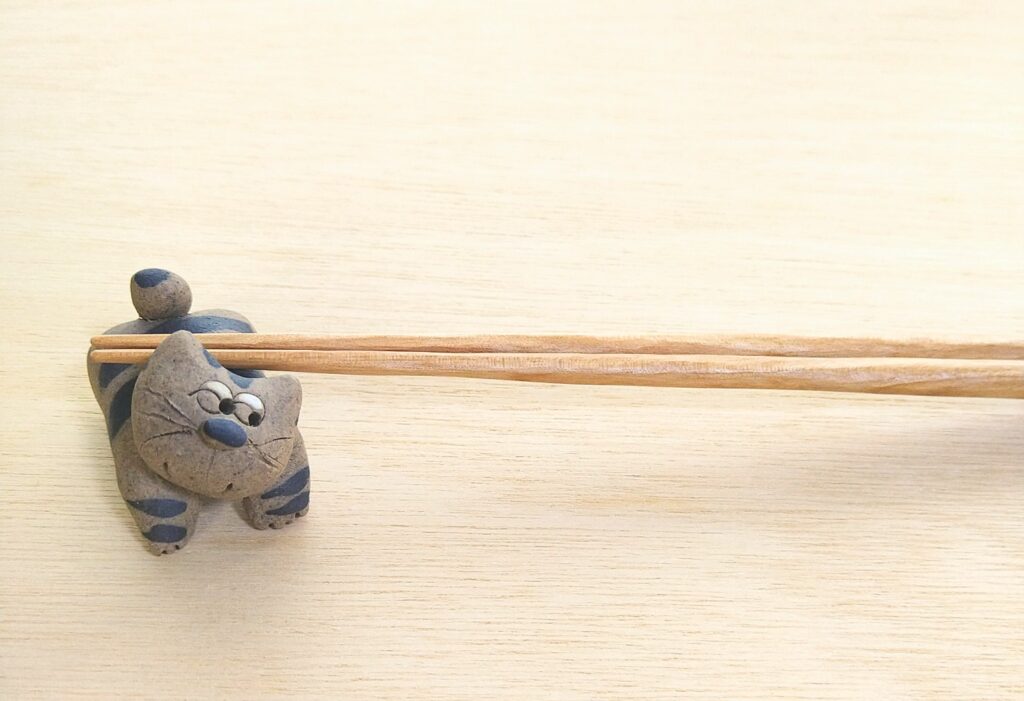
Especially the cat.
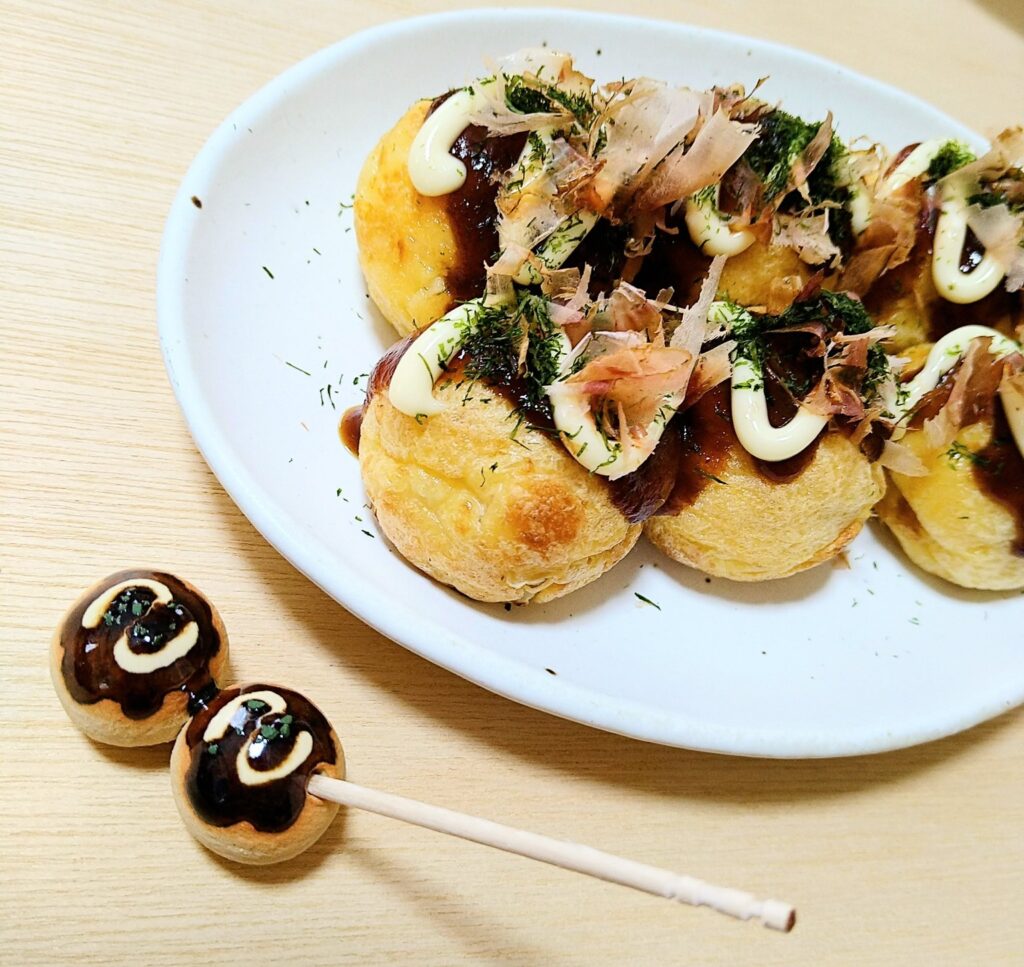
This takoyaki chopstick rest is a piece of Mino ware made by Ihoshiro Kiln.
The sauce, mayonnaise, and green seaweed are all carefully recreated. The golden-brown color is surprisingly realistic, and sometimes it looks more like takoyaki than the real thing.
The design features two connected takoyaki, with a space between them to rest your chopsticks. There’s also a small hole at one end where you can insert a toothpick. It’s a playful design, but a practical one too. I often use it to hold bamboo skewers or toothpicks when making takoyaki.
It looks charming on its own, but it’s even more fun paired with a spatula-shaped chopstick rest. Lining up two or three sets creates a miniature festival-stall atmosphere that’s hard not to smile at.
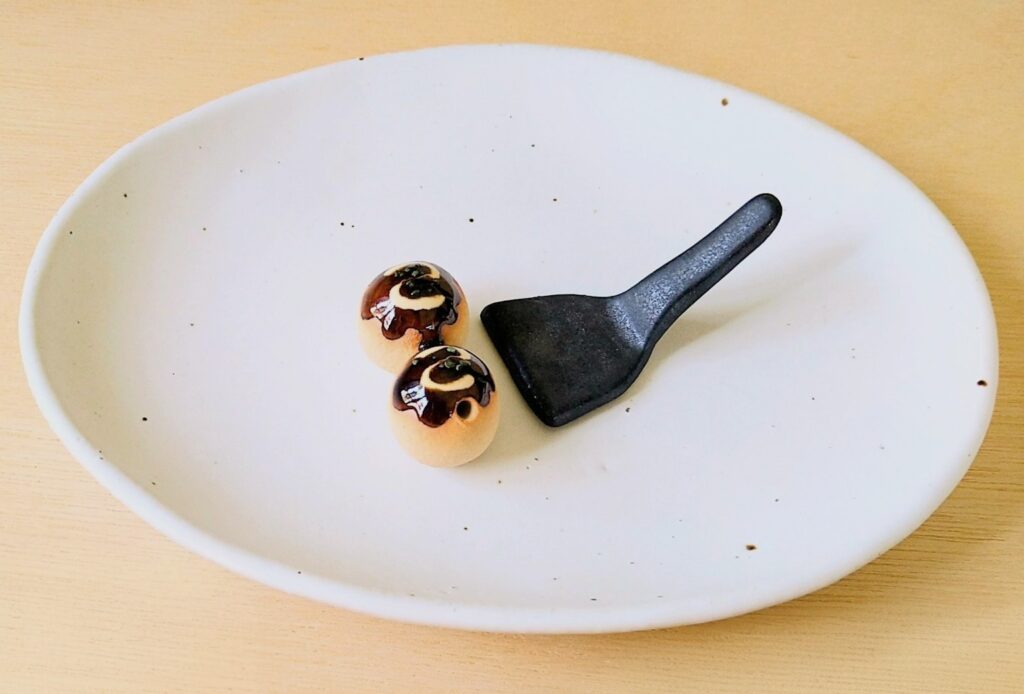
A handmade ceramic rest shaped like Japan’s most beloved street snack.
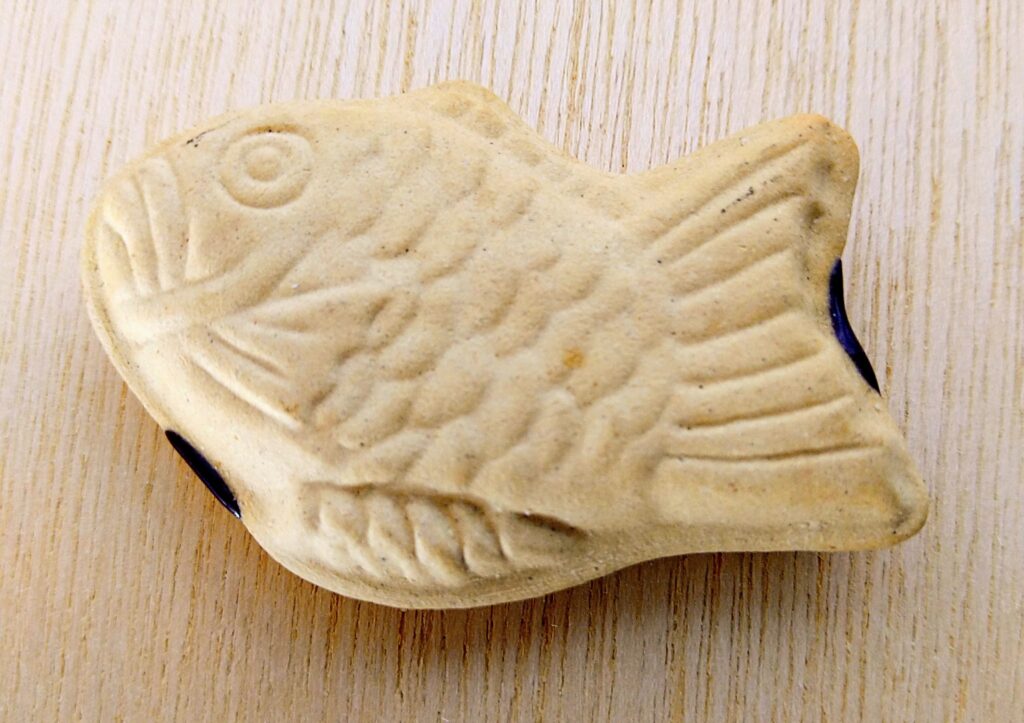
Chopstick rests are small tools used in Japan to keep chopsticks off the table during a meal. This one is shaped like taiyaki — a fish-shaped cake filled with sweet red bean paste that has been sold at street stalls across Japan for over a century.
It is made by Ihoshiro Kiln, a workshop in Mizunami, Gifu, known for handcrafting over 500 varieties of Mino ware chopstick rests.
The shape follows the taiyaki closely. Anko peeks out slightly from the belly and the tail — the kind of detail that makes you look twice. The surface has a gentle matte texture rather than a smooth glaze, which keeps chopsticks from rolling. Simple, but considered.
Each piece is handmade, so there are slight variations in color and form. That’s part of what makes them feel like objects rather than products.
Among taiyaki enthusiasts in Japan, there’s a familiar distinction worth knowing about.
Cast iron molds pressed over an open flame, each taiyaki made individually. Thin, crispy skin. Anko all the way to the tip of the tail.
A connected plate mold bakes several at the same time. Softer, fluffier, more consistent. Common at chain shops and food courts.
Neither is better. They’re just different, and people tend to have opinions. Those in the know will often check which type a shop makes before ordering.
Natural or farmed — the chopstick rest sits quietly on the table while the debate carries on. And for anyone who loves taiyaki, whichever side they’re on, it tends to land.
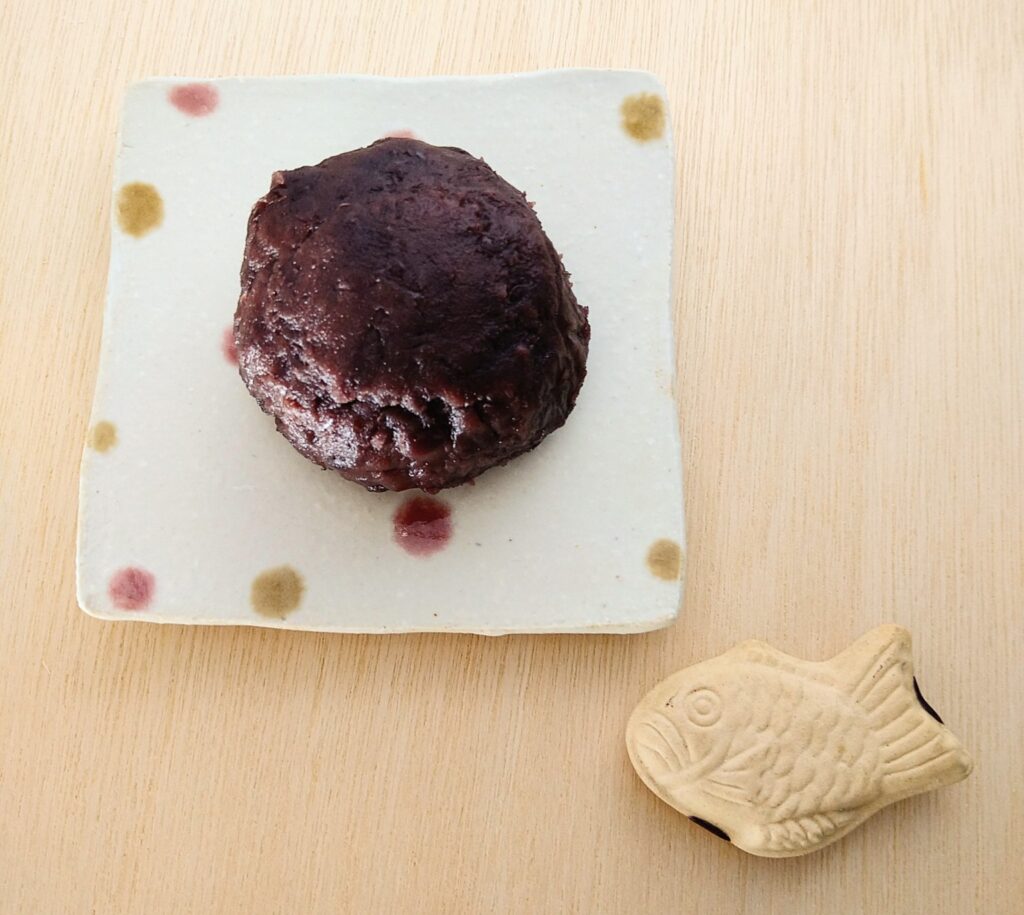
Ohagi with a taiyaki-shaped chopstick rest
It works as a chopstick rest, but also holds a fork or spoon.
Set one beside a cup of tea and something small to eat, and the table feels a little warmer than it did before.
Not dramatic — just quiet and pleasant.
Tai (sea bream) is a symbol of celebration in Japan. Small, considered, and easy to send.
If you have opinions about natural vs. farmed, these are essentially required.
Anyone who takes pleasure in small, well-chosen objects on a set table.
Drawn to things made by hand, with the slight imperfections that show it.
Ships internationally.
Ships internationally.
Official shop — Japan domestic shipping only.
A small object, but one that brings a bit of Japan’s street food culture to the table.
→ Back to: A Guide to Japanese Chopstick Rests
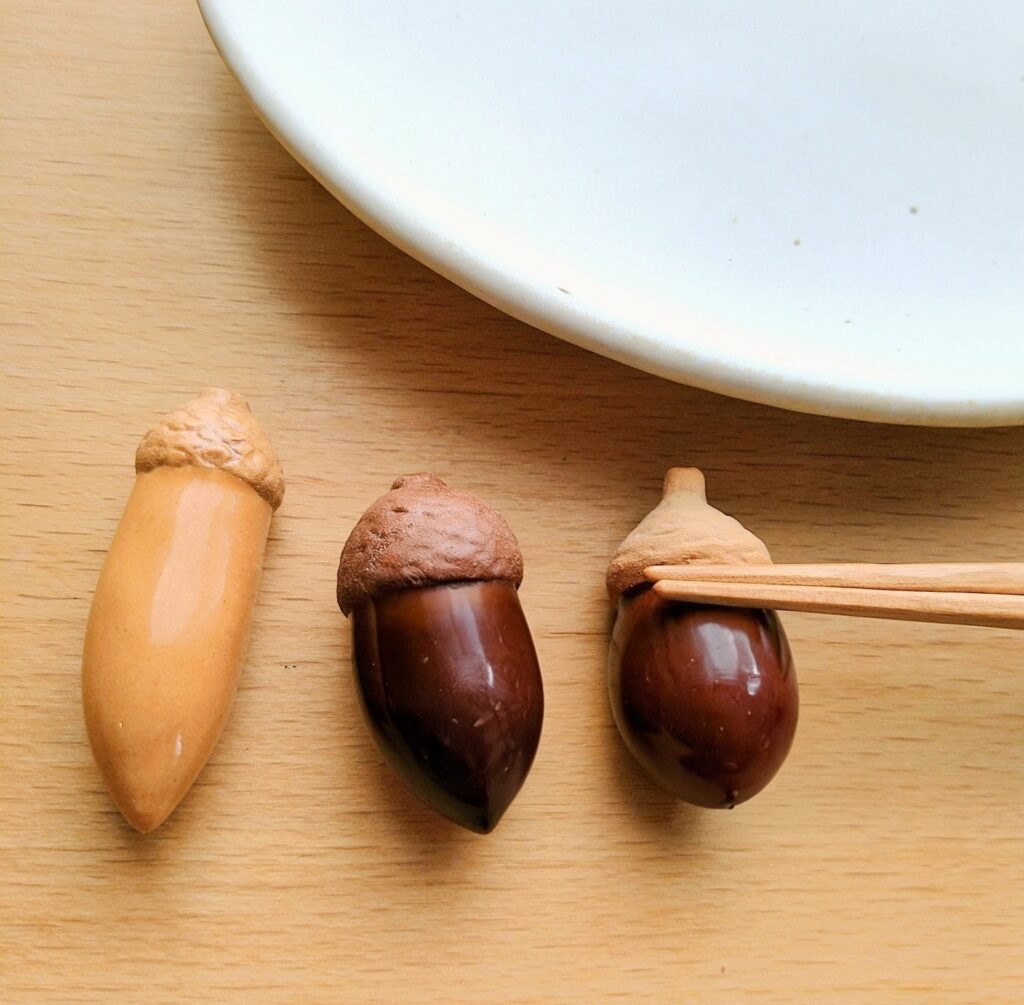
These acorn-shaped chopstick rests are made by Ihoshiro Kiln, a workshop in Mizunami, Gifu, known for handcrafting over 500 varieties of chopstick rests in Mino ware.
Design and Feel
Plump, glossy, and just like real acorns — they’re almost too cute to be a chopstick rest. I have three different varieties, and seeing them lined up together is half the appeal.
The body is smooth and gently rounded, while the cap has a slightly rough texture. Because of this, the chopsticks sit naturally between the two parts without rolling — a small but thoughtful detail.
They are slightly smaller than most chopstick rests, so they don’t stand out too much, but quietly bring a sense of season to the table.
The Varieties
The ones I use are mizunara, arakashi, and matebashii — all different kinds of acorns found in Japan.
Other varieties include akagashi and shirakashi.
I hadn’t really paid attention to the names or kinds of acorns before, but since using these, I’ve started to notice them more when autumn comes.
Who These Are For
A good fit for anyone who enjoys seasonal touches on the table, anyone looking for a small and considered gift from Japan, or anyone who appreciates handmade ceramics in everyday use.
Where to Buy
Available internationally through Musubikiln.com and Minimaru.com, both of which ship overseas.
Closing
They’re small, but in a quiet way, they’ve changed how I notice the season.
→ Back to: A Guide to Japanese Chopstick Rests
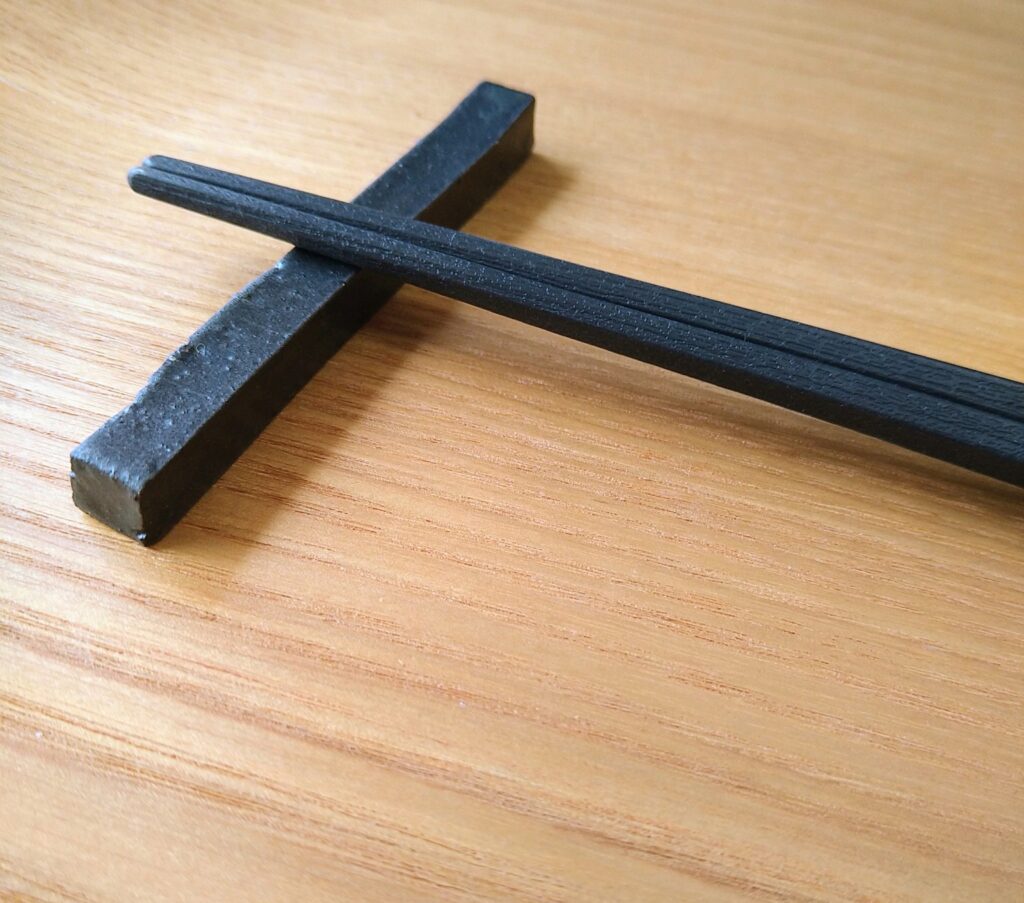
The first chopstick rest I bought was this one.
I came across it at a tableware shop while picking out a black plate — and it came home with it.
Design and Details
The color is a muted black with a soft sheen. It isn’t a uniform, deep black, so it doesn’t stand out too much and blends naturally into the table setting.
The shape isn’t perfectly straight, and that slight irregularity gives it a handmade warmth.
How I Use It
It’s a little longer than most chopstick rests, which makes it easy to use with chopsticks, spoons, and forks.
It pairs naturally with both Japanese and Western tableware.
Closing
Simple, but something I find myself coming back to.
It was the first, and it’s still on the table.
→ Back to: A Guide to Japanese Chopstick Rests
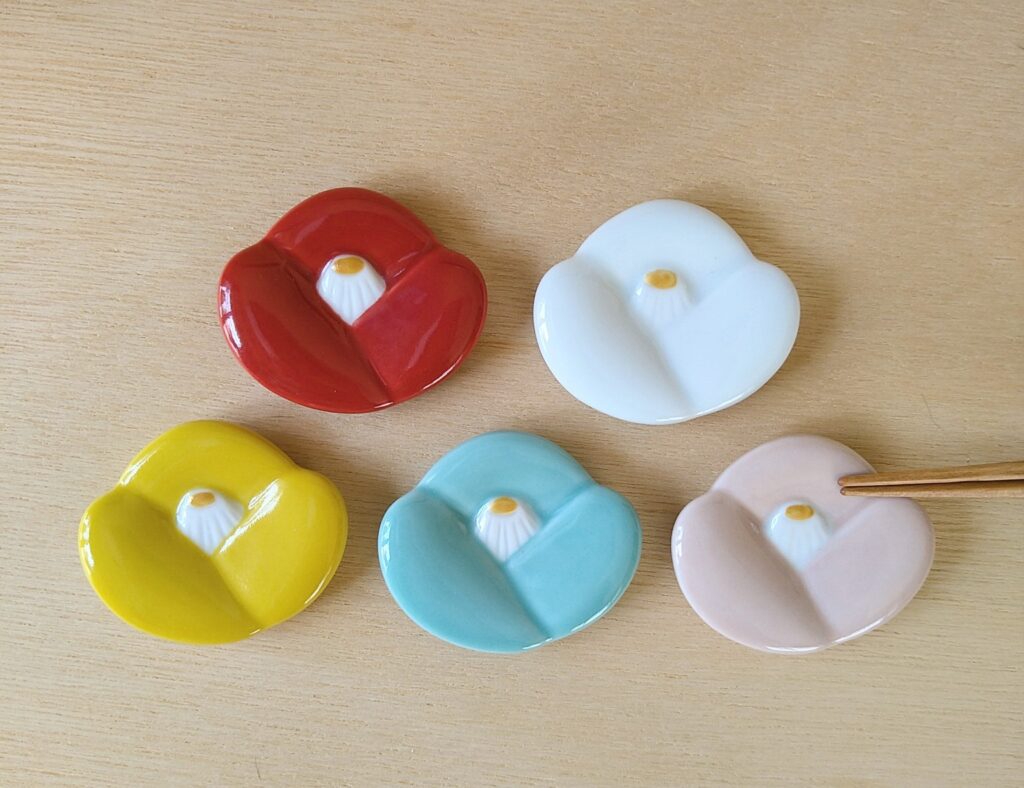
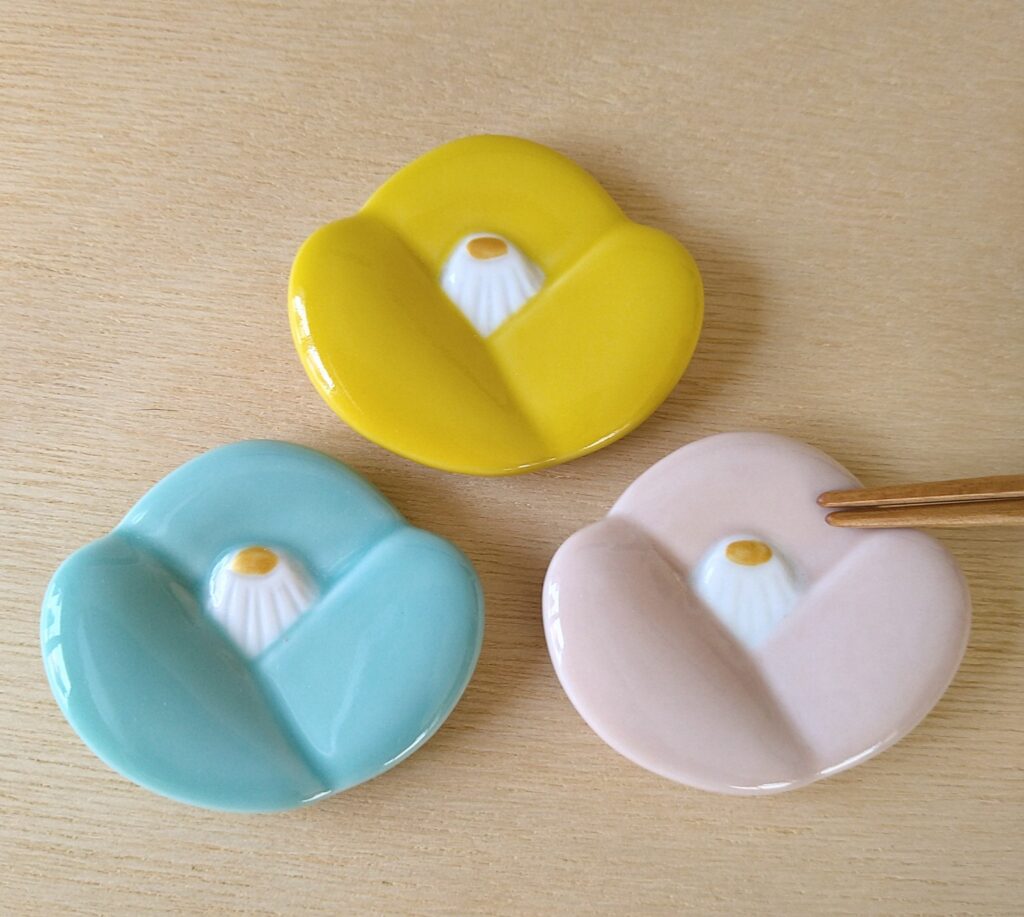
These camellia-shaped chopstick rests are made by Kyosen Kiln, a workshop producing Hasami ware in Nagasaki Prefecture.
Hasami ware has a history of over 400 years and is known for its durable, practical porcelain with clean, simple designs on a white base.
Design and Feel
The petals are gently rounded with a soft, slightly raised surface.
The wider surface helps keep chopsticks steady, making them easy to use.
The Colors and Seasons
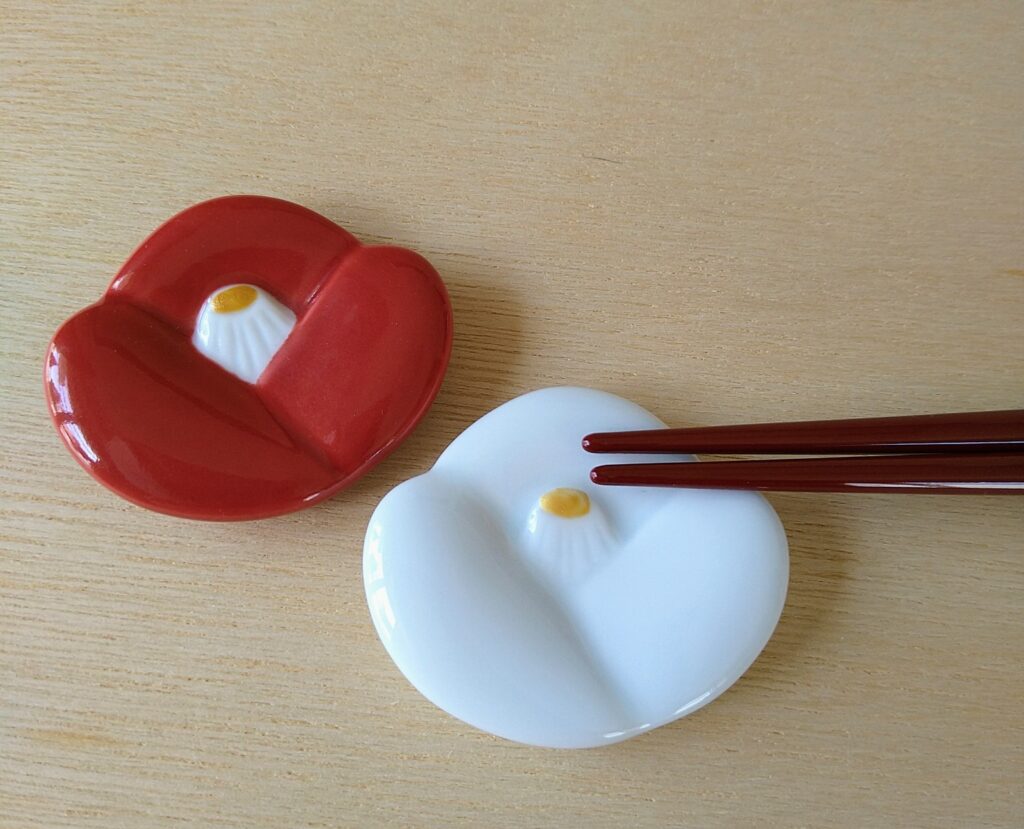
Camellia is often associated with winter in Japan.
I find myself reaching for the red and white ones around the New Year, when those colors feel especially fitting.
The softer tones feel more at home in spring.
The different colors bring a quiet sense of the changing seasons to the table.
Who These Are For
A good fit for anyone who enjoys seasonal touches on the table, anyone looking for a traditional Japanese ceramic gift, or anyone who appreciates the quiet beauty of flower-shaped tableware.
Where to Buy
Available on Rakuten Japan (Red / White)
Key Details
Closing
Small and understated, but the right color at the right time of year makes a difference
→ Back to: A Guide to Japanese Chopstick Rests
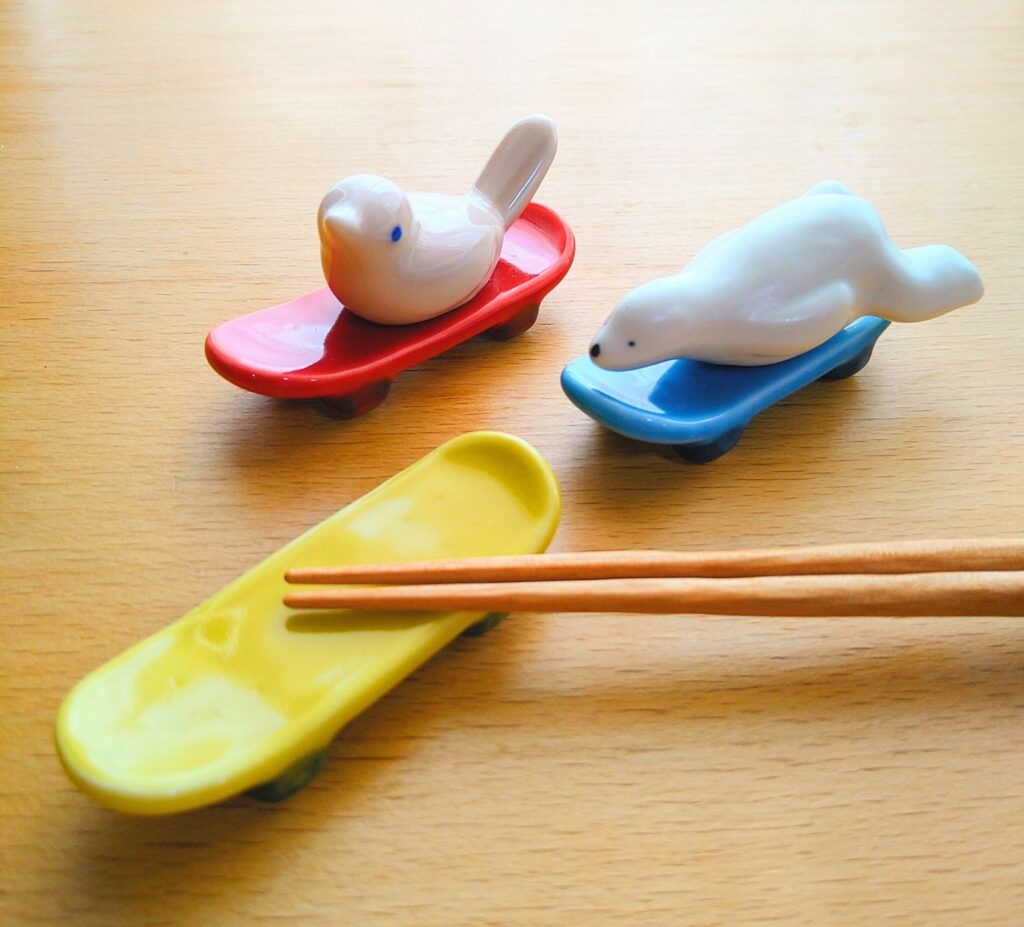
In Japan, there are chopstick rests shaped like flowers, animals, and even food.
Among them, I had never seen one shaped like a skateboard before.
This skateboard-shaped chopstick rest is made by Kitagawa Misen Kiln, a workshop producing Arita ware in Saga Prefecture.
Arita ware has a history of over 400 years and is known for its refined white porcelain and intricate craftsmanship.
Design and Details
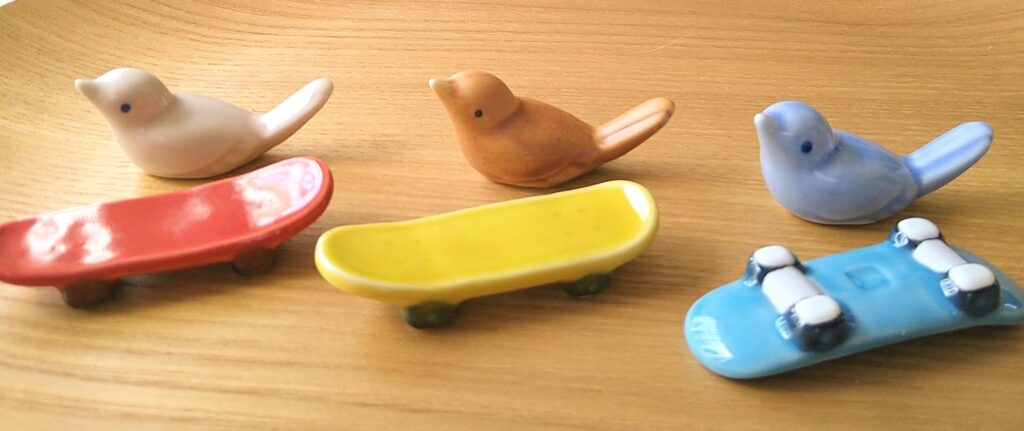
It comes in three colors — red, yellow, and turquoise blue. The underside is decorated with tiny wheels, making even the hidden details charming.
Because of its wider shape, it can hold not only chopsticks but also spoons and forks.
A Small Moment of Playfulness
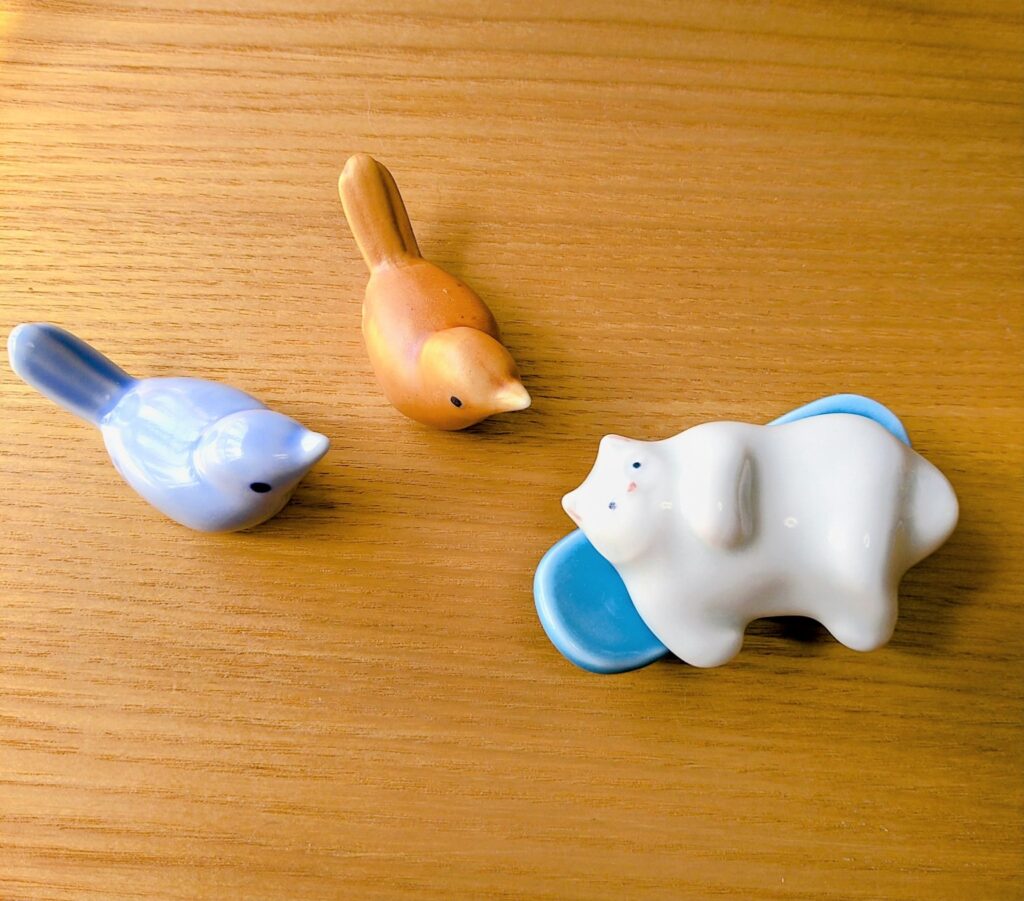
When you place an animal-shaped chopstick rest on top, it almost looks as if it’s riding a skateboard.
Though small, it adds a quiet touch of playfulness to the table.
Who These Are For
A good fit for anyone who enjoys unexpected details on the table, anyone looking for a unique Japanese ceramic gift, or anyone who wants to add a little fun to everyday dining.
Where to Buy
Key Details
Closing
A skateboard in porcelain, small enough to sit beside a bowl of rice. It shouldn’t work, but it does.
In summer, I often reach for glass chopstick rests — they feel light and quietly cool on the table.
But this year, I’ve been using these small uchiwa-shaped ones instead.
Design and Details
Made by Ihoshiro Kiln in Gifu Prefecture, each piece carries a traditional Japanese pattern — asanoha (hemp leaf), soft swirls, and shippo (linked circles).
Each is shaped and painted by hand, so the details vary slightly from piece to piece.
The wider surface of the fan shape makes them easy to use, and even in pottery, they carry a quiet coolness that feels right for the season.
Colors
I chose a blue tone, which feels especially fitting for summer.
Other designs include soft florals like cherry blossom and peach, which would suit spring as well.
On the Table
Rooted in traditional Japanese patterns, they also sit comfortably alongside Western tableware — a small seasonal detail that works quietly in the background.
Who These Are For
A good fit for anyone who enjoys bringing seasonal touches to the table, anyone drawn to traditional Japanese patterns in everyday objects, or anyone looking for a summer gift with a quiet sense of craft.
Where to Buy
→Ihoshiro Kiln Official Store (Japan)
→ Rakuten
Key Details
Closing
Glass in summer is classic. But a ceramic fan is a quieter kind of cool.
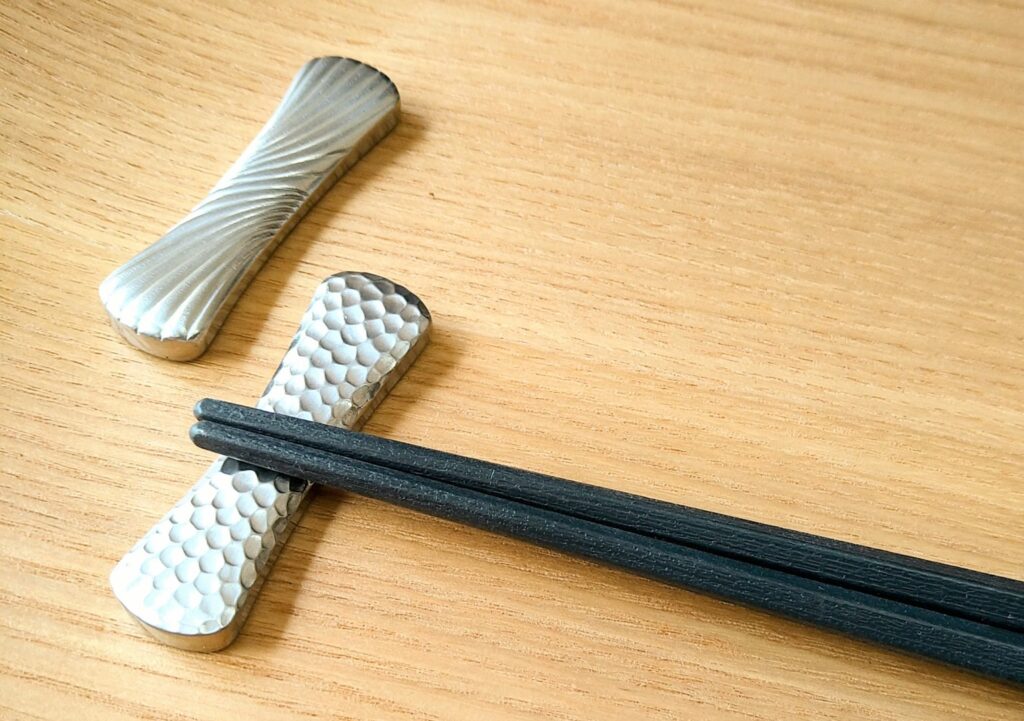
Stainless steel chopstick rests are durable and easy to wash — practical for everyday use in a way that ceramic ones sometimes aren’t.
These are made by Nagao, a manufacturer based in Tsubame-Sanjo, Niigata, a region that produces around 90 percent of Japan’s metal tableware.
Design and Feel
The matte stainless steel and simple shape give them a calm, understated look.
They have a bit of weight, so they stay stable on the table without shifting around.
The hammered finish adds a quiet texture without drawing attention to itself, and they blend naturally into the table whatever else is on it.
Who These Are For
A good fit for anyone looking for a chopstick rest they can use every day without thinking about it, anyone who prefers the practicality of metal over ceramic, or anyone looking for a simple, well-made Japanese kitchen item as a gift.
Where to Buy
Nagao Tsubamesanjo Chopstick Rest
→ Amazon US
→ Amazon Japan
→ Rakuten
Key Details
Closing
Stainless steel keeps the table looking clean and unfussy.
Easy to care for, easy to use — the kind of thing you don’t get tired of.