On weekends, when I cook for my family,
or when I want to gently reset after a long day,
I make dashi from kombu and bonito flakes.
A soft, familiar aroma — one I’ve known since childhood —
quietly fills the kitchen.
I add a small pinch of salt to the first broth
and taste it as it is.
The gentle umami slowly spreads through my body,
and I can feel myself begin to relax.
On mornings like this,
it somehow feels as if the day will go well.
This kind of gentle aroma and flavor
has always existed in Japanese kitchens.
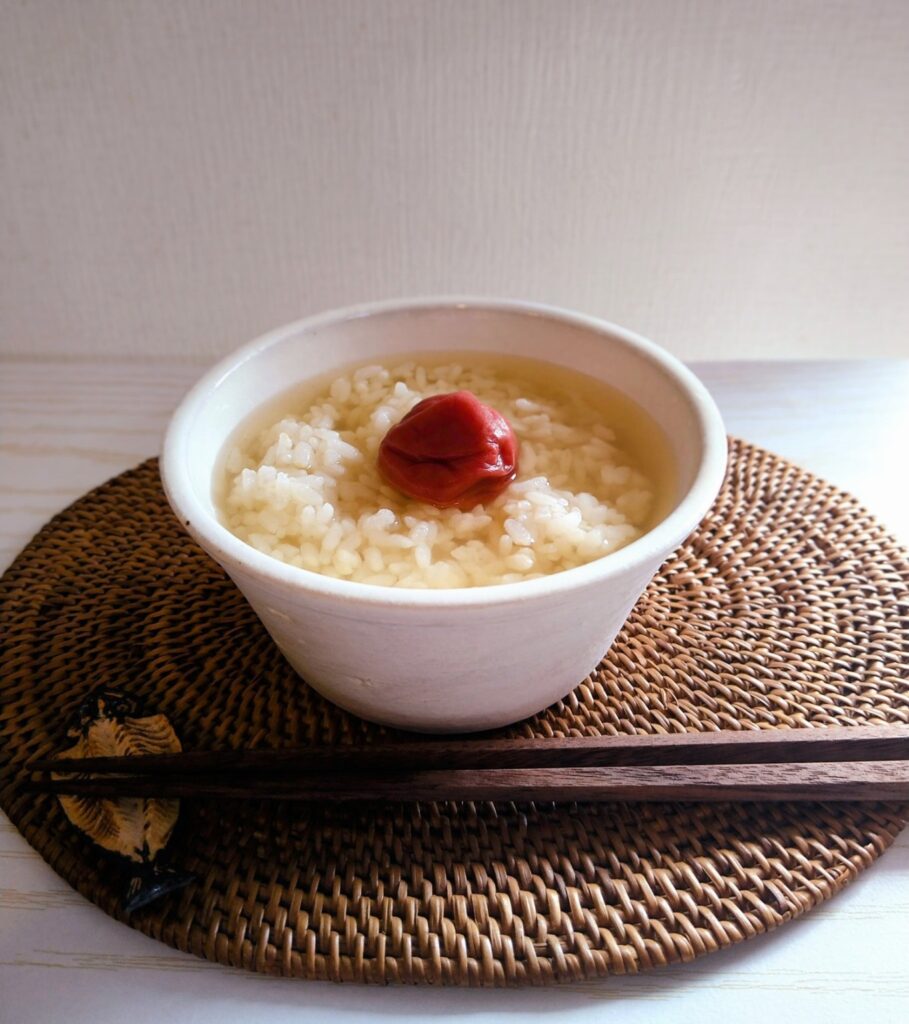
Sometimes it’s enjoyed simply with rice
and a single umeboshi.
What Is Dashi?
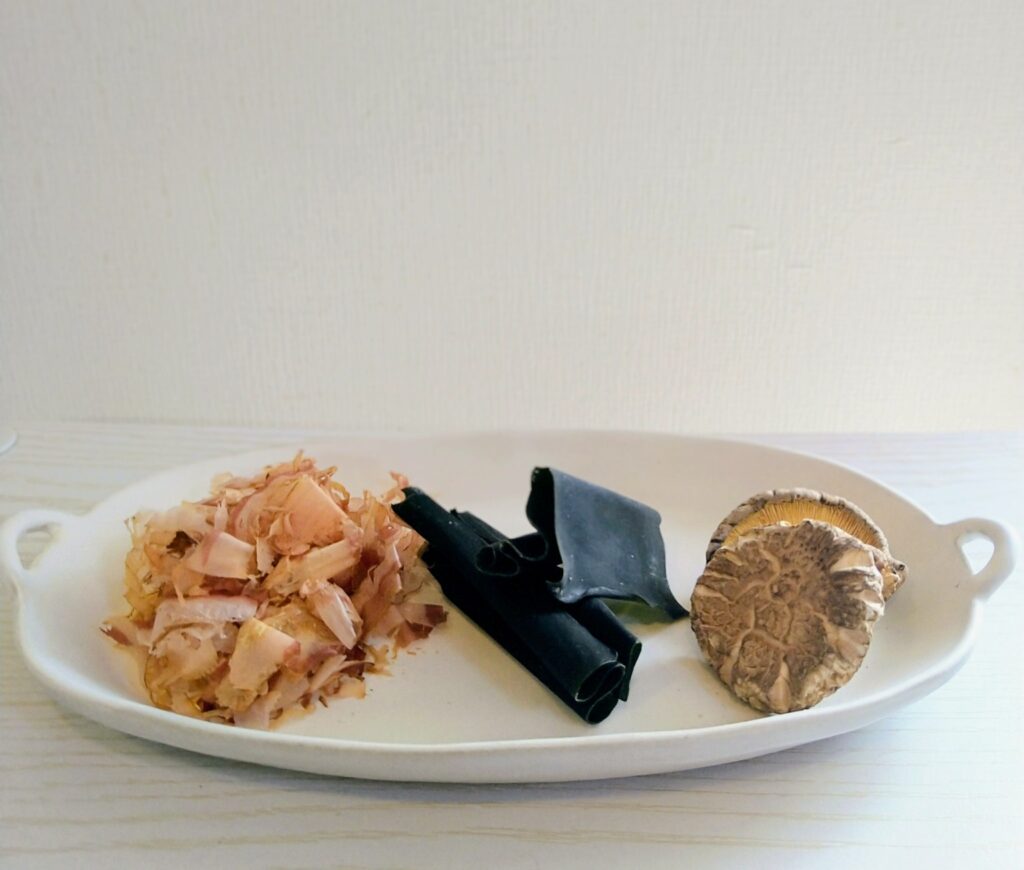
Dashi is the basic broth of Japanese cooking,
made from ingredients such as
bonito flakes, kombu, dried sardines,
and dried shiitake mushrooms.
It is naturally used in everyday dishes
like miso soup, tamagoyaki (rolled omelet),
udon, and rice bowls.
About Umami
The true charm of dashi lies in its umami.
There are three main types of umami:
Glutamic acid
(found in kombu, tomatoes, onions, cheese, green tea, and more)
Inosinic acid
(found in bonito flakes, dried sardines, and meats)
Guanylic acid
(found in dried shiitake mushrooms and other dried fungi)
Each has its own character,
but when combined,
they create a deeper, more rounded flavor.
With good dashi,
strong seasoning becomes unnecessary.
The dish simply feels complete.
How It Differs from Western Broth
If Western broths or stocks add richness and strength to a dish,
dashi works a little differently.
Rather than standing out in front,
it supports from underneath.
Instead of adding intensity,
it brings balance.
It highlights the natural flavors of ingredients
and gently brings the whole dish together.
Basic Method
Dashi is much simpler than it may seem.
In professional kitchens there are probably
many precise methods,
but at home it’s far more relaxed.
Soak kombu in water for several hours —
ideally up to a day.
Heat it gently and remove it just before boiling,
when small bubbles begin to appear along the edges.
Add bonito flakes to boiling water,
let them steep for a few minutes,
then strain.
Dried shiitake mushrooms can also be soaked in water.
They can be used as they are,
or gently heated for a deeper, richer broth.
An Easier Way
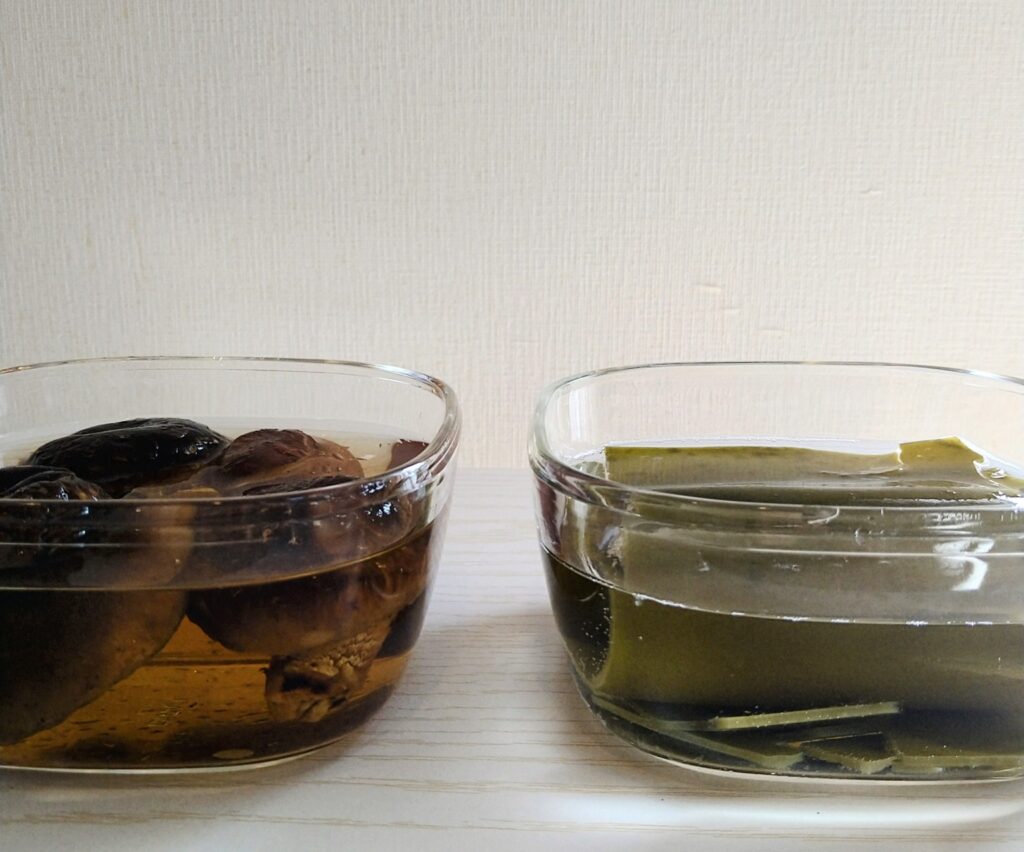
You can keep kombu or dried shiitake
in water in the refrigerator.
This way, dashi is always ready to use.
Simply bring the kombu water to a light boil
and add bonito flakes to create awase dashi.
Adding a little shiitake broth
makes the flavor even deeper.
You can also freeze dashi in ice cube trays.
Store the frozen cubes in an airtight container
so you can use only what you need.
Bonito-based dashi, however,
loses its aroma over time,
so it is best prepared fresh whenever possible.
An Even Simpler Way
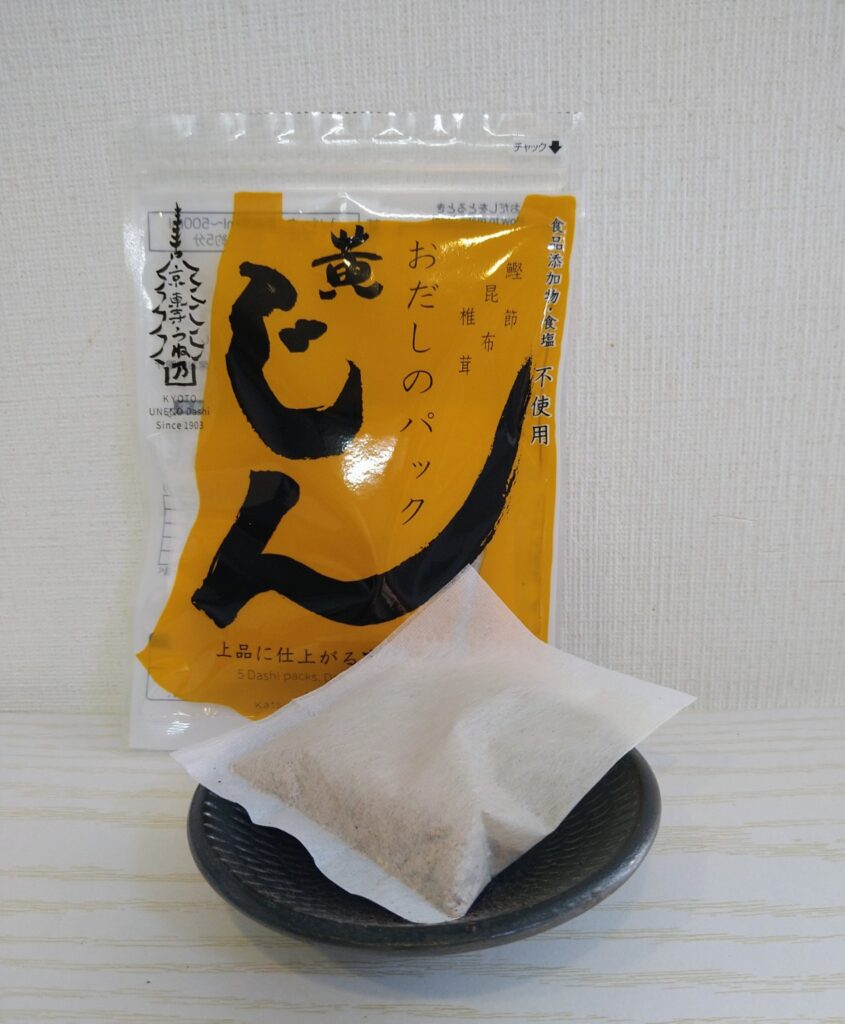
For everyday cooking,
dashi packets are an easy option.
Most packets contain a blend of ingredients
such as bonito flakes, kombu,
and sometimes dried shiitake.
There are also single-ingredient versions,
and plant-based blends made without fish.
Closing
If you are used to stronger flavors,
dashi may feel subtle at first.
But after tasting it a few times,
you begin to notice its quiet depth.
A gentle flavor that slowly warms
both body and mind.
Something reassuring
to have on the everyday table.
Leave a Reply