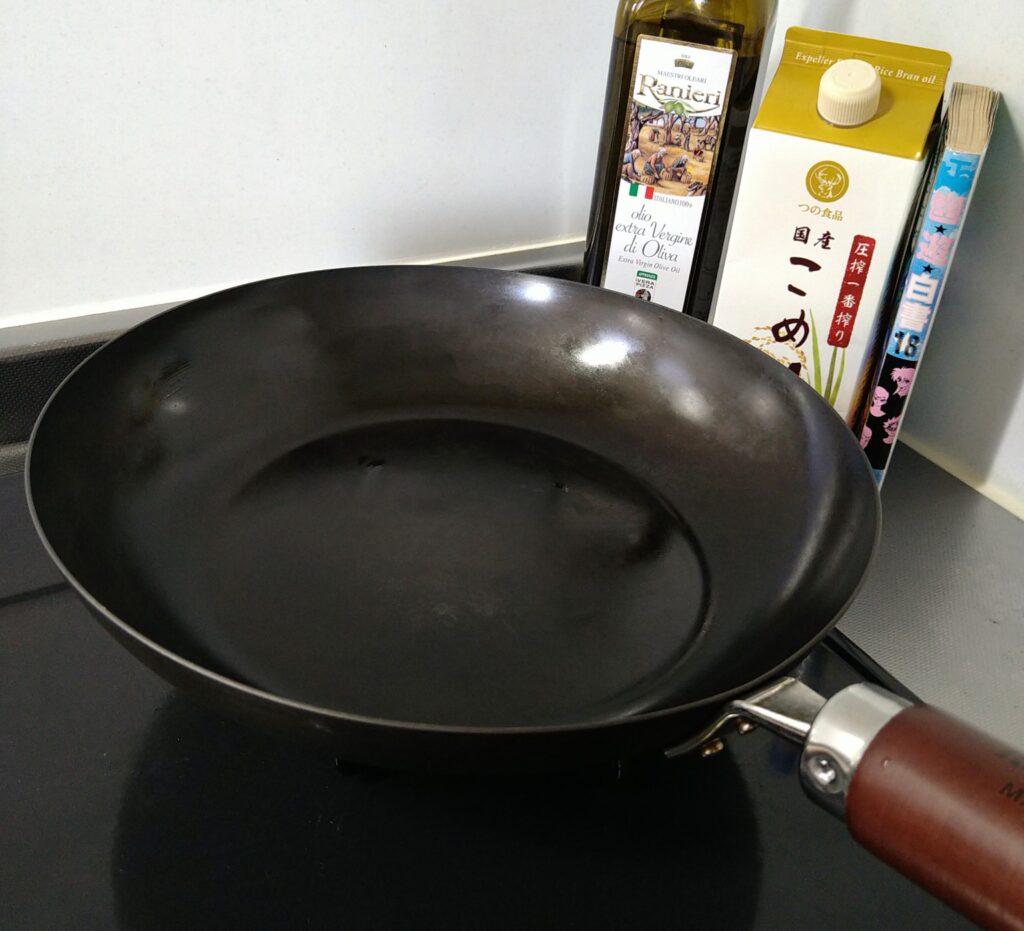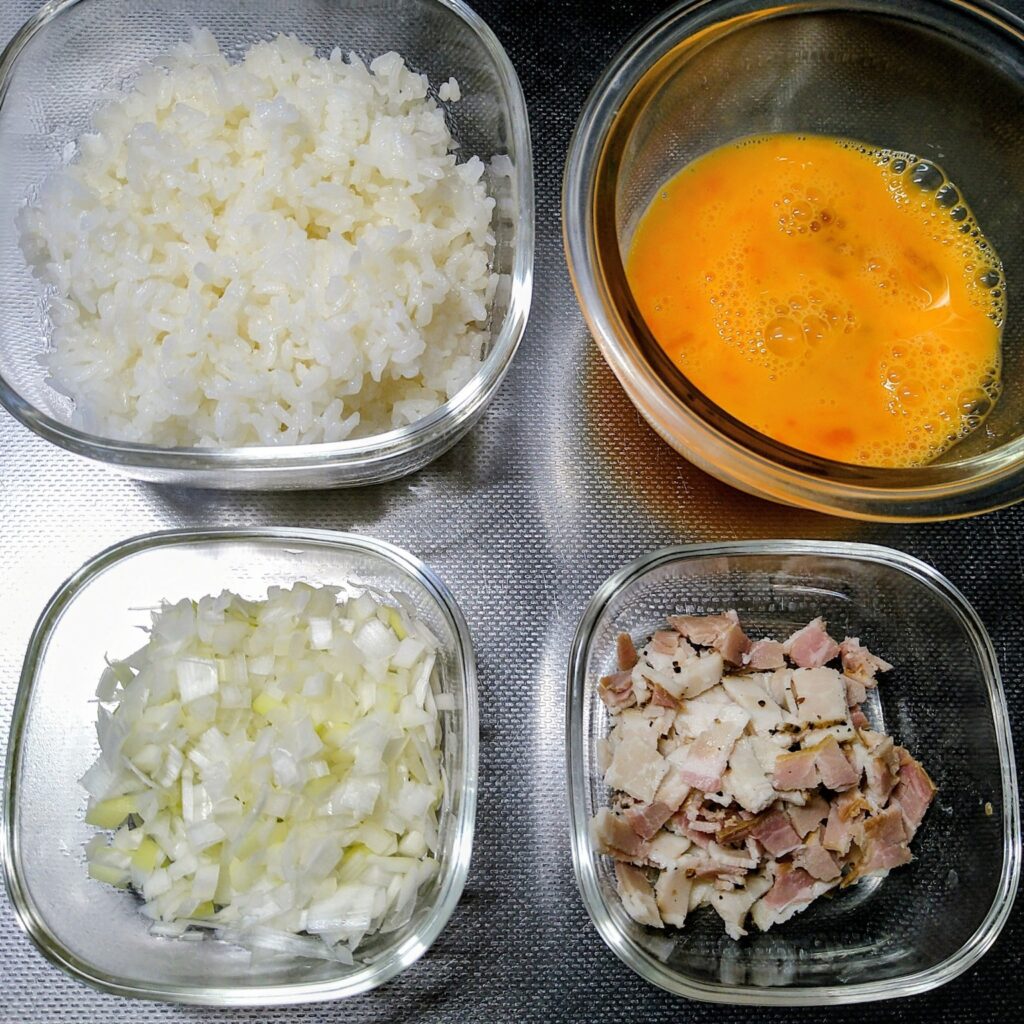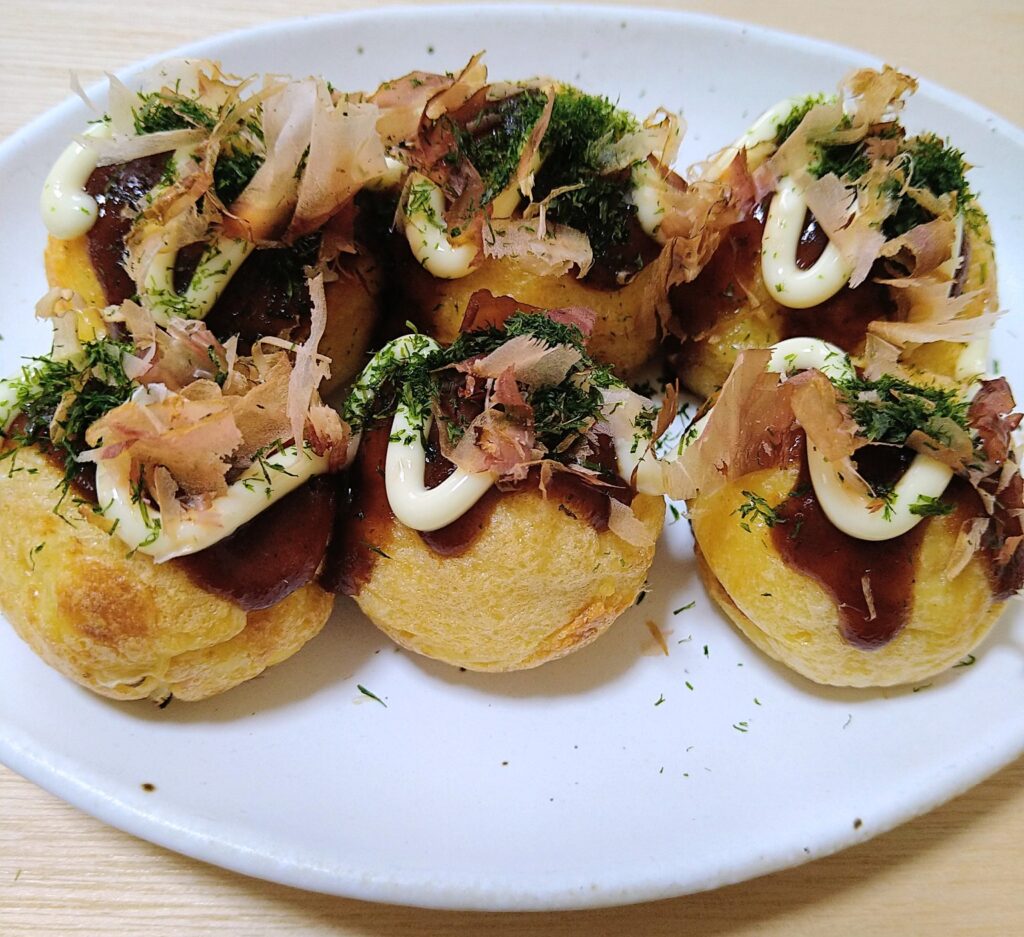
After all the trouble I went through with gyoza, I decided to try fried rice in the same iron pan.
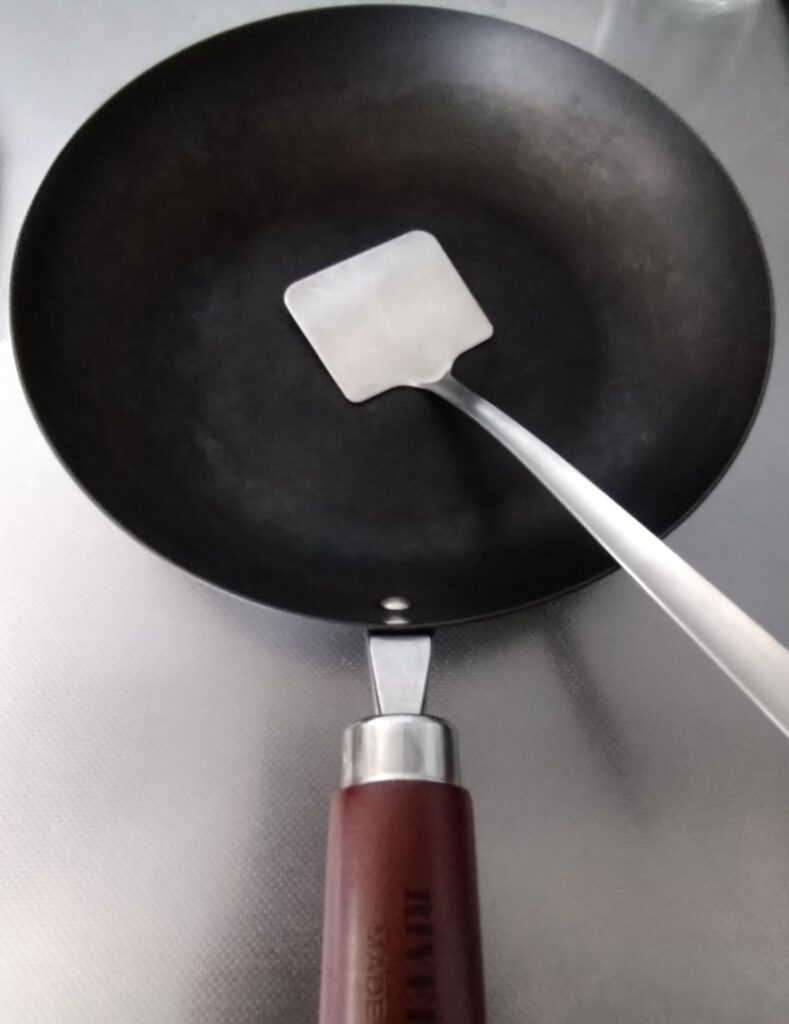
The lessons I’d learned from gyoza were simple: preheat thoroughly, coat the surface with enough oil, manage moisture carefully, and use a thin stainless steel turner when it’s time to release. I figured the same principles should apply to fried rice.
Preparing the Rice — No Water, No Exceptions
Before I started, I came across an article claiming that rinsing cooked rice removes excess starch and makes it easier to fry up fluffy and separated.
But I had the gyoza incident fresh in my memory. I’d rinsed the wrappers under water, and they stuck completely — a disaster. That experience made one thing clear: getting the rice wet was not an option.
Instead, I left the freshly cooked rice to sit for about 30 minutes, letting the surface dry out slightly before using it.
How I Cooked It
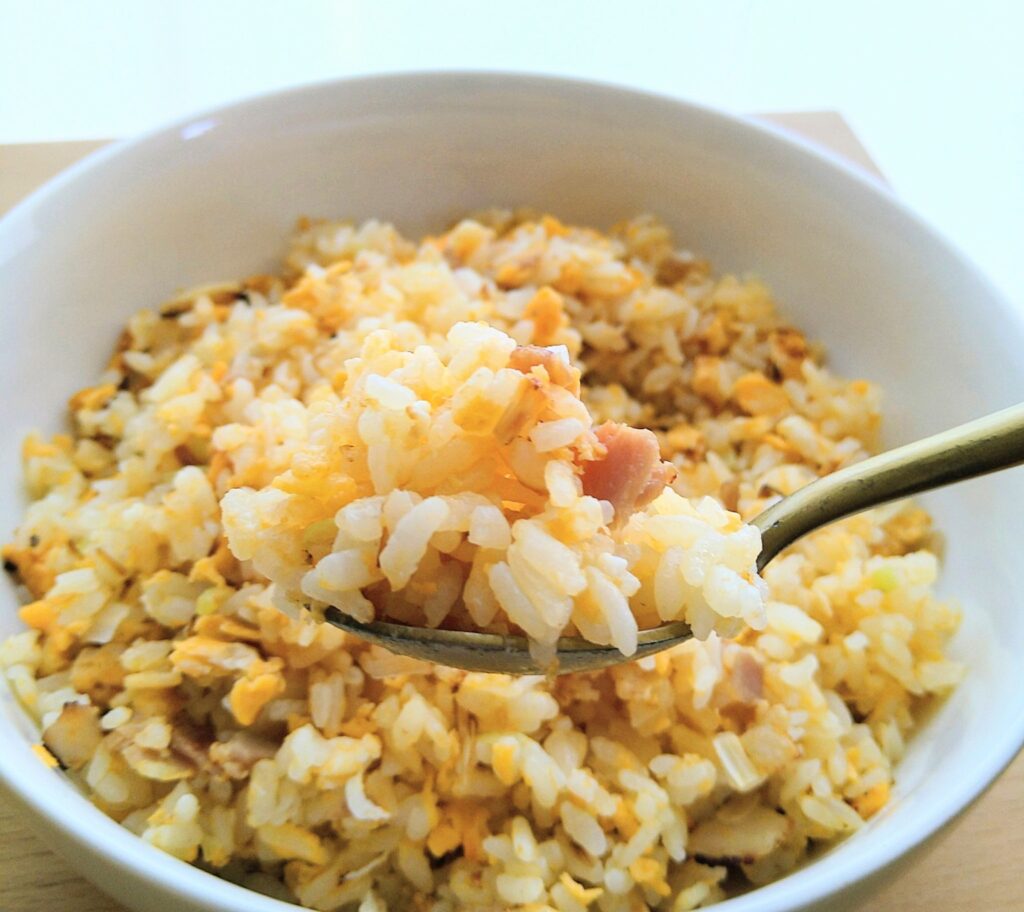
The ingredients were straightforward: green onion, bacon, two eggs, and rice.
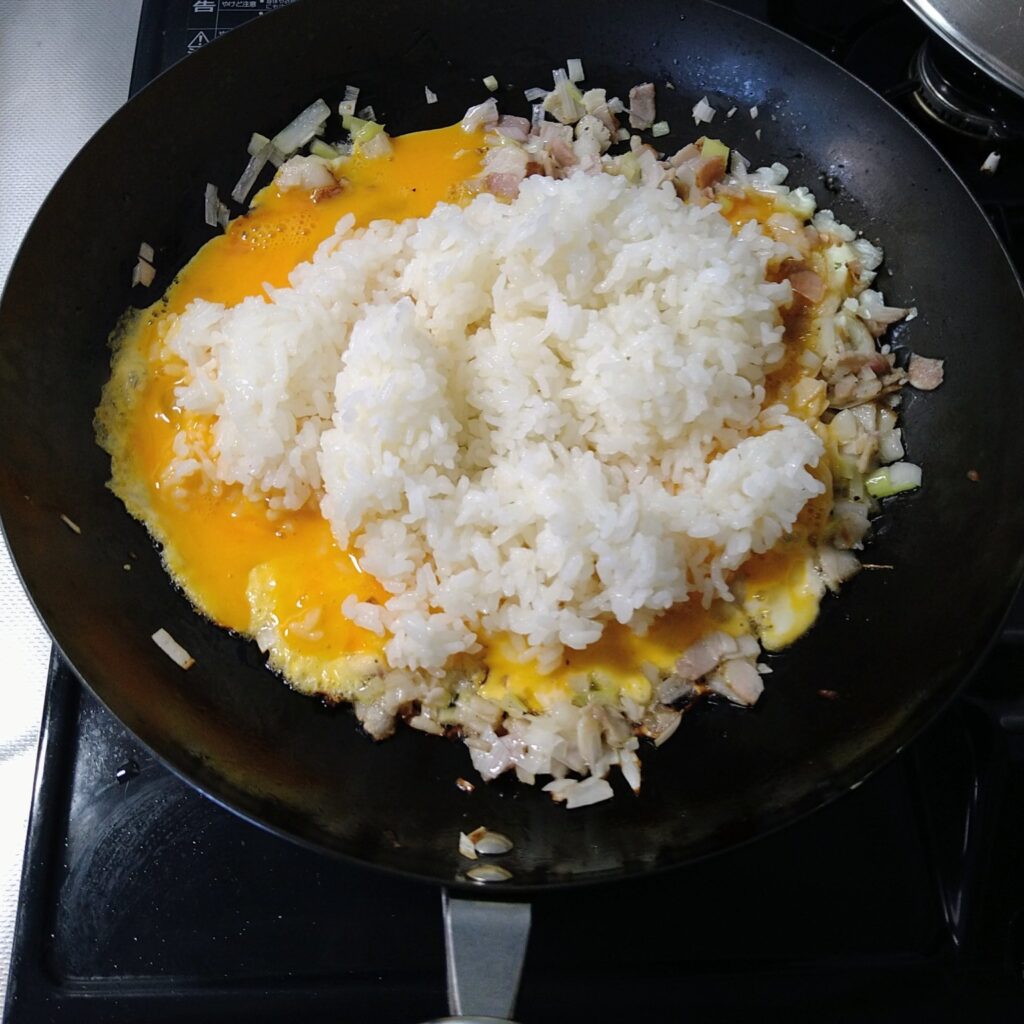
I preheated the pan thoroughly, then added about 3/4 tablespoon of oil. I stir-fried the green onion and bacon, then pushed them to the side. I added another 1/4 tablespoon of oil, poured in the beaten eggs, and placed the rice on top, breaking it apart as I went.
It stuck a little at first. But this time, I didn’t panic.
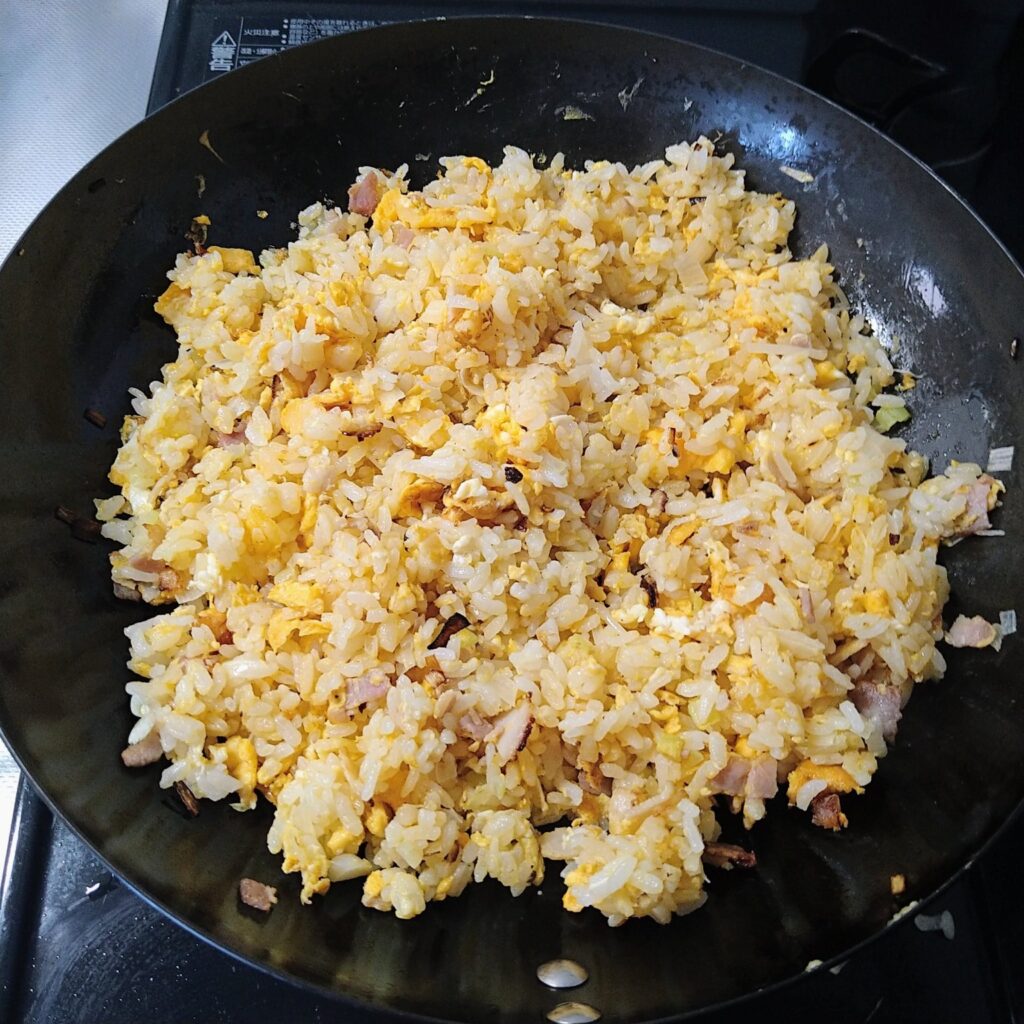
Unlike gyoza, the rice was coated in egg. I knew that protein contracts when heated and releases from the surface over time. I kept calm, sliding the stainless steel turner along the bottom to loosen things up — and gradually, the rice stopped sticking. By the end, I had fluffy, separated fried rice.
Why It Was Easier Than Gyoza
Gyoza wrappers are made of starch. The more moisture they get, the more firmly they bond to the pan. Even a small lapse in moisture management was enough to make them stick so hard that even a stainless steel turner couldn’t get under them.
Fried rice was different. Rice is starchy too, but the egg coating weakened the bond enough that even when it stuck, the turner could slide underneath without much force.
In the end, the lesson from gyoza — that starch-based foods come down to moisture management and the right tool — applied just as well here. The egg just made everything a little more forgiving.
One thing to fix next time: the green onion burned slightly. I’ll move the cooked ingredients to a plate before adding the egg and rice.
Final Thought
I’d bought extra ingredients expecting things to go wrong. They didn’t — it came out better than I expected on the first try, and the backup supplies went untouched.
They say a cast iron pan gets better with use. It seems I’m getting better too.
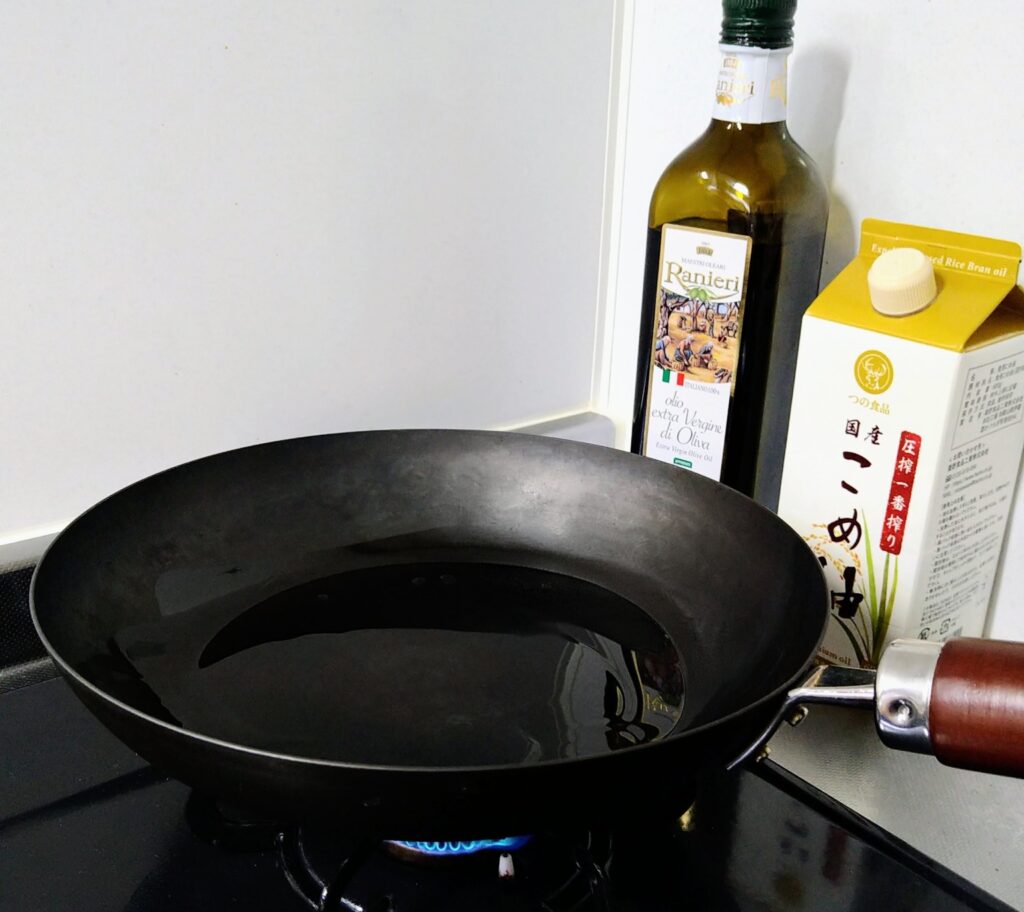
For a while, I’d noticed that heating olive oil at high temperatures left my throat feeling irritated afterward.
I searched “cast iron pan throat pain” but couldn’t find anything relevant. I assumed it was just my imagination and let it go. But the feeling kept coming back, so I decided to look into it properly.
It wasn’t my imagination.
The Culprit: Acrolein
Every oil has a smoke point — the temperature at which it starts to break down and produce visible smoke. When oil exceeds its smoke point, it undergoes chemical decomposition and produces a compound called acrolein. Acrolein forms with any oil, but oils with a lower smoke point reach that threshold faster.
Acrolein is a strong irritant to the mucous membranes of the eyes, nose, and throat. The irritation I’d been feeling was most likely from inhaling it.
Why Olive Oil Is Especially Prone to This
Smoke points vary significantly depending on the type of oil.
Oil
Smoke Point
Butter
~150°C
Extra virgin olive oil
~160–190°C
Grapeseed oil
~215°C
Canola oil
~200–230°C
Sunflower oil
~230°C
Rice bran oil
~230°C
Ghee
~250°C
Avocado oil
~270°C
Extra virgin olive oil has one of the lowest smoke points on the list — around 160–190°C. It reaches its threshold faster than most other oils.
I had been using extra virgin olive oil. And I had a habit of preheating my cast iron pan until it just started to smoke. That means I was regularly heating the oil past its smoke point. The conditions for acrolein production were there every time.
Refined olive oil has a higher smoke point of around 240°C, so the same cooking style would produce less irritation. That said, extra virgin retains more flavor and health benefits. It may be worth using different oils for different purposes.
Oils That Work Better with Cast Iron
Cast iron pans are often used at high heat, so oils with a higher smoke point tend to work better. Based on the table above, rice bran oil, sunflower oil, canola oil, and avocado oil are all solid options.
Rice bran oil A staple in Asian cooking, long used in cast iron pans and woks. Neutral in flavor, so it won’t affect the taste of your food. A practical choice for everyday use.
Avocado oil One of the highest smoke points available. Mild flavor and easy to use — though it tends to be more expensive.
Canola oil / Sunflower oil Widely available and affordable. Neutral flavor and high smoke point make them reliable for everyday cooking.
Extra virgin olive oil Rich in flavor and health benefits, but not well suited for high-heat cast iron cooking. Better saved for low-heat finishing or uncooked uses like dressings.
Final Thoughts
I’d read that heating a cast iron pan until it smokes was the right way to preheat it. With no PTFE coating to worry about, high heat seemed like a non-issue. And the pan itself was fine. But I didn’t realize that the oil you use can turn that into a problem.
Now I use rice bran oil for cast iron cooking and save the extra virgin olive oil for dishes that don’t involve high heat.
I also stop preheating before the smoke appears. If I see the faintest wisp, I lower the heat right away to keep the pan from getting hotter than it needs to be.
I’m glad I didn’t just ignore the feeling. If you’ve noticed something similar, it might be worth checking the smoke point of the oil you’ve been using.
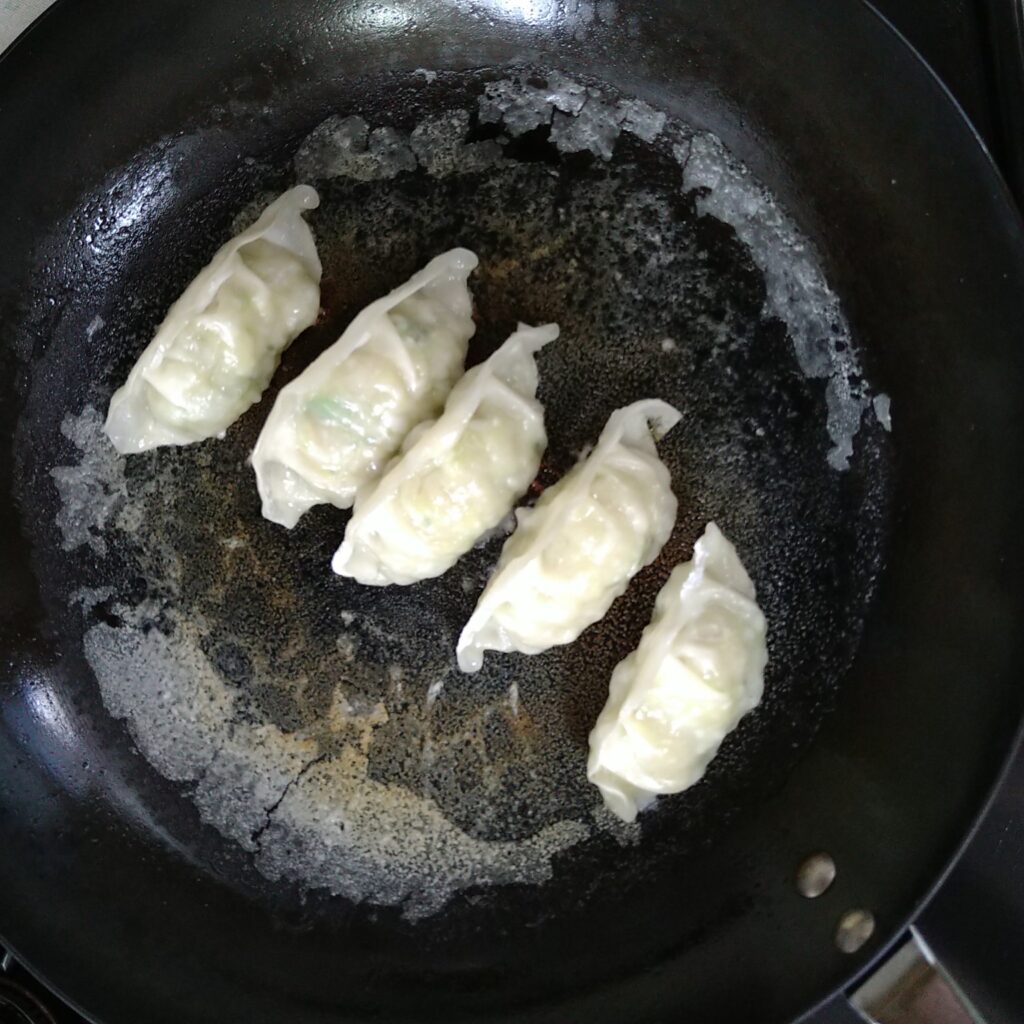
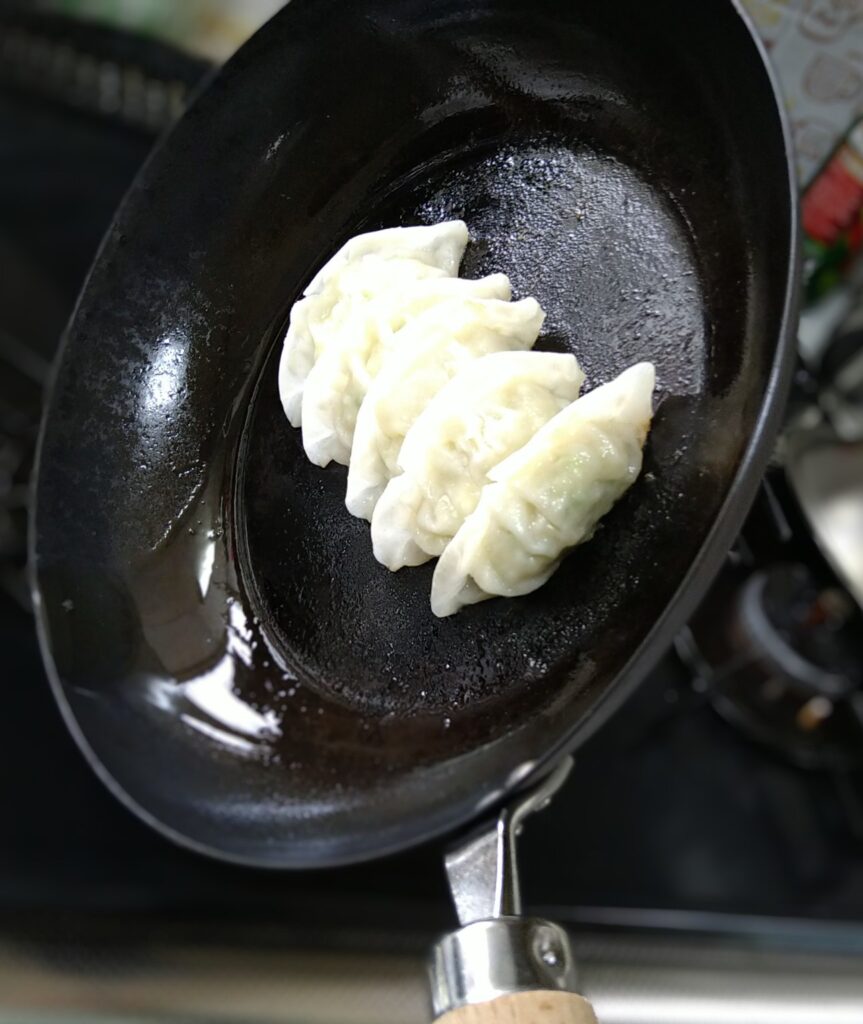
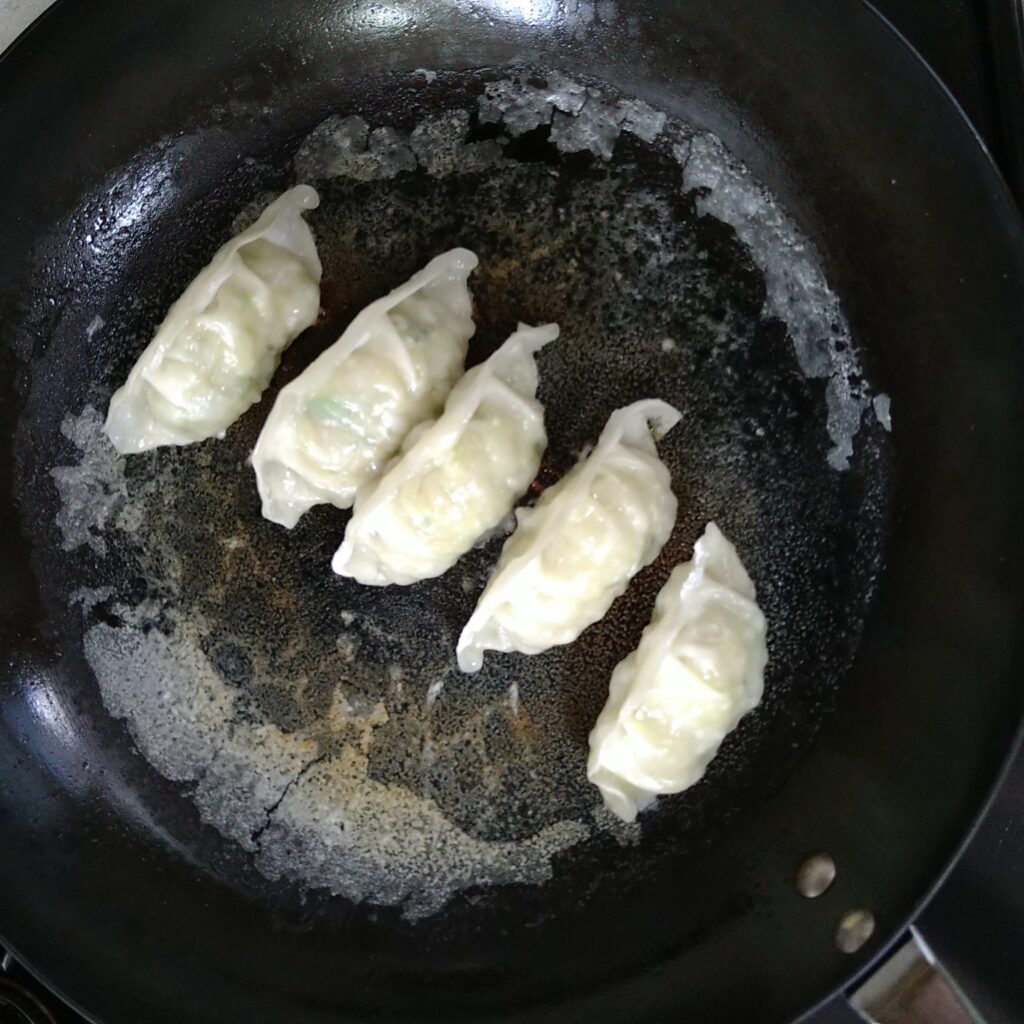
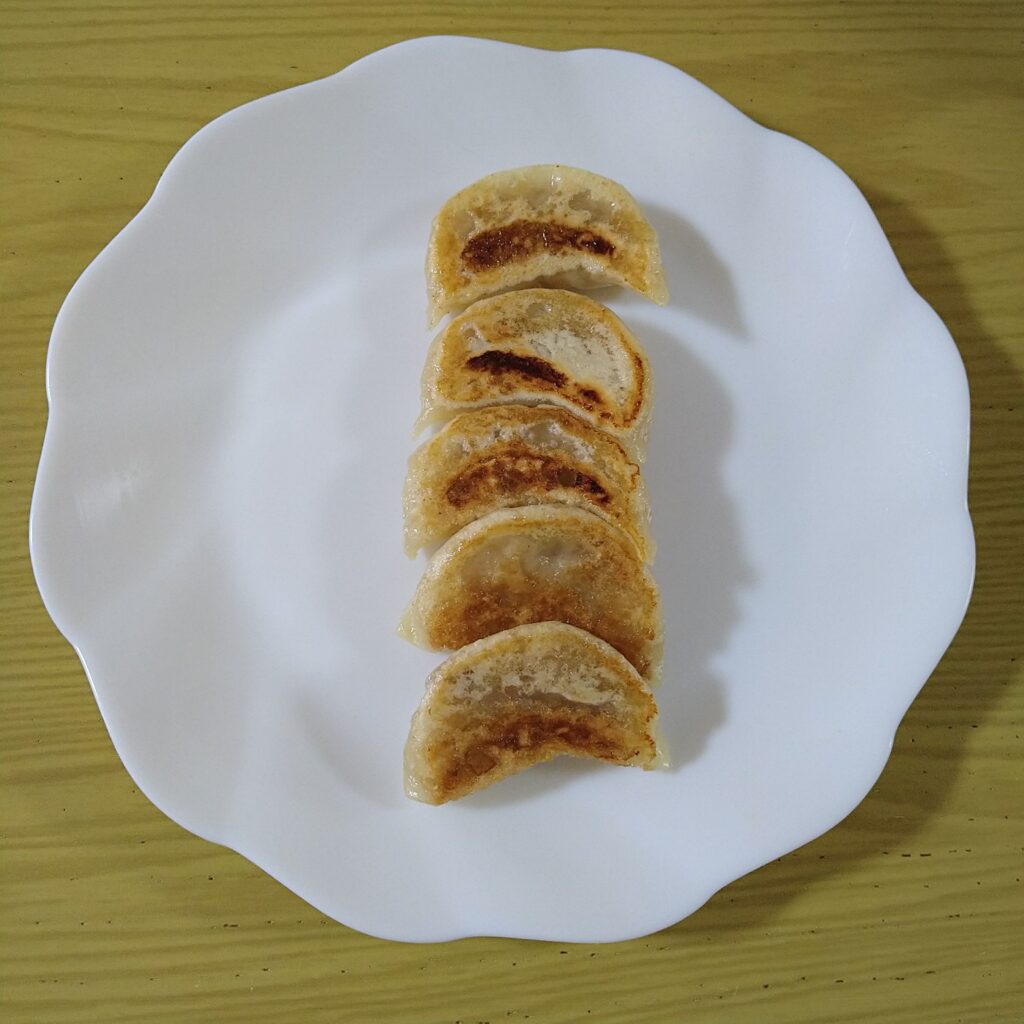
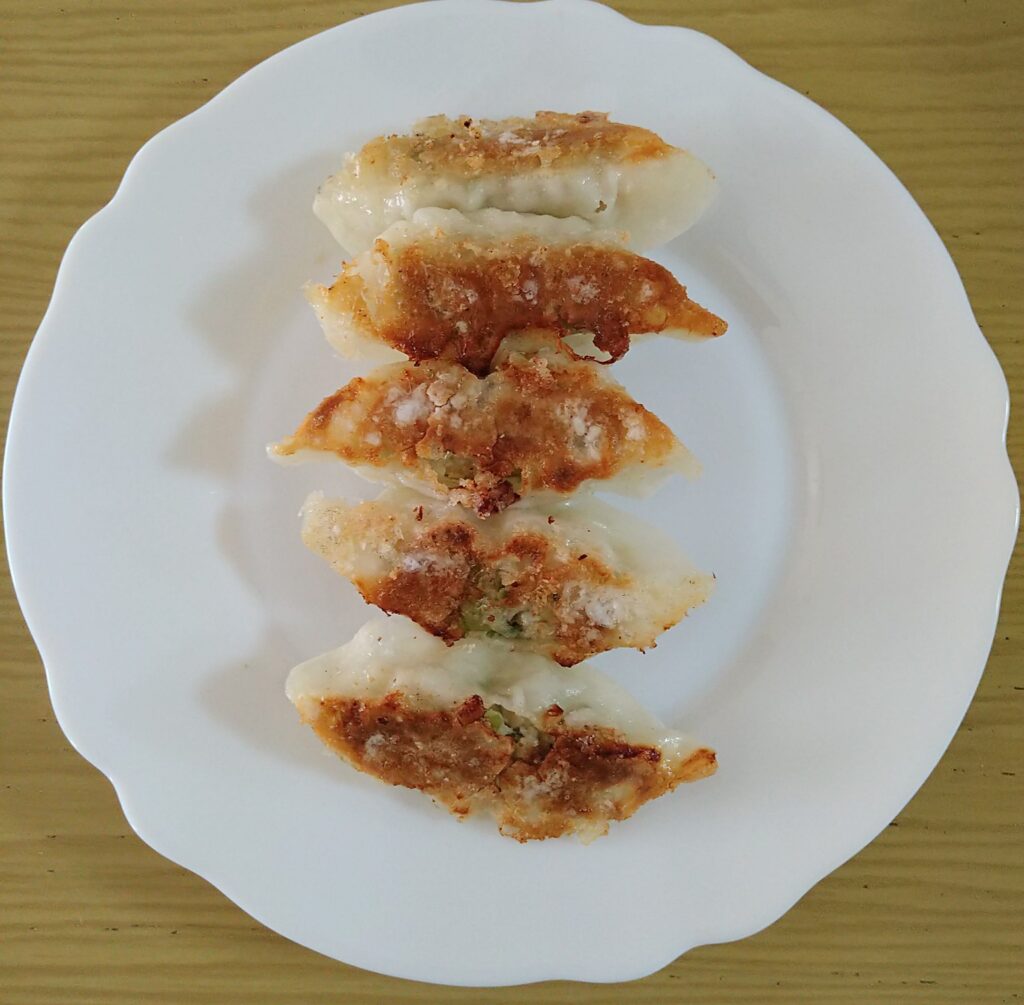
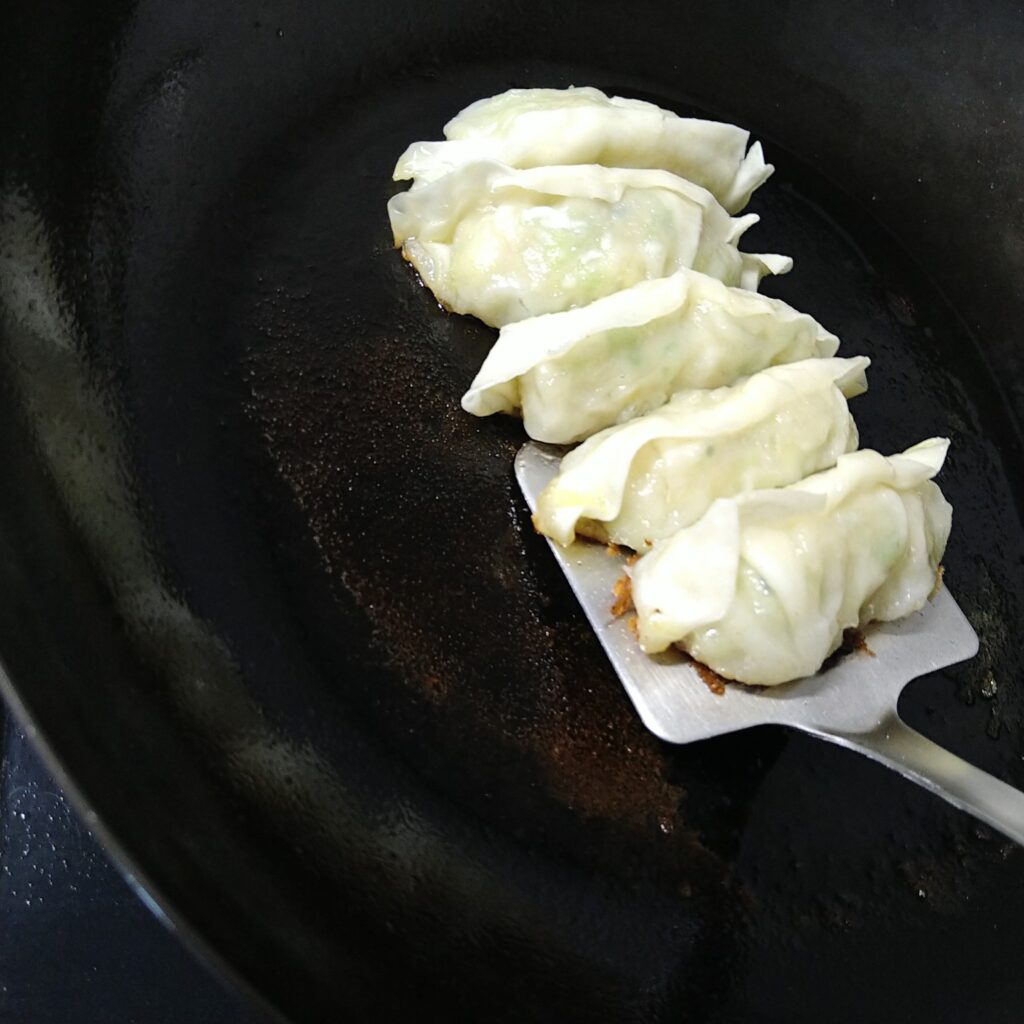
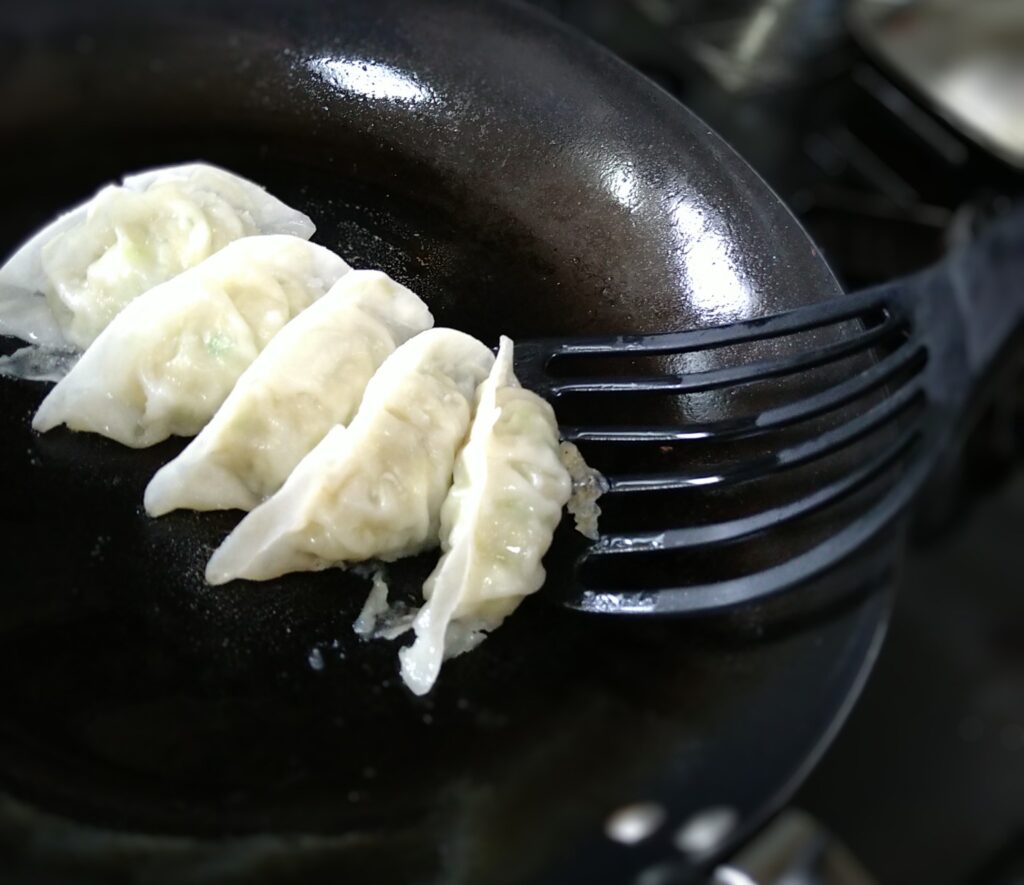
Before adding water for steaming, the gyoza release cleanly from the pan and are not sticking yet.
I was comfortable cooking protein in my cast iron pan. So I assumed gyoza would be no different.
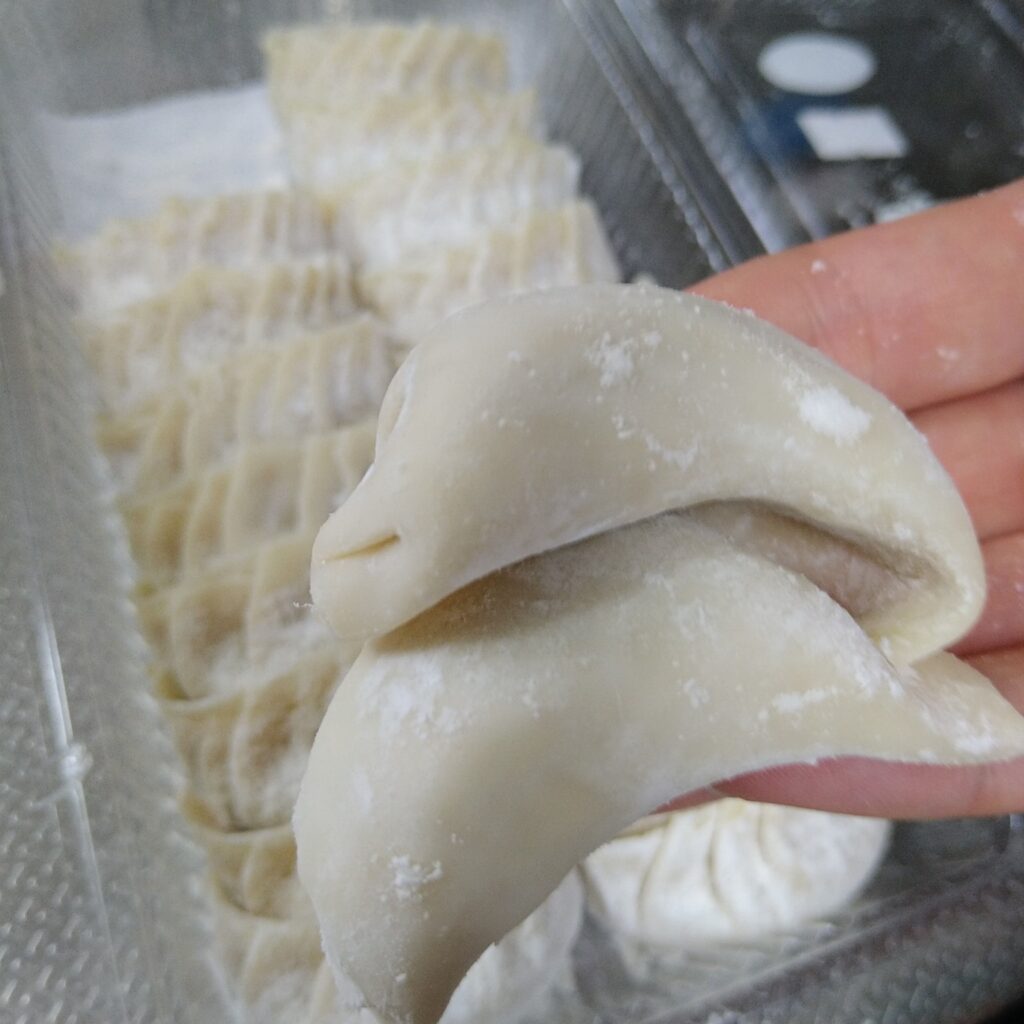
I thawed some frozen dumplings and rinsed the wrappers under water to remove the excess flour. They stuck completely.
After cooking 70 more gyoza, I figured out what went wrong. There are four things that matter when cooking gyoza in a cast iron pan — heat, oil, moisture management, and the right tool.
The Four Key Points
The foundation of cast iron cooking is a shield — creating a state where food doesn’t directly bond to the metal surface. Heat and oil work together to create it.
For gyoza, two more factors come into play: moisture management to maintain the shield, and the right tool to act as a spear and break the bond when it’s time to release.
Heat + Oil — The Shield
A properly preheated pan instantly sears and sets the surface of the food the moment it makes contact. Oil gets between the food and the pan, preventing direct contact. Together, these two create the shield.
Without enough heat, the wrapper bonds to the pan before the surface has a chance to set. Too little oil exposes the metal surface and makes sticking more likely.
Moisture Management — Maintaining the Shield
Too much moisture lowers the pan’s temperature and weakens the shield. Use wrappers that are dry. After steaming, remove the lid and let the moisture evaporate completely.
The Tool — The Spear
The turner’s job is to slide its edge under the wrapper and break the bond between the gyoza and the pan. The thinner and harder the edge, the less force it takes to get under.
Silicone flexes and lacks a sharp edge. Wood is hard but thick and dull. Both fail to cut through the bond. The only tool that can is a thin, rigid stainless steel turner.
Why Gyoza Sticks to a Cast Iron Pan
Gyoza wrappers are made from wheat flour. When exposed to heat and moisture, the starch gelatinizes and bonds to the surface of the pan. Unlike protein, which contracts when heated and releases from the pan, starch does the opposite — the more heat and moisture it gets, the more it sticks.
In practice, the gyoza didn’t stick before the steaming water was added. The moment moisture entered the pan, they started to bond. That explains the first failure. Rinsing the wrappers added excess moisture before cooking even started.
Gyoza Is Meant to Stick — and Then Be Released
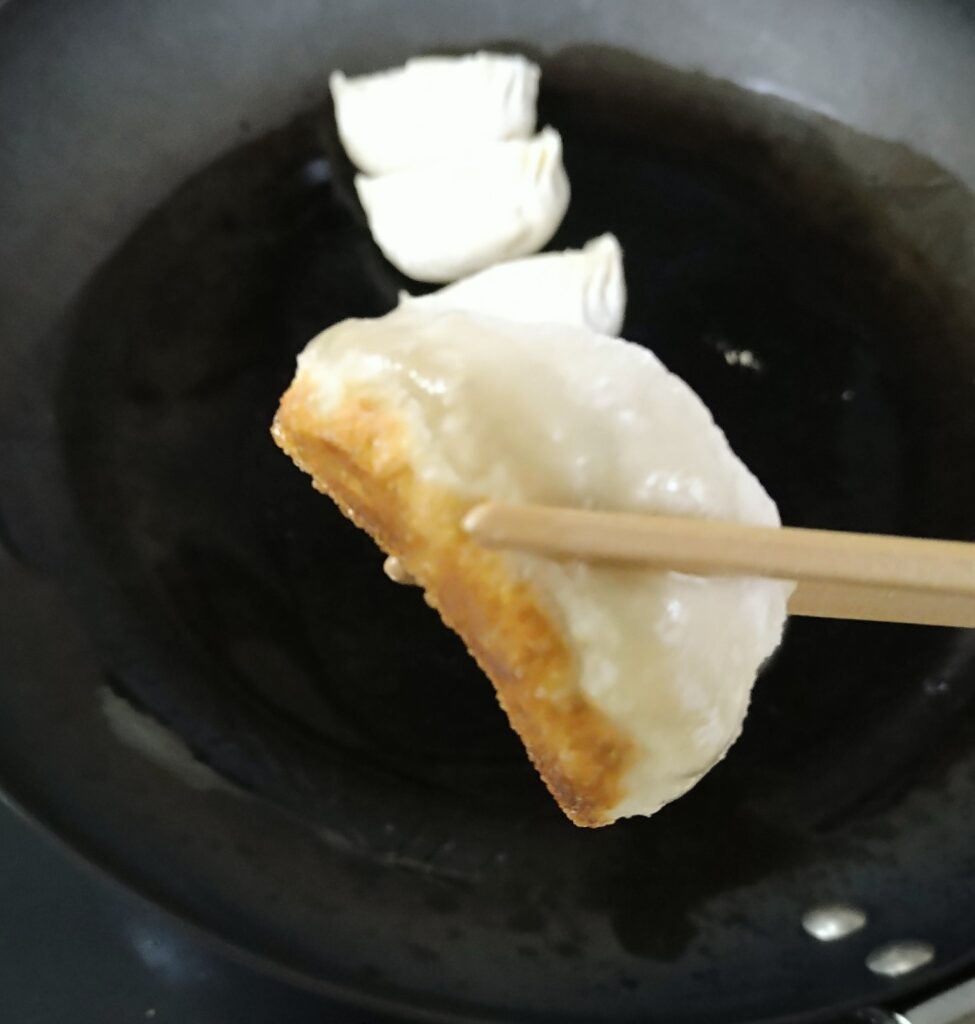
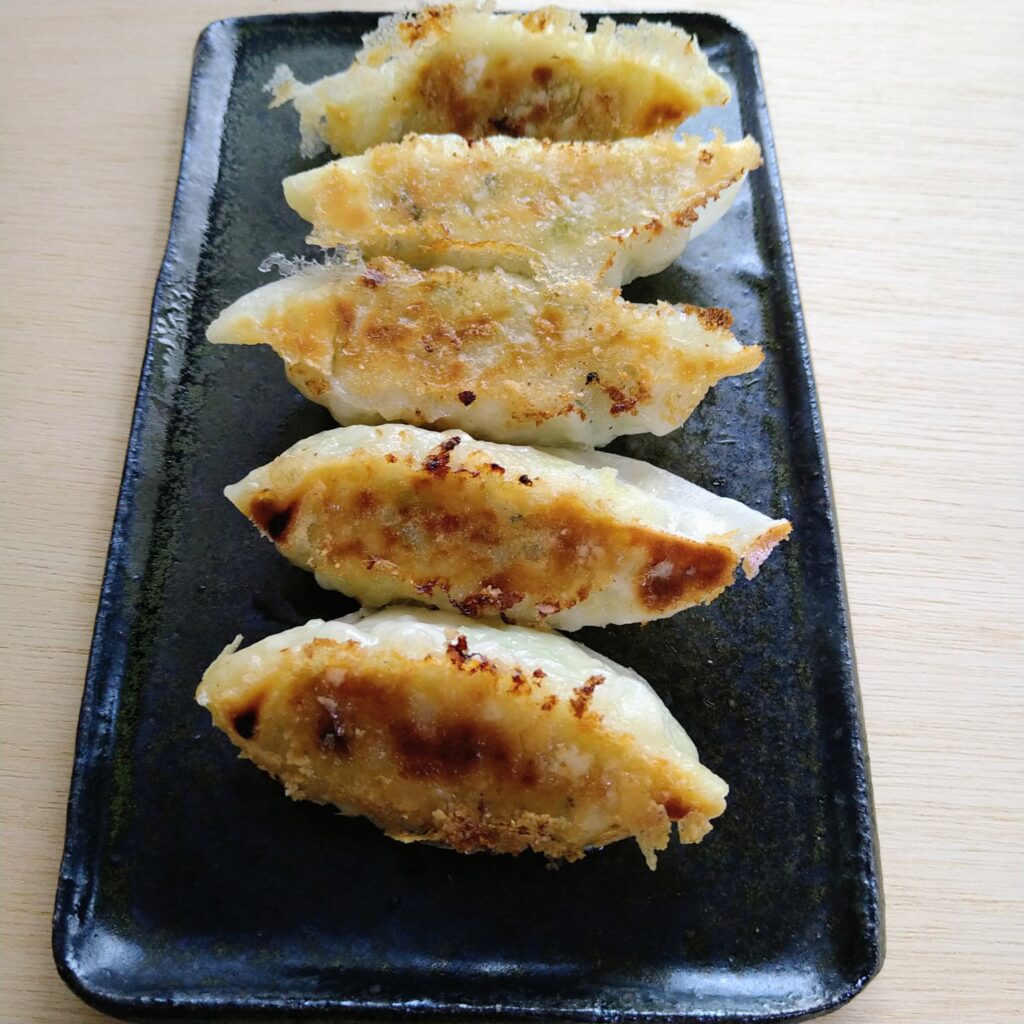
The crispy texture of pan-fried gyoza comes from gelatinized starch. As the gelatinized starch loses moisture and sets, it creates that signature crunch. Sticking, in other words, isn’t the problem. It’s what makes gyoza crispy.
What matters is the quality of the bond.
When the shield is working and gelatinization begins after the steaming water is added, there’s already a seared layer between the wrapper and the pan. The bond stays on the surface. Once the moisture evaporates, the gyoza can be released with a turner.
When the wrapper is wet from the start, the shield weakens. The starch bonds directly to the metal surface. By the time it sets, the bond is too strong for even a stainless steel turner to break.
This is what seems to be happening — though it’s hard to say for certain.
Wrapper Texture Changes Everything
I tested two types of gyoza — fresh and frozen — and the results were the same either way. What mattered wasn’t fresh versus frozen. It was the wrapper.
Gyoza with firm, low-moisture wrappers were straightforward. Even if they stuck a little, a gentle push with a silicone turner was enough to release them. The wrappers stayed intact. Clean results.
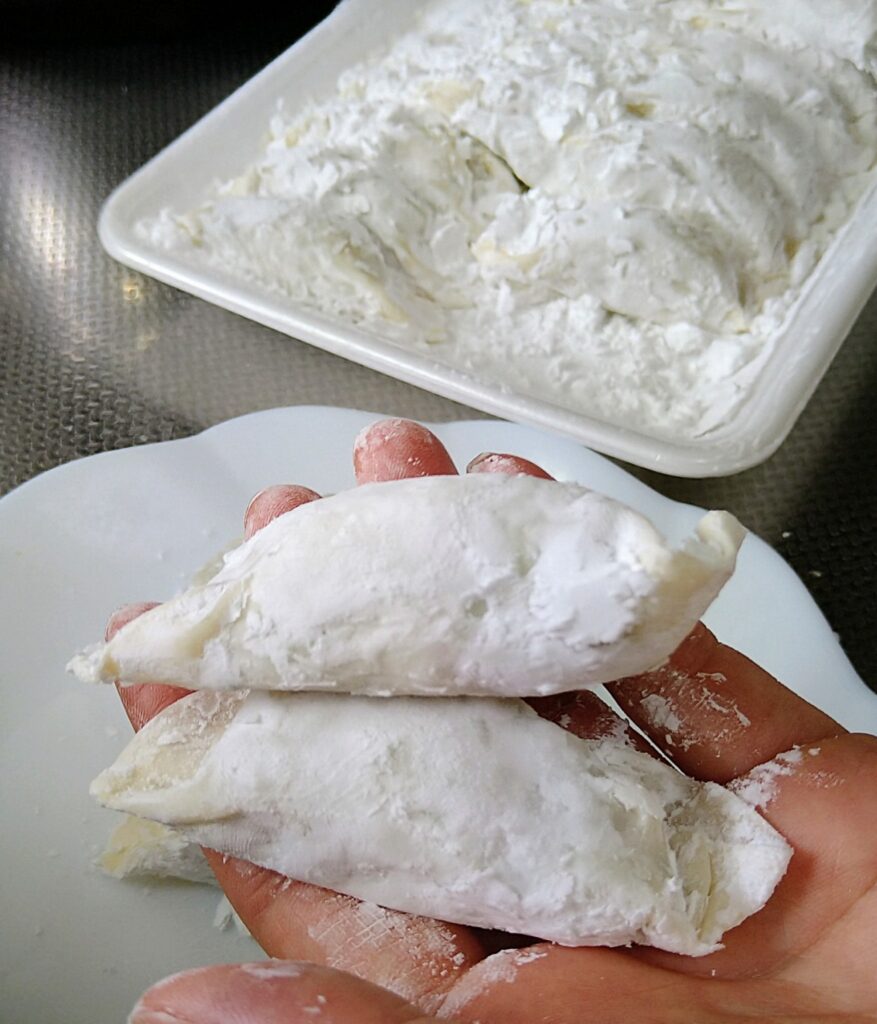
Firmer, lower-moisture wrappers hold much less excess flour.
Gyoza with soft, high-moisture wrappers were a different story. They stuck more, the edges would release but the center stayed bonded, and the act of releasing them was itself enough to tear the skin.
Soft, high-moisture wrappers tend to hold onto excess flour.
The wrappers tend to tear in the center where moisture is highest.
Nicely browned, but three wrappers tore.
A silicone turner couldn’t get under the wrapper or the crispy edges. I tried more oil. I tried hot water instead of cold for steaming. Nothing changed. Even with heat, oil, and moisture well managed, the final act of releasing the gyoza was the hardest part. That’s where the tool makes the difference.
A stainless steel turner could slide under where silicone couldn’t. With force concentrated at the edge and minimal resistance, it got under the wrapper without tearing it. The moment I switched turners, the struggle was over.
A thin stainless steel turner can slide under the wrapper and break the bond with the pan.
A flexible silicone turner bends easily and cannot break the bond between the gyoza and the pan.
How to Cook Gyoza
Preheat the pan
Heat over medium until just before it starts to smoke. If you see a faint wisp of smoke, lower the heat slightly.
Add oil
Swirl to coat the entire surface, with just a little left over. For a 26cm pan, about 1/2 to 1 tablespoon. When the pan is properly preheated, the oil will spread quickly and smoothly. As the pan becomes more seasoned over time, less oil will be needed.
Add the gyoza
Place them flat side down. Cook until the bottoms are lightly golden. Lower the heat slightly here to avoid burning while the first pieces are still going in.
Add water
Pour in enough to reach about 1/4 to 1/3 of the height of the gyoza. For crispy wings, mix in a little potato starch or flour.
Cover and steam
Cover with a lid and steam until most of the water has evaporated.
Remove the lid and dry the pan
When you hear a crackling, sizzling sound, remove the lid and let the remaining moisture evaporate completely. Cook until the wings and edges of the gyoza are golden. Adding a small drizzle of oil at this stage seems to make them crispier, though it’s not necessary. Medium to low heat is safer here — high heat makes it easy to burn.
Release and plate
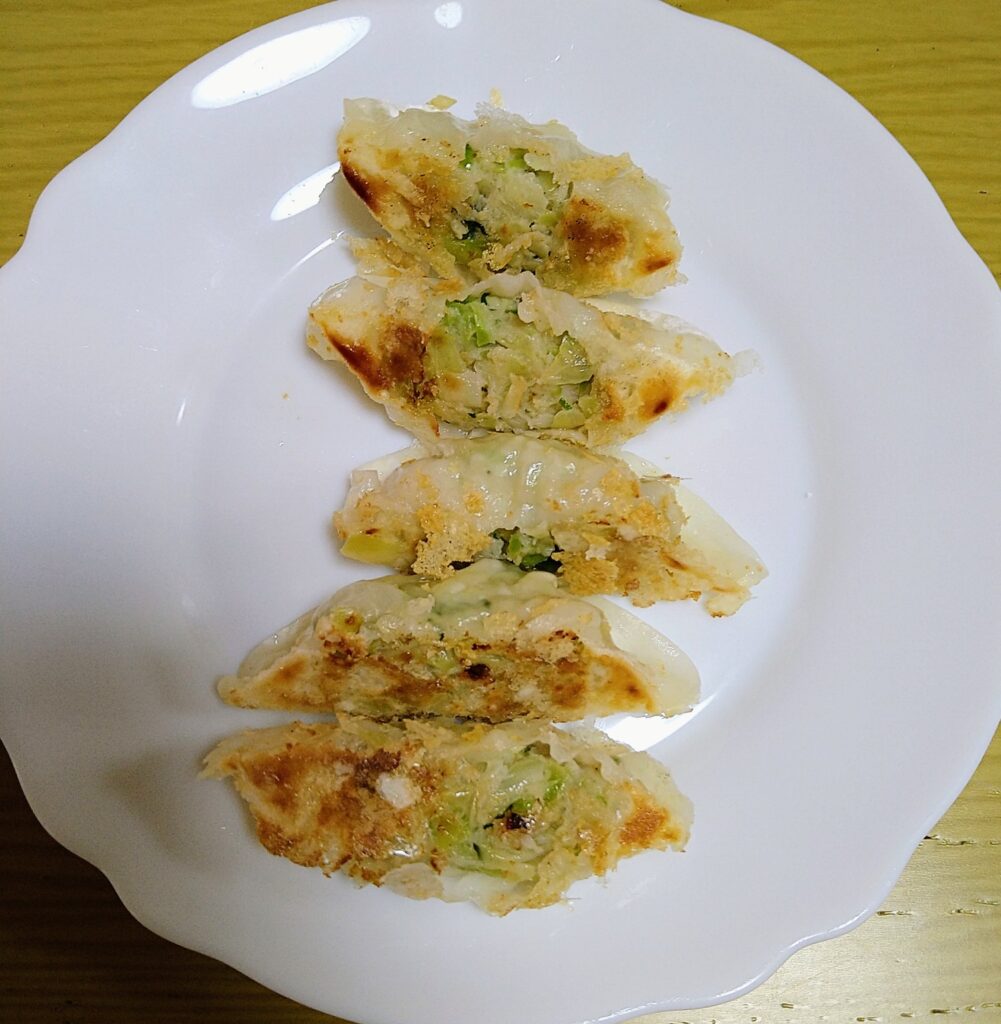
Slide the turner under the wrapper and crispy edges, and release the gyoza carefully.
No tearing with soft, high-moisture wrappers.
Final Thoughts
At first, I was looking for a way to cook gyoza without it sticking. Maybe a professional cook could pull that off. But for an amateur like me, it wasn’t happening.
So I changed my approach. I accepted that gyoza is a food that sticks — and focused on keeping the bond as weak as possible through heat, oil, and moisture management, then relied on the right tool to finish the job.
The moment I switched to a stainless steel turner, the gyoza that had given me so much trouble came off the pan cleanly. It might not be the perfect method. But for me, it was enough.
Gyoza cooked in cast iron has a flavor and crispiness that other pans can’t quite match. I think it’s worth the effort.
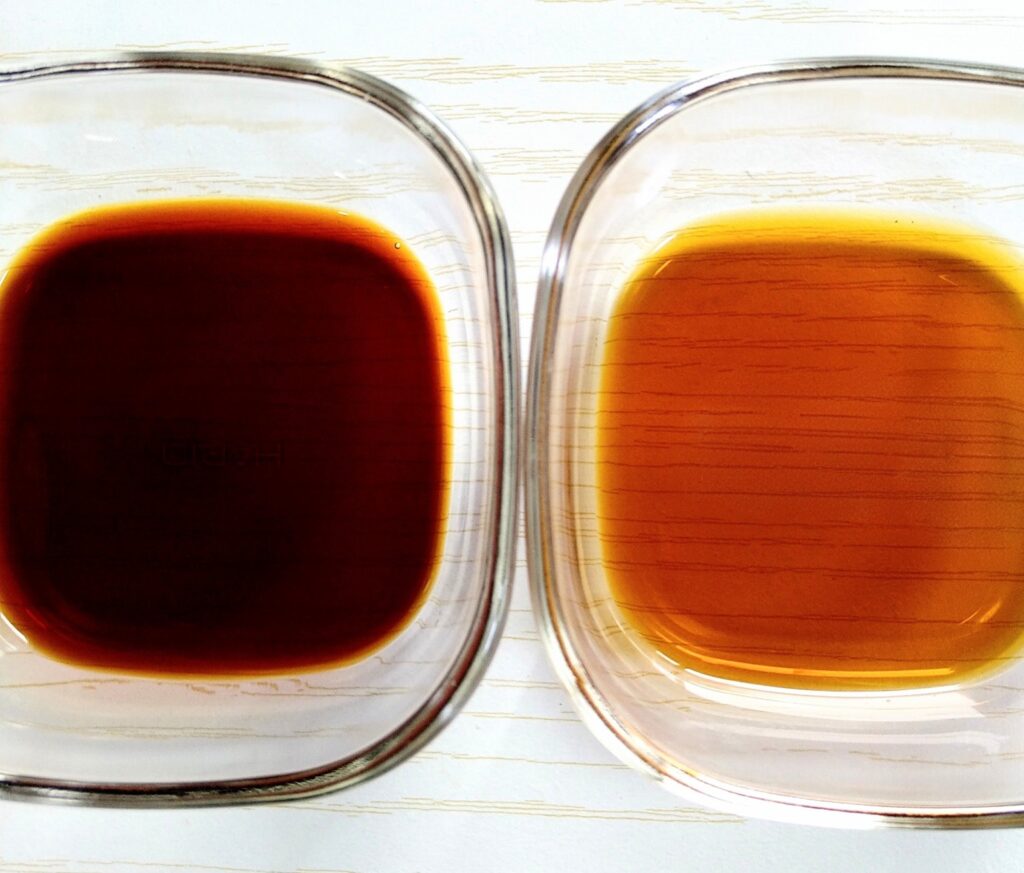
Dark soy sauce (left) and light soy sauce (right).
What is Shoyu?
Shoyu (醤油) is the Japanese word for soy sauce — a fermented seasoning made from soybeans, wheat, salt, and water. It is one of the most fundamental ingredients in Japanese cooking, used in almost everything from dipping sauces and simmered dishes to everyday seasoning.
The two most common types are koikuchi (dark soy sauce) and usukuchi (light soy sauce). Unlike salt, shoyu adds not just saltiness but also umami, color, and aroma to a dish.
A Brief History
Soy sauce has a long history in Japan. It is generally believed that its roots trace back to the Nara period (710–794), when a grain-based seasoning called kokubishio was introduced from China. During the Kamakura period (1185–1333), Zen monks began using tamari — a liquid byproduct of miso — as a seasoning. This became a direct ancestor of modern shoyu. The word shoyu first appeared in Japanese records around the 1500s, during the Muromachi period. By the Edo period (1603–1867), soy sauce production flourished across Japan, and it became an essential part of everyday cooking.
Why Two Styles?
Japan’s two main soy sauce styles — koikuchi in the east and usukuchi in the west — reflect the different food cultures and geography of their regions.
In the Kanto region, koikuchi developed to suit the bold flavors of Edo cuisine. The city of Edo grew rapidly and consumed enormous quantities of seafood — not always at its freshest. Koikuchi’s strong aroma and deep flavor helped mask unwanted smells and complemented the rich, robust dishes of the era.
In Kyoto, the situation was different. As an inland city, fresh seafood was hard to come by. Cooking centered around vegetables, tofu, and preserved fish — ingredients with no strong smell to mask. A lighter soy sauce that enhanced the natural color and flavor of these ingredients made more sense. Usukuchi developed in Tatsuno, Hyogo prefecture — a town with access to quality salt from nearby Ako, good soybeans and wheat, and soft water from the Ibo River. These natural conditions made it the ideal place for a lighter, more delicate soy sauce to develop.
The Two Main Types
Koikuchi (dark soy sauce)
Koikuchi is the most common type of Japanese soy sauce, accounting for about 80% of domestic production. It is made from roughly equal parts soybeans and wheat, and undergoes a longer fermentation process — typically two years or more. This results in a deep brown color, a rich aroma, and a full-bodied flavor with well-balanced umami.
Usukuchi (light soy sauce)
Usukuchi accounts for about 14% of Japanese soy sauce production and is particularly popular in the Kansai region. It is brewed for a shorter period — around one year — and uses more salt to control fermentation. Some include rice, which adds a natural sweetness to balance the flavor despite the shorter aging time. The result is a lighter color, a milder aroma, and a slightly saltier taste than koikuchi.
Key Differences
Koikuchi
Usukuchi
Color
Dark brown
Light amber
Salt content
~16-17%
~18-19%
Fermentation
2+ years
~1 year
Main ingredients
Soybeans, wheat, salt, water
Soybeans, wheat, salt, water (some include rice)
Flavor
Rich, full-bodied, strong umami
Lighter, milder, slightly saltier
Best for
Rich, bold dishes
Light, delicate dishes
How I Use Them
I use koikuchi for richer dishes — simmered dishes, ingredients with higher fat content, or food that isn’t at its freshest. It also works well when I want more depth and richness in a dish. It pairs well with sugar and mirin, and holds up to bold seasoning.
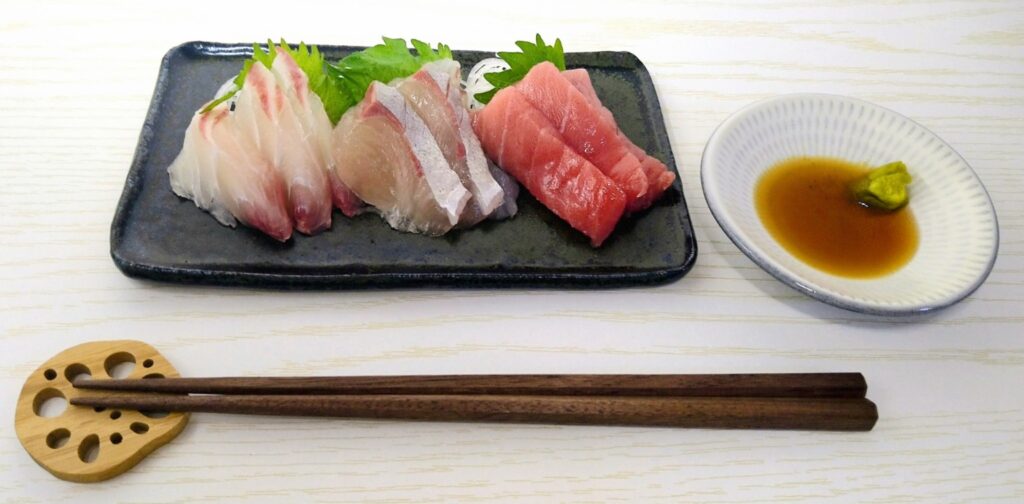
Usukuchi is my go-to for fresh ingredients — sashimi, lightly cooked vegetables, and light dashi-based dishes. I use it when I want the natural flavor of the ingredients to come through.
I actually use usukuchi more often than koikuchi in my everyday cooking. I tend to prefer lighter seasoning, and usukuchi fits that naturally.
The Soy Sauces I Use
These are the two soy sauces I use at home. Both ship from Japan, so they may not be the most convenient option for everyone — but if you’re looking to try quality Japanese soy sauce, these are a good place to start.
Koikuchi and usukuchi are both shoyu — but they bring different things to the table. Knowing the difference makes it easier to choose the right one for the dish you’re cooking.
Salt is something we use every day, but rarely stop to think about. The difference between refined and natural salt is real—in taste, texture, and how it behaves in cooking. And even within natural salts, the variation is surprisingly wide depending on where and how they’re made.
Here are four Japanese sea salts I’ve tried, compared by how I actually use them.
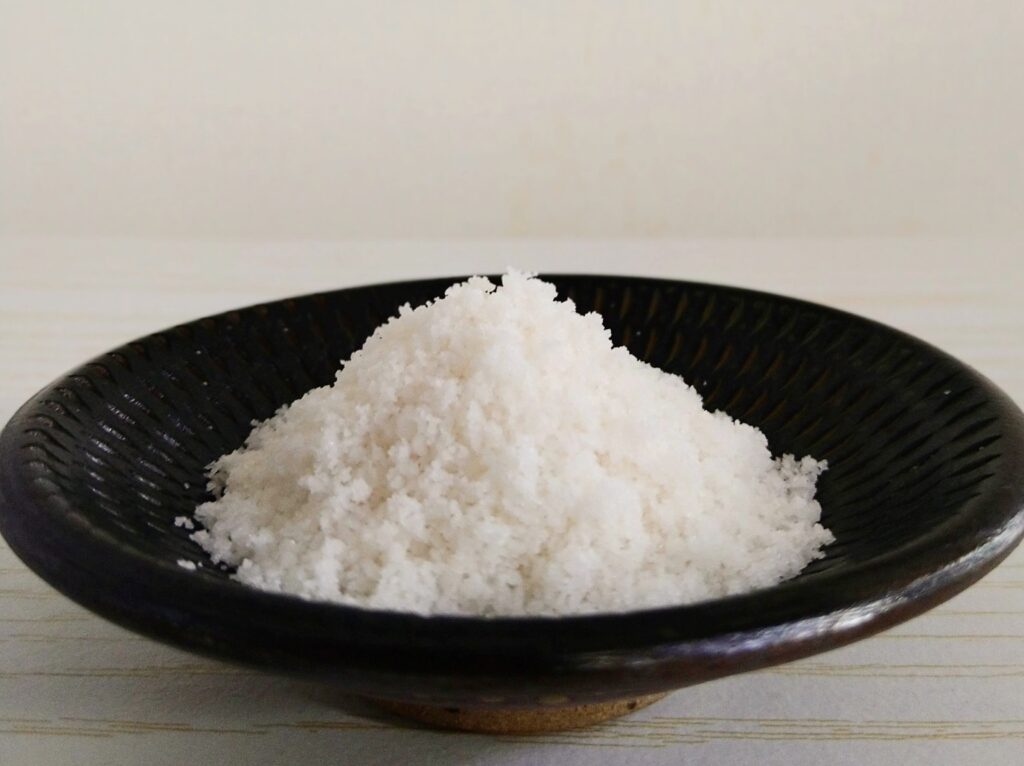
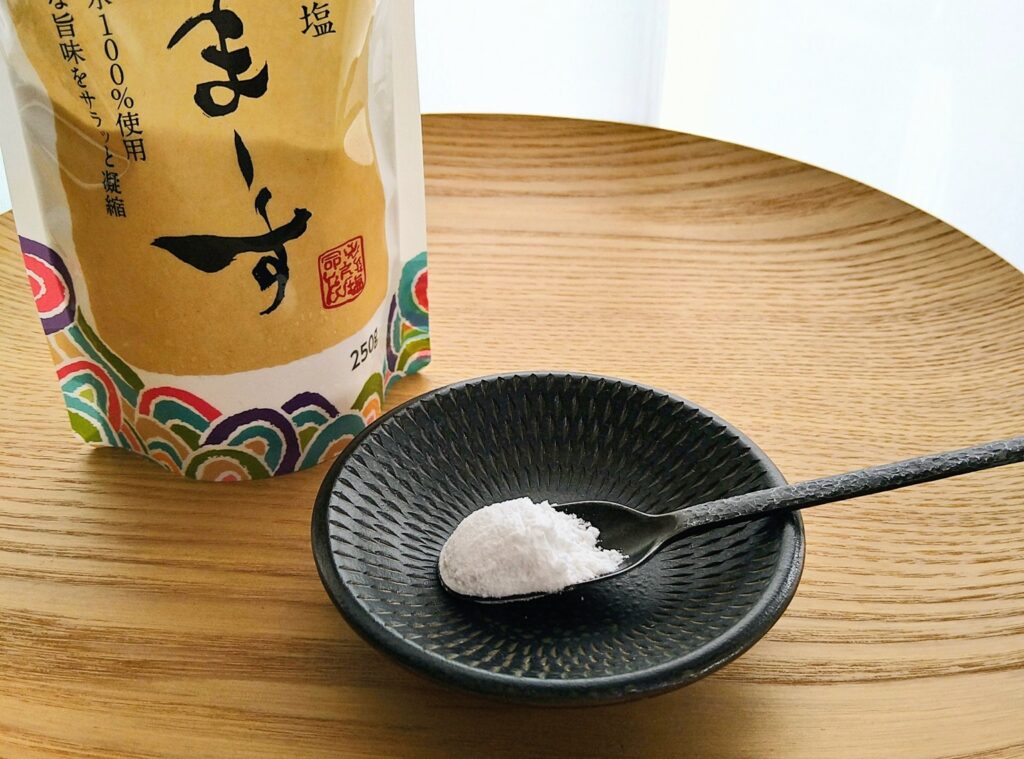
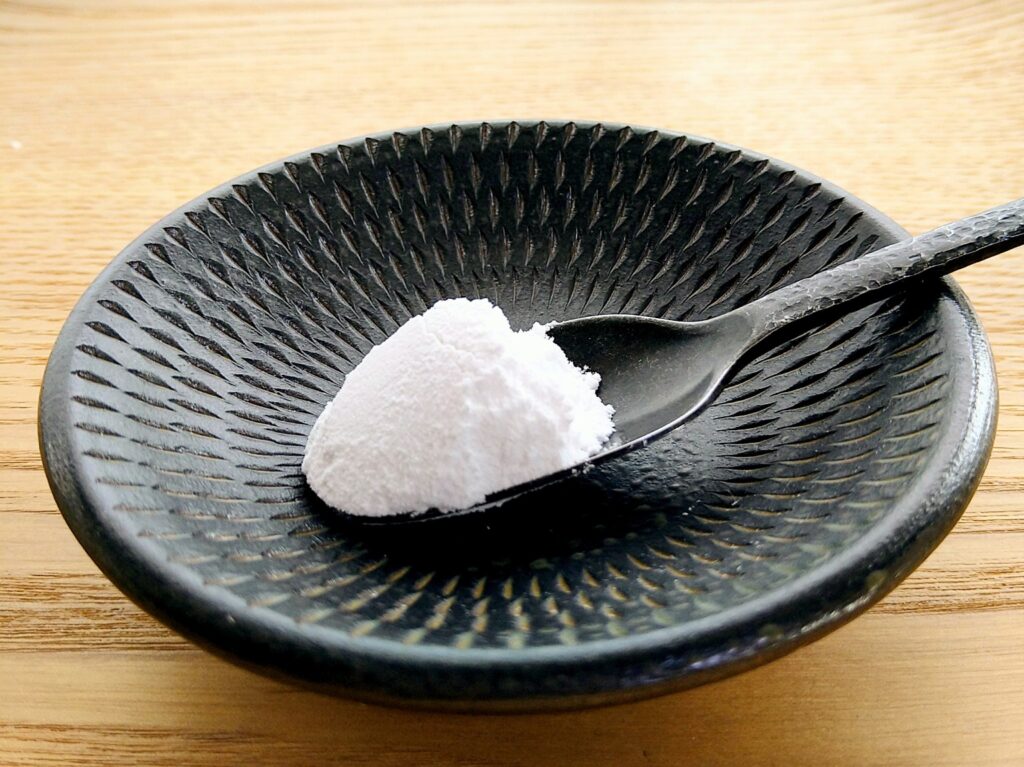
Made through a rare air-crystallization process, Nuchimasu has a powder-like texture that dissolves almost instantly. A light sprinkle over onigiri, sashimi, tempura, boiled eggs, or salad is all it takes. The flavor is mild and faintly sweet, with no sharp edge—it enhances without overpowering.
Produced slowly on the Goto Islands using only sunlight and sea breeze, Toppen has the gentlest flavor of the four. It works across vegetables, fish, and simple preparations without drawing attention to itself. It’s the salt I reach for most in my kitchen. It can be hard to find due to small-batch production, but worth keeping on hand when you do.
Aguni salt is made from the coral-rich waters around Aguni Island, concentrated through bamboo towers and finished in flat kettles over a wood fire—a process that takes several weeks. The result is a clean, well-balanced salt that performs especially well in cooked dishes. It has a slightly more pronounced saltiness than Toppen or Nuchimasu, making it a good fit where heat and time are involved.
For macrobiotic cooking or seasoning during cooking → Umi no Sei Yakishio
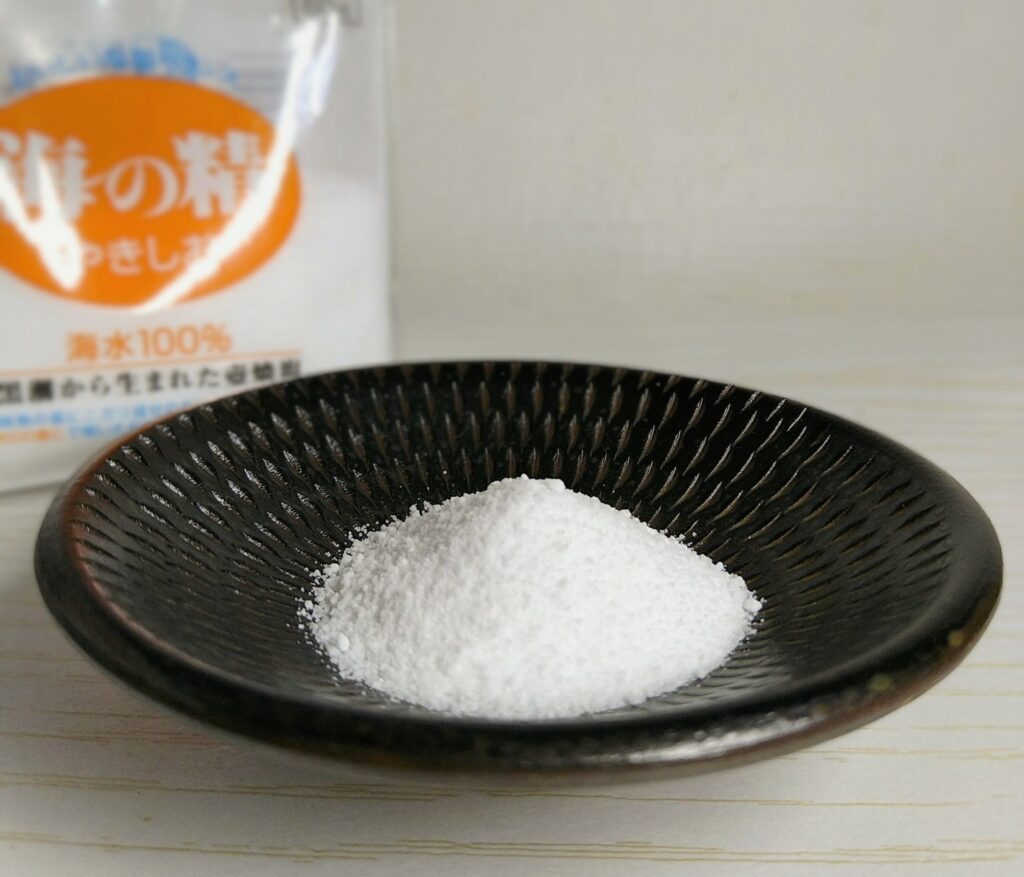
Umi no Sei is made from seawater around Izu Oshima using traditional methods, then fired at high heat to create a dry, free-flowing salt. It’s a staple in macrobiotic cooking, where unrefined sea salts are preferred. The saltiness is direct and assertive, so it works best when used during cooking—where it has time to blend into the ingredients—rather than sprinkled at the table.
Looking at the numbers side by side, a few things stand out.
Finer grains dissolve quickly in the mouth, making the saltiness hit faster and stronger. Larger grains dissolve more slowly, giving a milder impression. And the more nigari (magnesium) a salt contains, the further it moves from a direct, sharp saltiness — toward something more complex and rounded.
By that logic, Umi no Sei makes sense. Fine grains, high sodium — the saltiness is direct and strong.
Nuchimasu has the highest magnesium of the four at 3360mg, and a relatively low sodium equivalent of 75.5g. Despite the fine, powder-like texture, the taste is mild. The high mineral content and lower sodium seem to explain that.
Aguni is where it gets harder to explain. High in magnesium at 1660mg, coarser grains, and the lowest sodium equivalent of the four at 73.4g. By the numbers, it should taste the mildest — but it’s the second saltiest of the four. I don’t have an explanation for that.
And then there’s Toppen. High sodium at 93.3g, low in magnesium, similar grain size to Aguni. It should, by any logic, taste the saltiest. It’s the mildest. I still don’t know why. It’s also the one I reach for most.
Final Thoughts
All four are Japanese natural salts made through traditional methods, but they differ more than you’d expect—in texture, intensity, and where they shine. If you’re trying just one, Toppen or Nuchimasu are the easiest starting points. Toppen works quietly in almost any dish, while Nuchimasu makes a noticeable difference as a finishing salt.
Once you start paying attention to which salt you’re reaching for and why, it’s hard to go back to treating them as interchangeable.
Umi no Sei is a Japanese sea salt known for its mineral-rich content and traditional production methods. It is often used in macrobiotic cooking, where unrefined natural salts are preferred.
This time, I tried the yakishio variety for the first time.
How It’s Made
Made using only seawater from around Izu Oshima, the brine is first concentrated using a net-flow salt bed powered by sun and wind, then crystallized in flat kettles. The resulting salt is fired at high heat to create yakishio — a dry, free-flowing roasted salt.
Flavor and Character
The grains are fine and dry, making it easy to sprinkle evenly. It feels light and smooth when picked up with your fingers.
The saltiness is direct, with a clear, defined taste — the most forward of the four salts I’ve tried.
How I Use It
I found it better suited for seasoning during cooking — where it has time to blend into the ingredients — rather than as a finishing salt sprinkled at the table. When used as a base seasoning for meat or fish, it helps the flavor settle in clearly without adding extra character, bringing out the natural taste of the ingredients.
Who It’s For
A good fit for anyone interested in macrobiotic cooking, anyone who wants a salt that seasons firmly during cooking, or anyone looking for a traditionally made Japanese sea salt.
Produced using a traditional net-flow salt bed, flat kettle, and high-heat firing
Naturally rich in minerals, no additives
Fine, dry, free-flowing texture
Closing
I usually reach for salts that are richer in minerals and slightly moist, so this fine, dry texture felt especially easy to handle. Even small differences in texture and saltiness can change how a salt works in cooking, which is something I noticed again here.
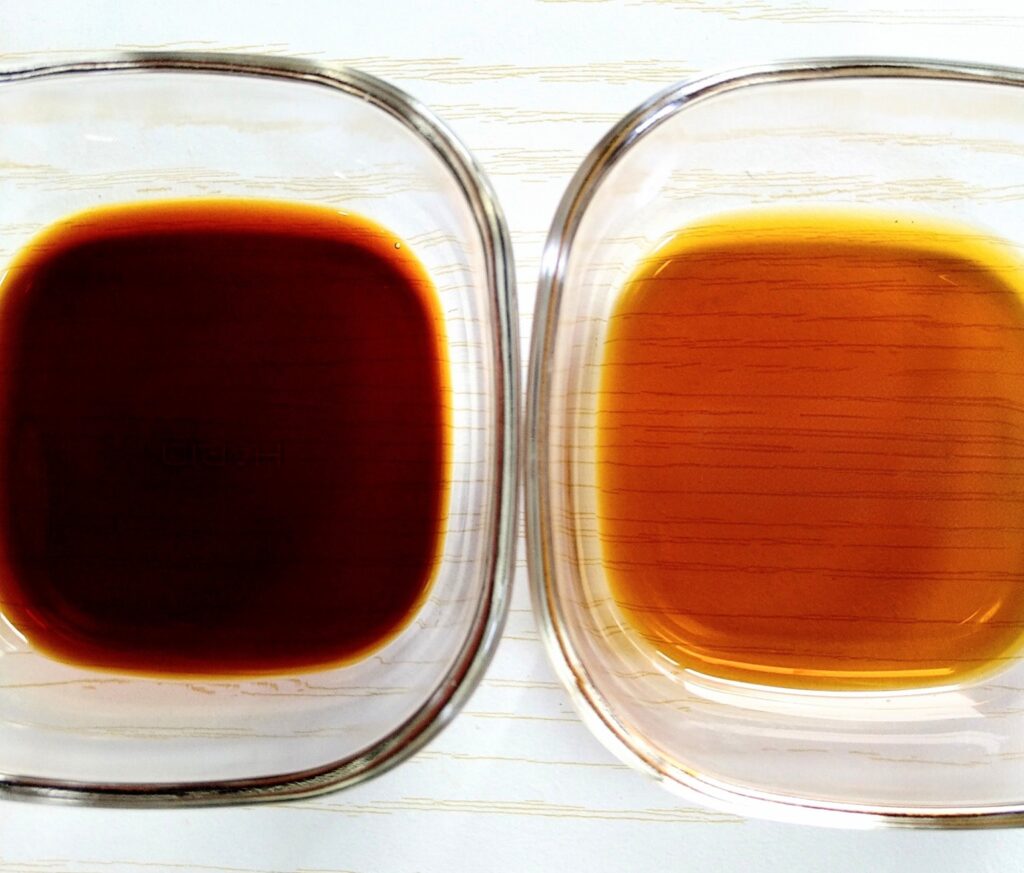
Dark soy sauce (left) and light soy sauce (right).
About
In many Japanese households, koikuchi soy sauce is the standard. But in my kitchen, I mostly use usukuchi soy sauce. Its lighter color helps keep the ingredients and broth clear, while still adding depth of flavor.
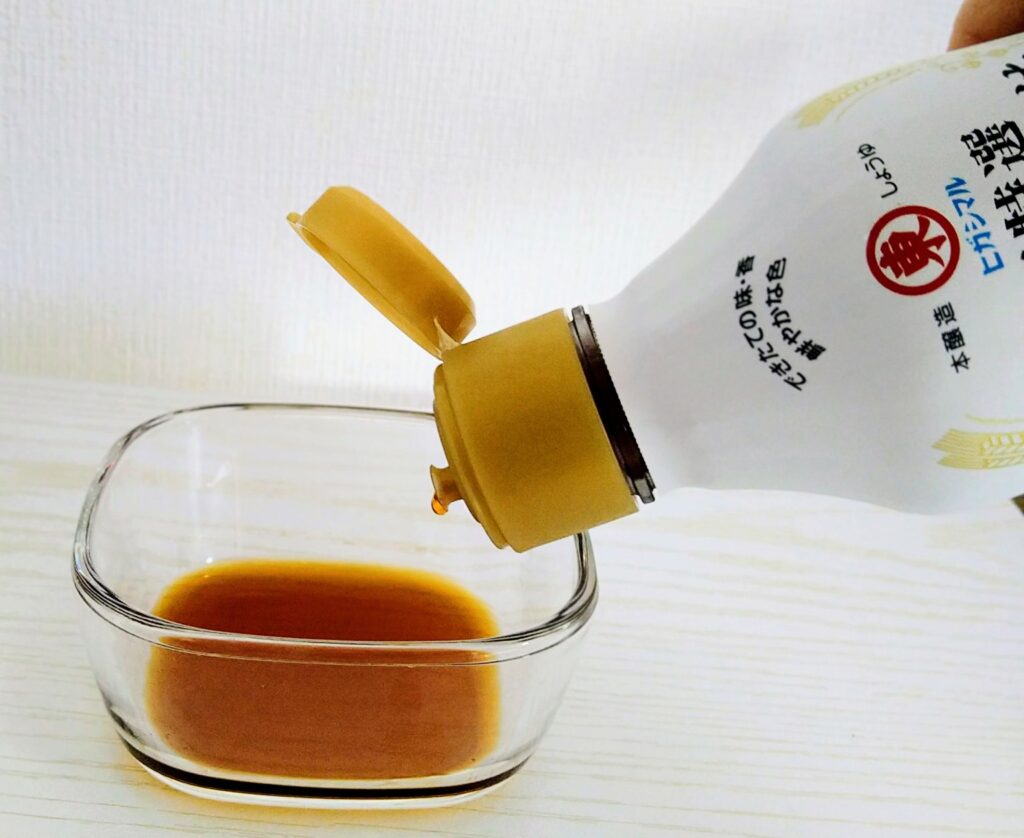
The one I use is Higashimaru’s Ginshun Hojun Tokusen Marudaizu Usukuchi Soy Sauce, made in western Japan from soybeans, wheat, salt, and rice — all sourced in Japan.
Flavor
It has a faint sweetness and a very clean taste. Almost like an extension of salt, it enhances the flavor of ingredients without overpowering them.
Design
The bottle dispenses one drop at a time and helps keep air out, so the flavor stays fresh until the last drop.
How I Use It
One of my favorite ways to enjoy it is with sashimi. I mix a little soy sauce with yuzu kosho, dip the fish lightly, and place it on warm rice. Wrapped in nori, it becomes a simple meal I never get tired of.
A Japanese sea salt made from the coral-rich waters surrounding Aguni Island in Okinawa.
How It’s Made
The seawater is first pumped into a tall salt tower filled with bamboo branches.As it flows repeatedly over the bamboo, wind and sunlight slowly evaporate the moisture, gradually concentrating the salt. The brine is then simmered in traditional flat kettles over a wood fire and carefully dried. The entire process takes several weeks.
Flavor and Character
Rich in natural minerals, Aguni salt has a clean, well-balanced taste. Among the four salts I use, it has a cleaner, more defined saltiness—not sharp, but present. Its color is slightly off-white, with soft hints of pale pink and beige.
How I Use It
In my kitchen, I tend to use this salt in cooking rather than sprinkling it directly on food. It works especially well in grilled dishes, simmered dishes, and soups, where a gentle, balanced saltiness works well.
Produced using a traditional tower and flat-kettle method
Naturally rich in minerals
Closing
There’s something satisfying about a salt with this much history behind it — weeks of work, traditional tools, a small island in Okinawa. That care comes through in how it tastes.
A sea salt made from the seawater of the Pacific side of Miyagi Island, Okinawa, with no additives.
“Nuchi” means “life” and “masu” means “salt” in the Okinawan dialect.
How It’s Made
Instead of being boiled, the seawater is turned into a fine mist and crystallized in the air. Because no high heat is used, many natural minerals remain, resulting in a very fine, powder-like salt.
Flavor and Character
The flavor is mild and rounded, with a slight sweetness. It dissolves easily and doesn’t have a sharp edge, so it works well when sprinkled directly over food.
How I Use It
I often use it for rice balls, sashimi, tempura, boiled eggs, and even watermelon. A light sprinkle at the end is all it takes — it enhances without overpowering.
Who It’s For
A good fit for anyone looking for a finishing salt, anyone who prefers a gentler saltiness, or anyone who wants a salt that dissolves easily for everyday use.
A Japanese black vinegar made by Uchibori Brewing, a vinegar maker based in Gifu Prefecture. Made from 100% domestically grown brown rice, slowly fermented and aged over time. No additives or colorings.
Flavor
It has a gentle acidity with a subtle depth and faint natural sweetness.It feels softer than many black vinegars I’ve used. When heated, the acidity softens and the richness deepens, adding a quiet layer of flavor.
How I Use It
I mix this vinegar with soy sauce and add a little yuzu kosho, a Japanese condiment made from yuzu citrus and chili peppers. It makes a simple dipping sauce that pairs well with gyoza.
It also works well as a simple dressing — I sometimes just add a little olive oil to the same mixture.
Beyond that, it pairs naturally with pickles, simmered dishes, and tomato-based soups.