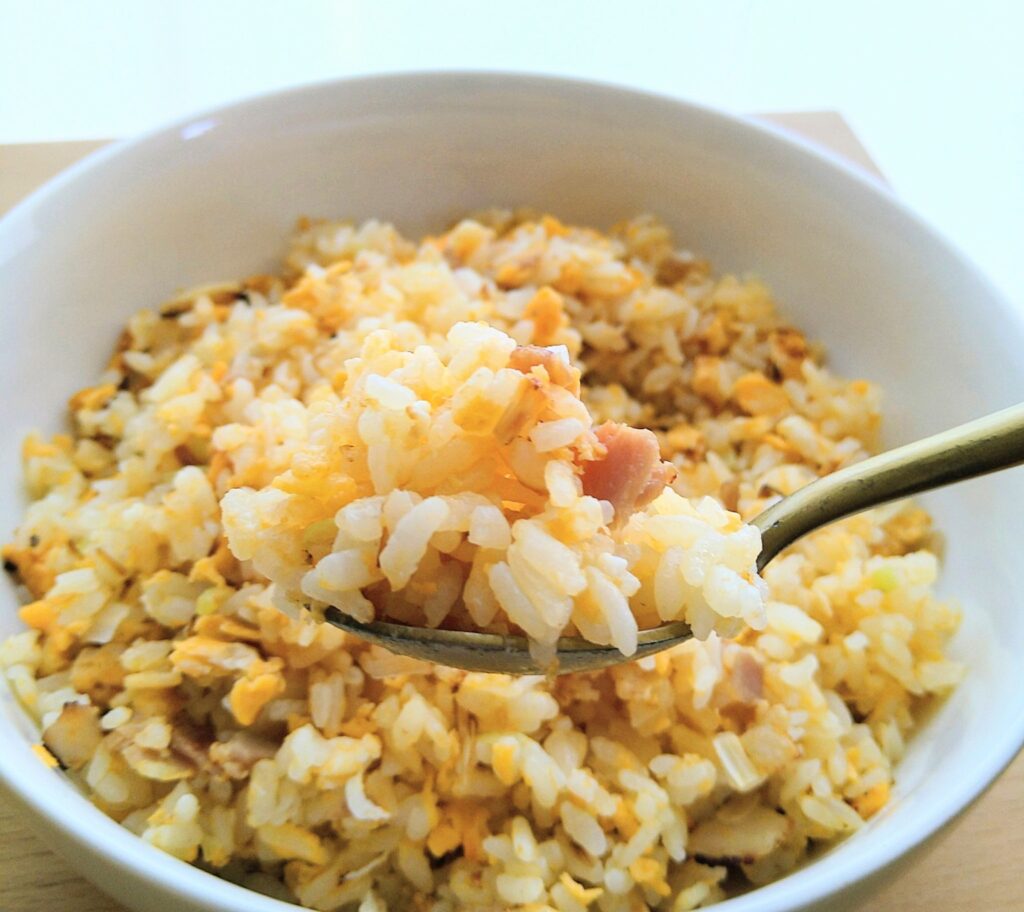
After all the trouble I went through with gyoza, I decided to try fried rice in the same iron pan.
The lessons I’d learned from gyoza were simple: preheat thoroughly, coat the surface with enough oil, manage moisture carefully, and use a thin stainless steel turner when it’s time to release. I figured the same principles should apply to fried rice.
Preparing the Rice — No Water, No Exceptions
Before I started, I came across an article claiming that rinsing cooked rice removes excess starch and makes it easier to fry up fluffy and separated.
But I had the gyoza incident fresh in my memory. I’d rinsed the wrappers under water, and they stuck completely — a disaster.
That experience made one thing clear: getting the rice wet was not an option.
Instead, I left the freshly cooked rice to sit for about 30 minutes, letting the surface dry out slightly before using it.
How I Cooked It
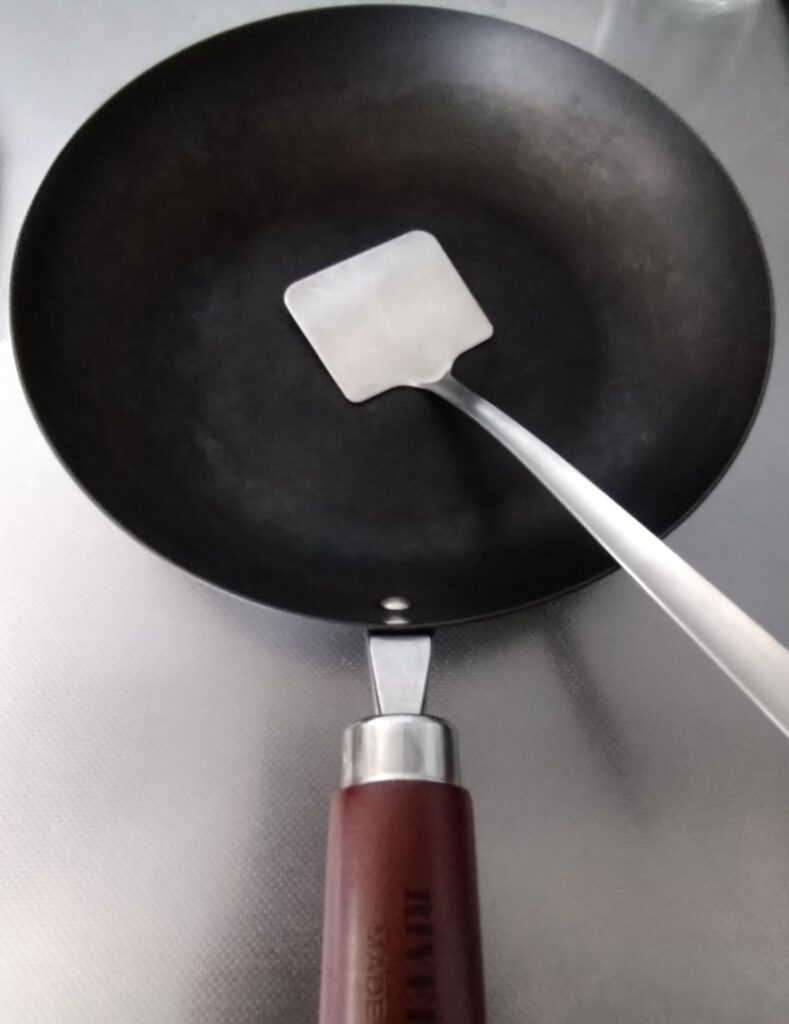
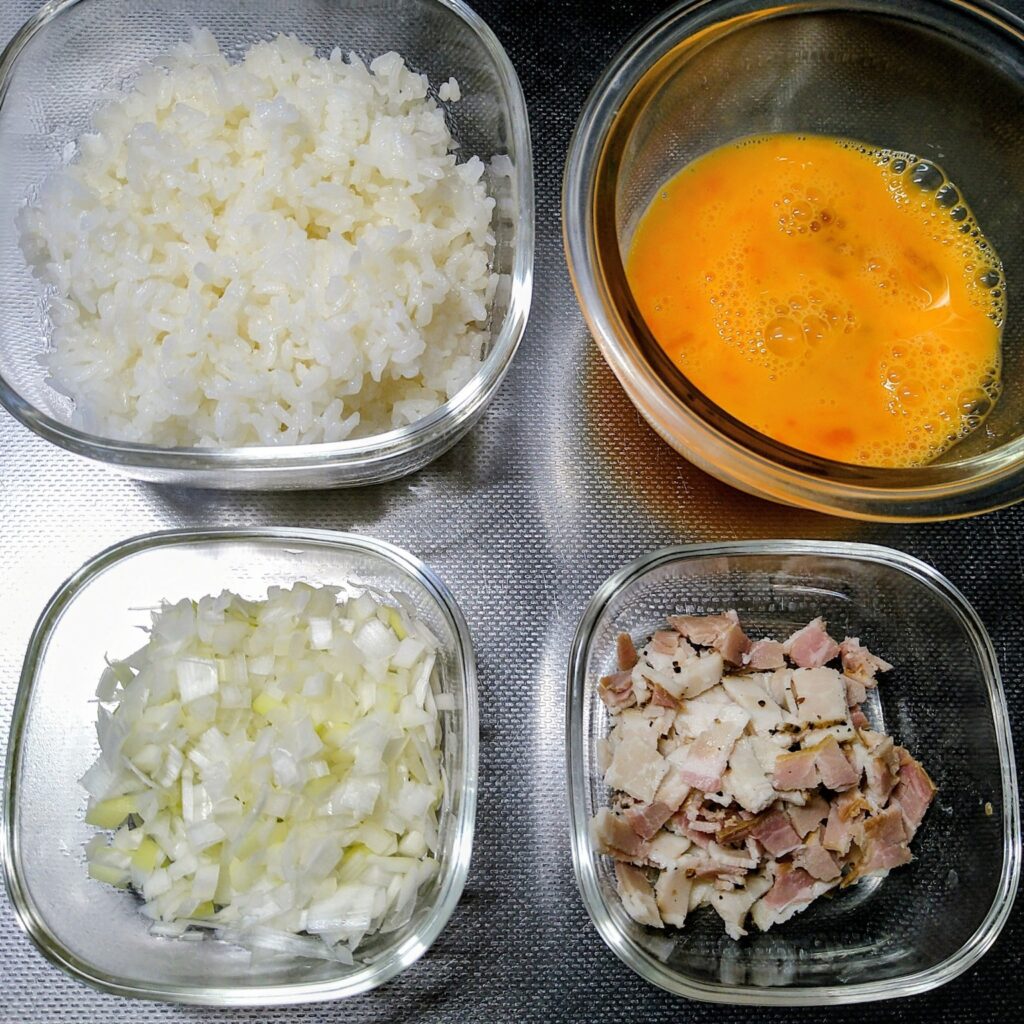
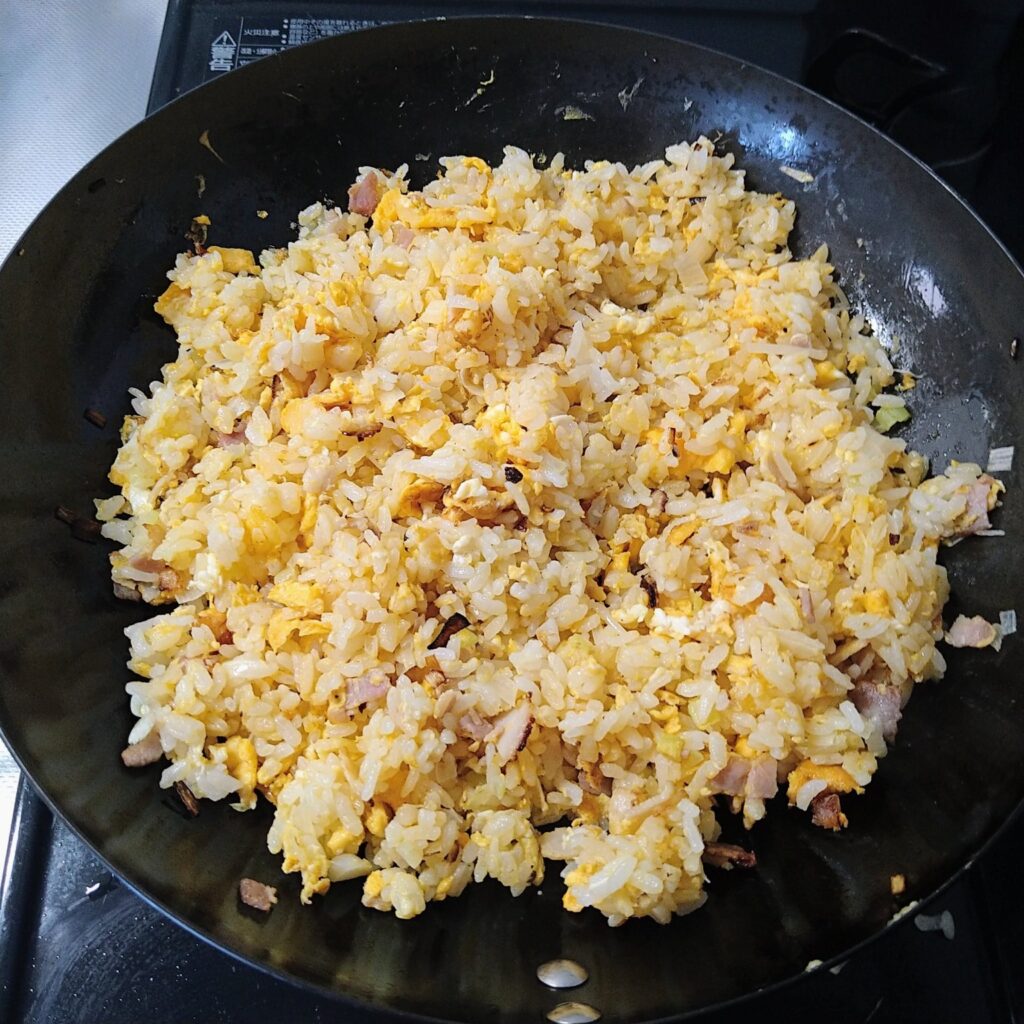
The ingredients were straightforward: green onion, bacon, two eggs, and rice.
I preheated the pan thoroughly, then added about 3/4 tablespoon of oil. I stir-fried the green onion and bacon, then pushed them to the side. I added another 1/4 tablespoon of oil, poured in the beaten eggs, and placed the rice on top, breaking it apart as I went.
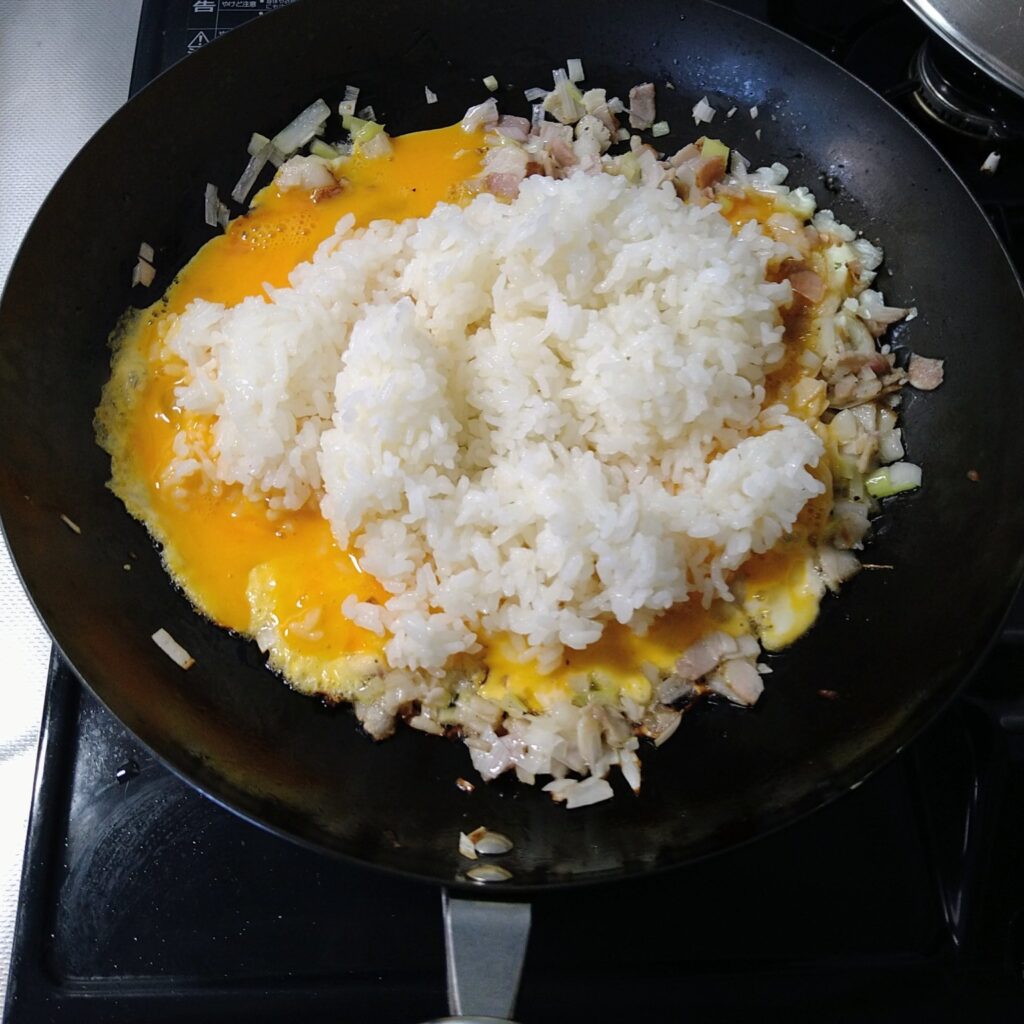
It stuck a little at first. But this time, I didn’t panic.
Unlike gyoza, the rice was coated in egg. I knew that protein contracts when heated and releases from the surface over time.
I kept calm, sliding the stainless steel turner along the bottom to loosen things up — and gradually, the rice stopped sticking. By the end, I had fluffy, separated fried rice.
Why It Was Easier Than Gyoza
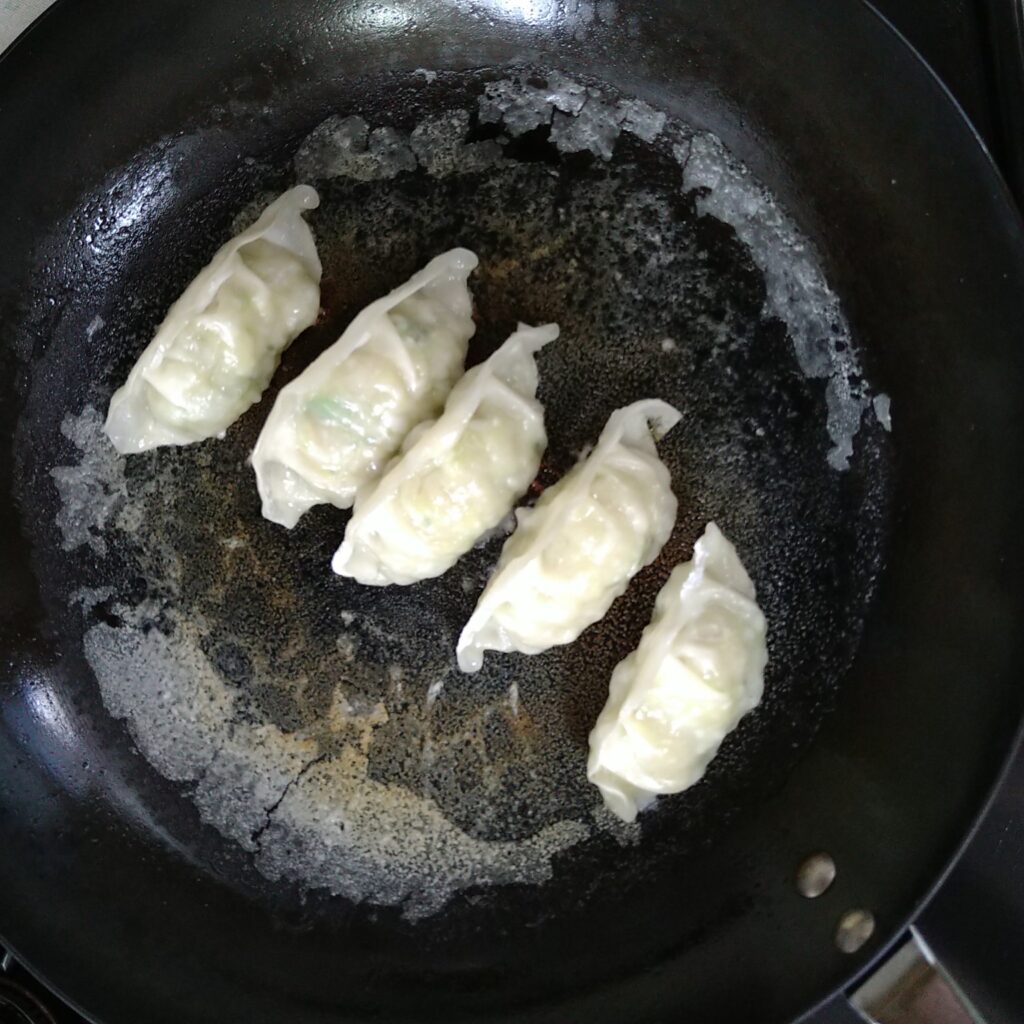
Gyoza wrappers are made of starch. The more moisture they get, the more firmly they bond to the pan. Even a small lapse in moisture management was enough to make them stick so hard that even a stainless steel turner couldn’t get under them.
Fried rice was different. Rice is starchy too, but the egg coating weakened the bond enough that even when it stuck, the turner could slide underneath without much force.
In the end, the lesson from gyoza — that starch-based foods come down to moisture management and the right tool — applied just as well here. The egg just made everything a little more forgiving.
One thing to fix next time: the green onion burned slightly. I’ll move the cooked ingredients to a plate before adding the egg and rice.
Final Thought
I’d bought extra ingredients expecting things to go wrong. They didn’t — it came out better than I expected on the first try, and the backup supplies went untouched.
They say a cast iron pan gets better with use. It seems I’m getting better too.
Related Articles
→ How to Cook Gyoza in a Cast Iron Pan — Why It Sticks and What to Do About It
→ River Light Iron Frying Pan Review
→ Why Food Sticks to Cast Iron — And How to Prevent It
→ How to Care for a Cast Iron Pan
Leave a Reply