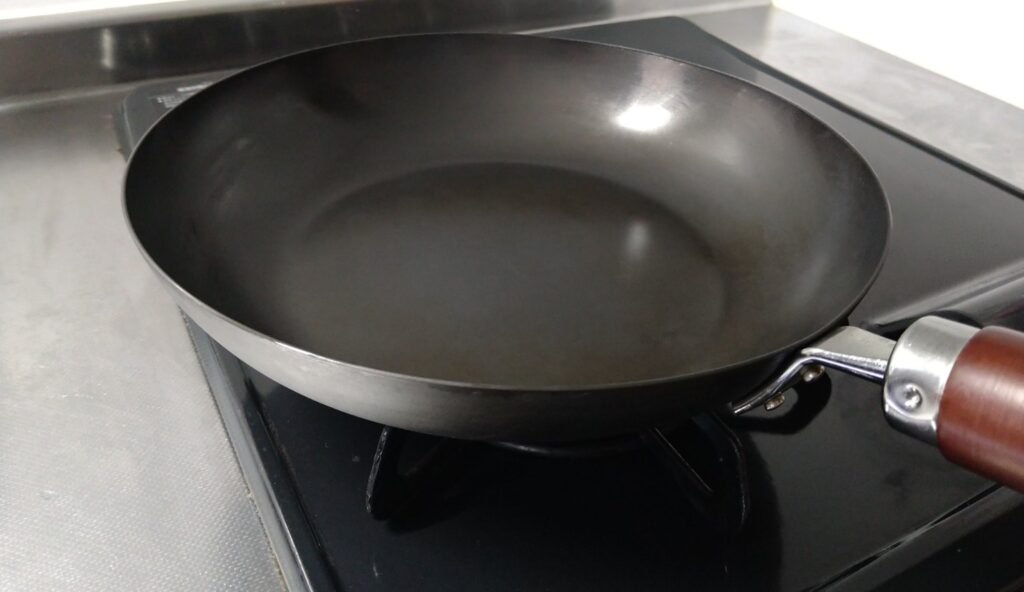
For a long time, I used non-stick pans.
They were lightweight, required little oil, and were easy to care for.
But over time, I began to question using them. PFAS — chemicals associated with non-stick coatings — have raised concerns about long-term health and environmental impact.
For something I use every day, I wanted to feel more comfortable with my choice. That’s when I came across River Light.
Why River Light
What drew me to the brand was their approach to materials.
They use steel sourced exclusively from Japanese steelmakers, with strict control over raw materials. Knowing exactly where the steel comes from gave me confidence.
The reviews backed it up, with many people praising its rust resistance and durability. That was another reason I decided to give it a try. And in all the time I’ve been using it, it has never rusted.
The pan is made in River Light’s own factory in Japan by skilled craftsmen. Thanks to a special heat treatment, it resists rust without any coating.
No initial high-heat seasoning is required — a simple oil seasoning is enough to get started.
The wooden handle fits comfortably in the hand and stays cool during cooking. It comes in a variety of sizes and works on all heat sources, including IH cooktops. I use the 26 cm version on a gas stove.
What It’s Like to Use
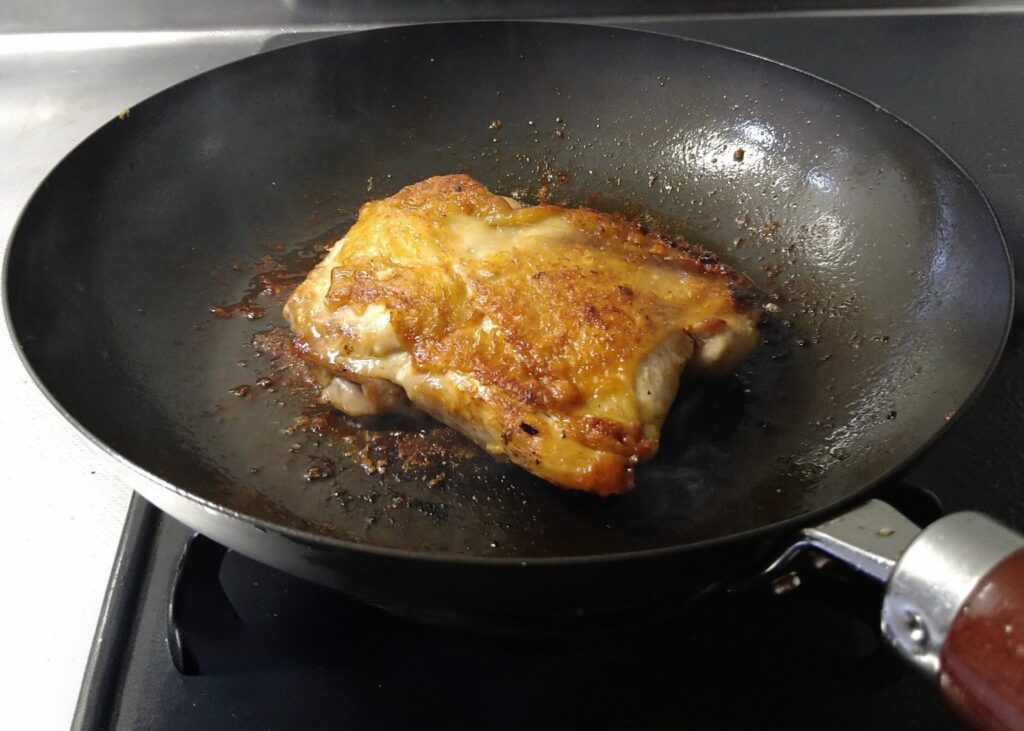
It’s heavier than a non-stick pan and takes a little longer to heat up. But once it’s hot, the temperature stabilizes and heat spreads evenly — so cooking actually becomes quicker.
Even at high heat, the wooden handle stays cool, so no oven mitts needed.
More than anything, what surprised me most was the difference in how the food turned out. I noticed it most in simple dishes.
Stir-fried vegetables turn out crisp and fragrant, chicken develops a golden, crispy surface while staying juicy inside, and eggs come out soft. Fish also turned out clean in flavor, without that strong fishy taste, even when I used frozen fish.
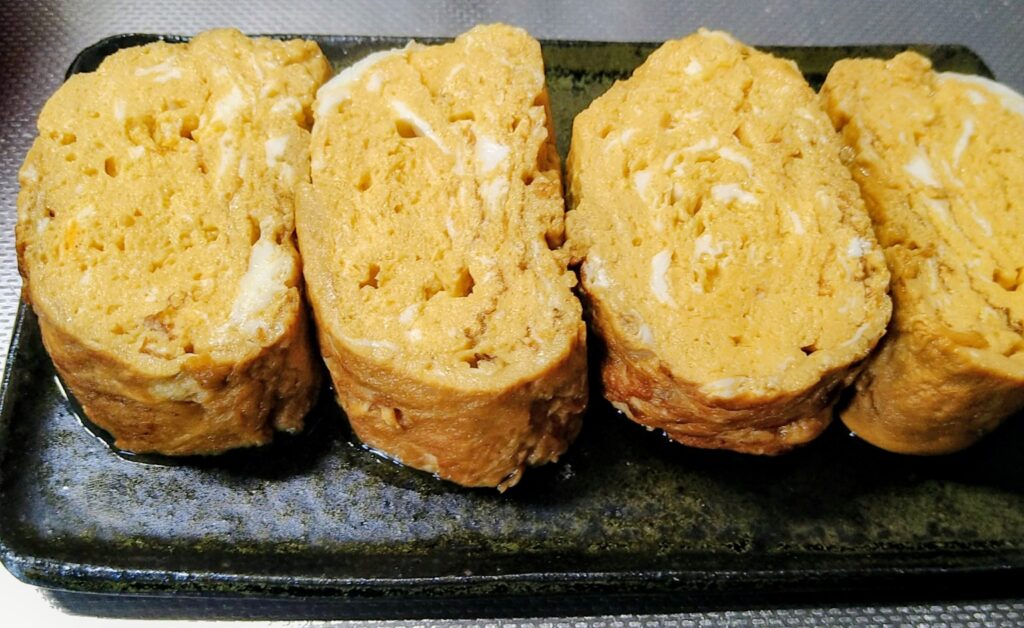
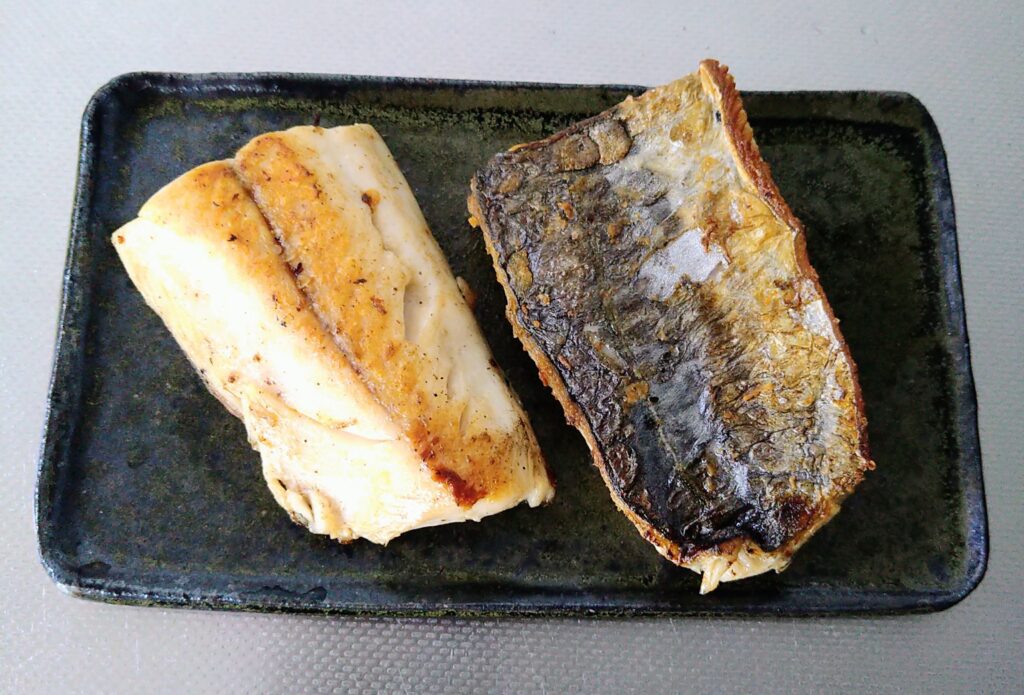
I’m not sure if it’s the material itself, but food cooked in this pan seems to taste a little richer — there’s a depth to it that I don’t quite get with other pans.
Getting Used to It
At first, things stuck.
The key was preheating — heating the pan thoroughly until just before it starts to smoke. Once a faint wisp of smoke appears, lower the heat. Once I figured that out, cooking became much less stressful.
If you’ve struggled with sticking, you can read more here:
→ Why Food Sticks to Cast Iron — And How to Prevent It
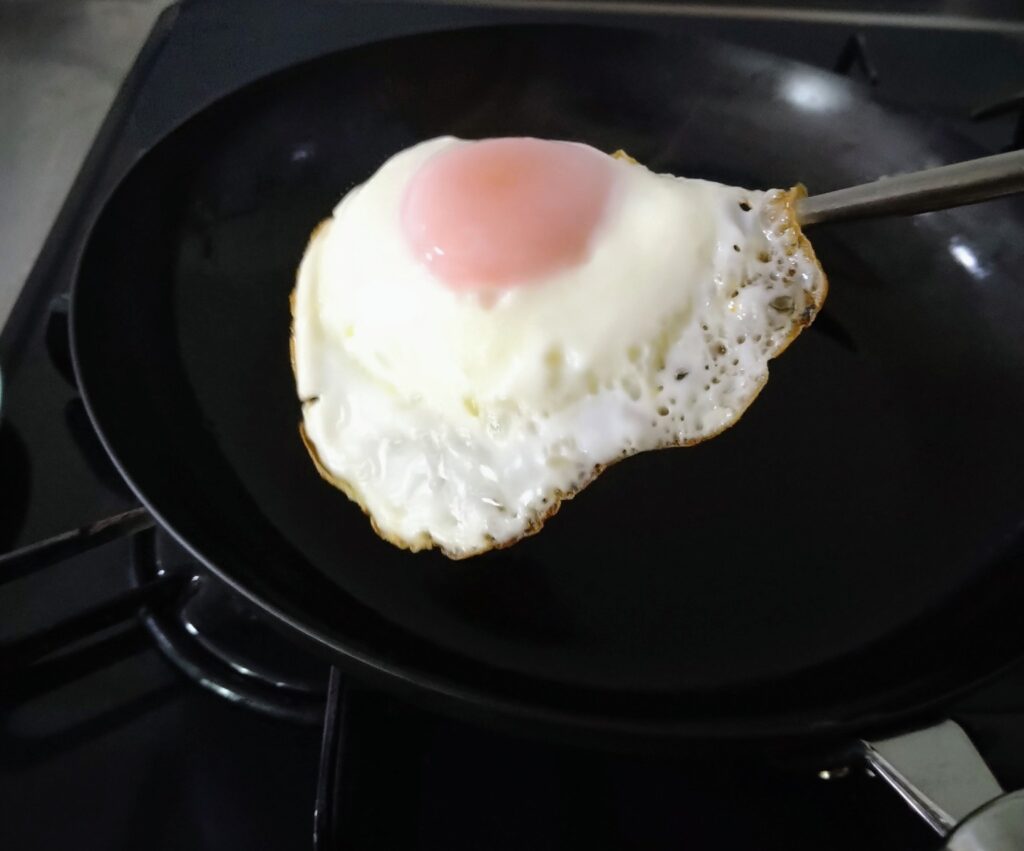
Slid right off
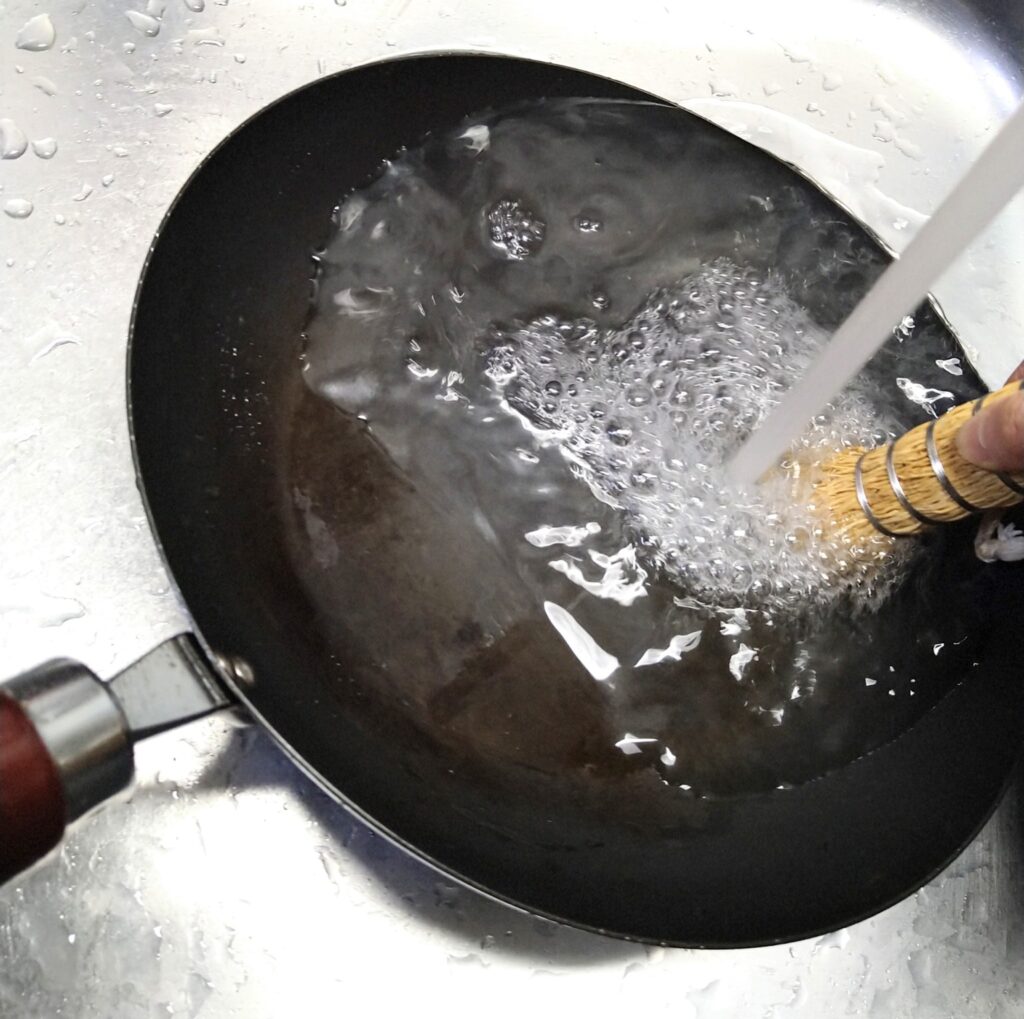
I also reworked how I washed it. I had been washing it too gently to preserve the seasoning layer, but that left residue behind, which eventually led to more scorching.
After switching to a natural fiber brush and water, and occasionally using dish soap, the pan stayed much cleaner and scorching became less of an issue.
I was initially concerned that dish soap might affect the seasoning and make food stick more easily, but I didn’t find that to be the case.
If you’re interested, you can read more here.
→ How to Care for a Cast Iron Pan
Where to Buy
→ River Light Cast Iron Pan on Amazon
Related Articles
→ How to Cook Gyoza in a Cast Iron Pan — Why It Sticks and What to Do About It
→ Is Tamagoyaki (Japanese Rolled Omelette) Difficult with a Cast Iron Pan?
→ Karukaya Brush for Cast Iron Pans — A Natural Scrubber from Japan
Closing
It takes a little time to get used to.
But once I did, vegetables stayed crisp and chicken turned out crispy and juicy.
It makes me feel like my cooking has improved, if only a little.
Leave a Reply