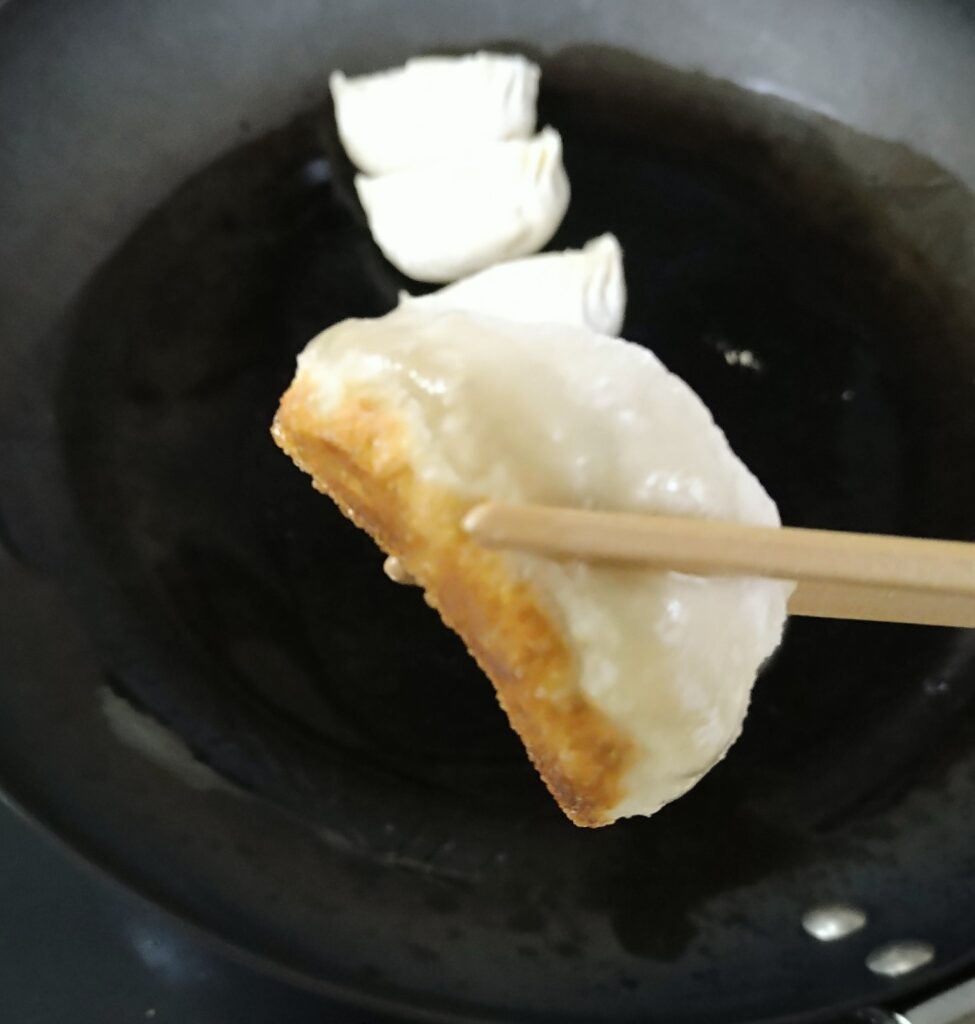
Before adding water for steaming, the gyoza release cleanly from the pan and are not sticking yet.
I was comfortable cooking protein in my cast iron pan.
So I assumed gyoza would be no different.
I thawed some frozen dumplings and rinsed the wrappers under water to remove the excess flour. They stuck completely.
After cooking 70 more gyoza, I figured out what went wrong.
There are four things that matter when cooking gyoza in a cast iron pan — heat, oil, moisture management, and the right tool.
The Four Key Points
The foundation of cast iron cooking is a shield — creating a state where food doesn’t directly bond to the metal surface. Heat and oil work together to create it.
For gyoza, two more factors come into play: moisture management to maintain the shield, and the right tool to act as a spear and break the bond when it’s time to release.
Heat + Oil — The Shield
A properly preheated pan instantly sears and sets the surface of the food the moment it makes contact. Oil gets between the food and the pan, preventing direct contact. Together, these two create the shield.
Without enough heat, the wrapper bonds to the pan before the surface has a chance to set. Too little oil exposes the metal surface and makes sticking more likely.
Moisture Management — Maintaining the Shield
Too much moisture lowers the pan’s temperature and weakens the shield. Use wrappers that are dry. After steaming, remove the lid and let the moisture evaporate completely.
The Tool — The Spear
The turner’s job is to slide its edge under the wrapper and break the bond between the gyoza and the pan. The thinner and harder the edge, the less force it takes to get under.
Silicone flexes and lacks a sharp edge. Wood is hard but thick and dull. Both fail to cut through the bond.
The only tool that can is a thin, rigid stainless steel turner.
Why Gyoza Sticks to a Cast Iron Pan
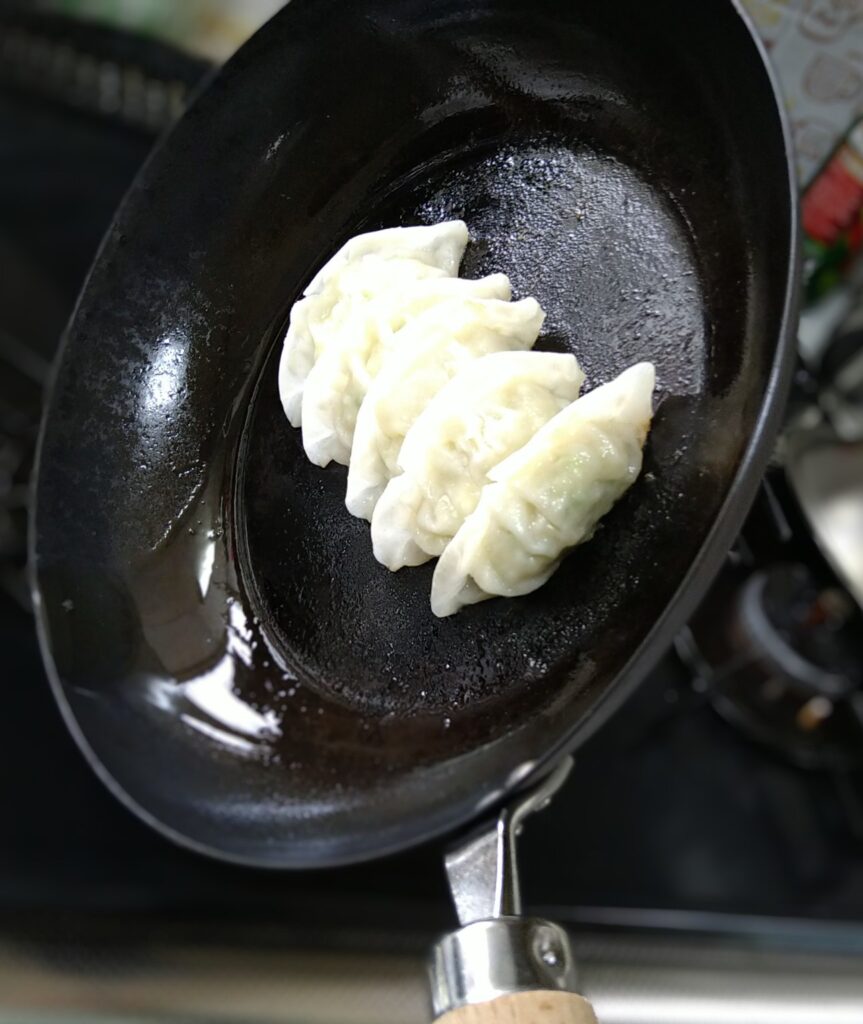
Gyoza wrappers are made from wheat flour. When exposed to heat and moisture, the starch gelatinizes and bonds to the surface of the pan. Unlike protein, which contracts when heated and releases from the pan, starch does the opposite — the more heat and moisture it gets, the more it sticks.
In practice, the gyoza didn’t stick before the steaming water was added. The moment moisture entered the pan, they started to bond. That explains the first failure. Rinsing the wrappers added excess moisture before cooking even started.
Gyoza Is Meant to Stick — and Then Be Released
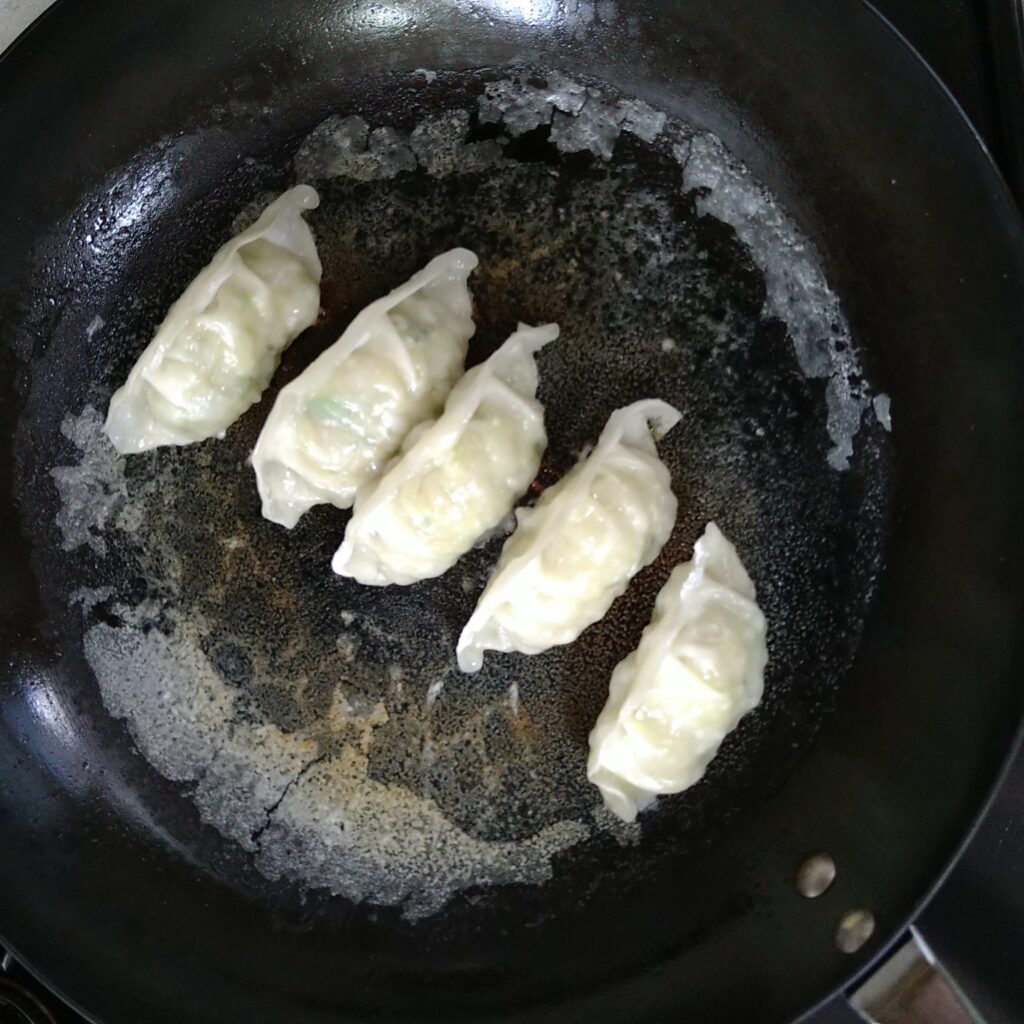
The crispy texture of pan-fried gyoza comes from gelatinized starch. As the gelatinized starch loses moisture and sets, it creates that signature crunch. Sticking, in other words, isn’t the problem. It’s what makes gyoza crispy.
What matters is the quality of the bond.
When the shield is working and gelatinization begins after the steaming water is added, there’s already a seared layer between the wrapper and the pan. The bond stays on the surface. Once the moisture evaporates, the gyoza can be released with a turner.
When the wrapper is wet from the start, the shield weakens.
The starch bonds directly to the metal surface. By the time it sets, the bond is too strong for even a stainless steel turner to break.
This is what seems to be happening — though it’s hard to say for certain.
Wrapper Texture Changes Everything
I tested two types of gyoza — fresh and frozen — and the results were the same either way. What mattered wasn’t fresh versus frozen. It was the wrapper.
Gyoza with firm, low-moisture wrappers were straightforward. Even if they stuck a little, a gentle push with a silicone turner was enough to release them. The wrappers stayed intact. Clean results.
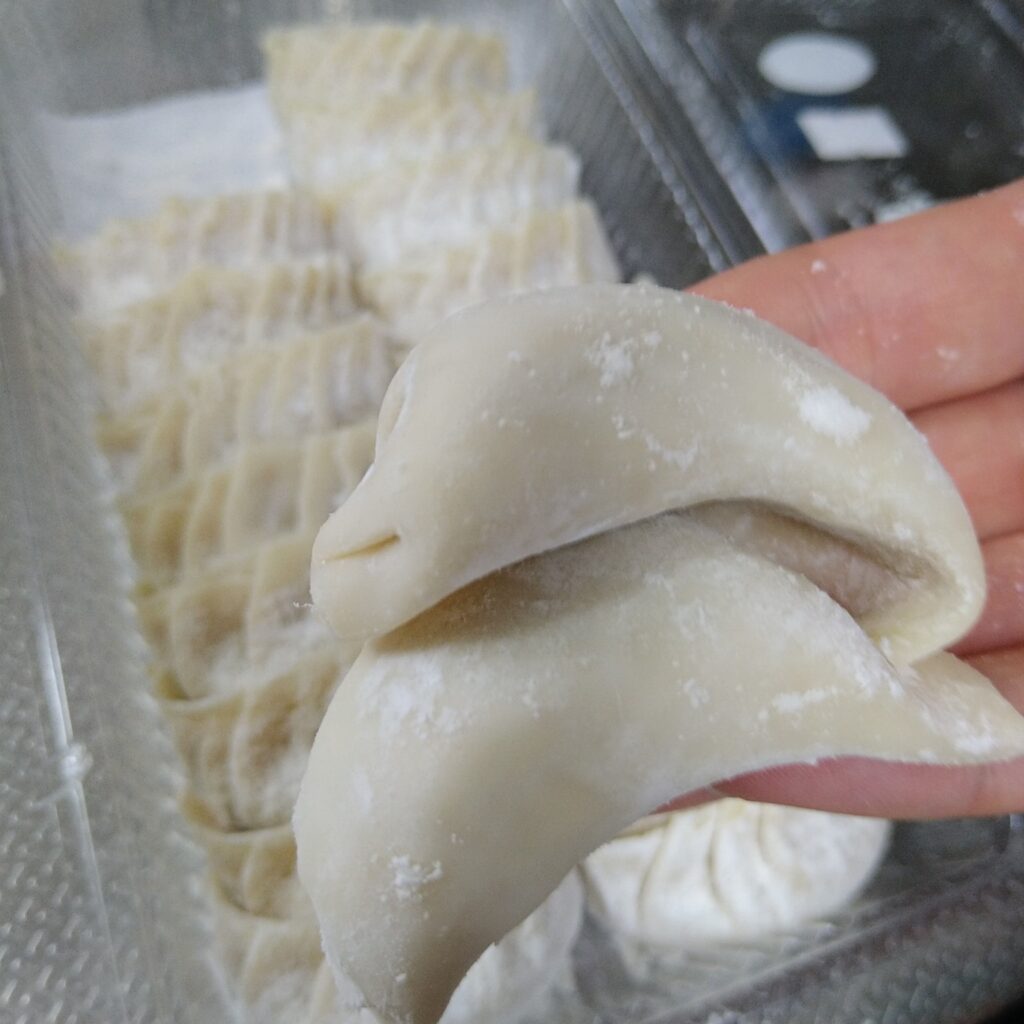
Firmer, lower-moisture wrappers hold much less excess flour.
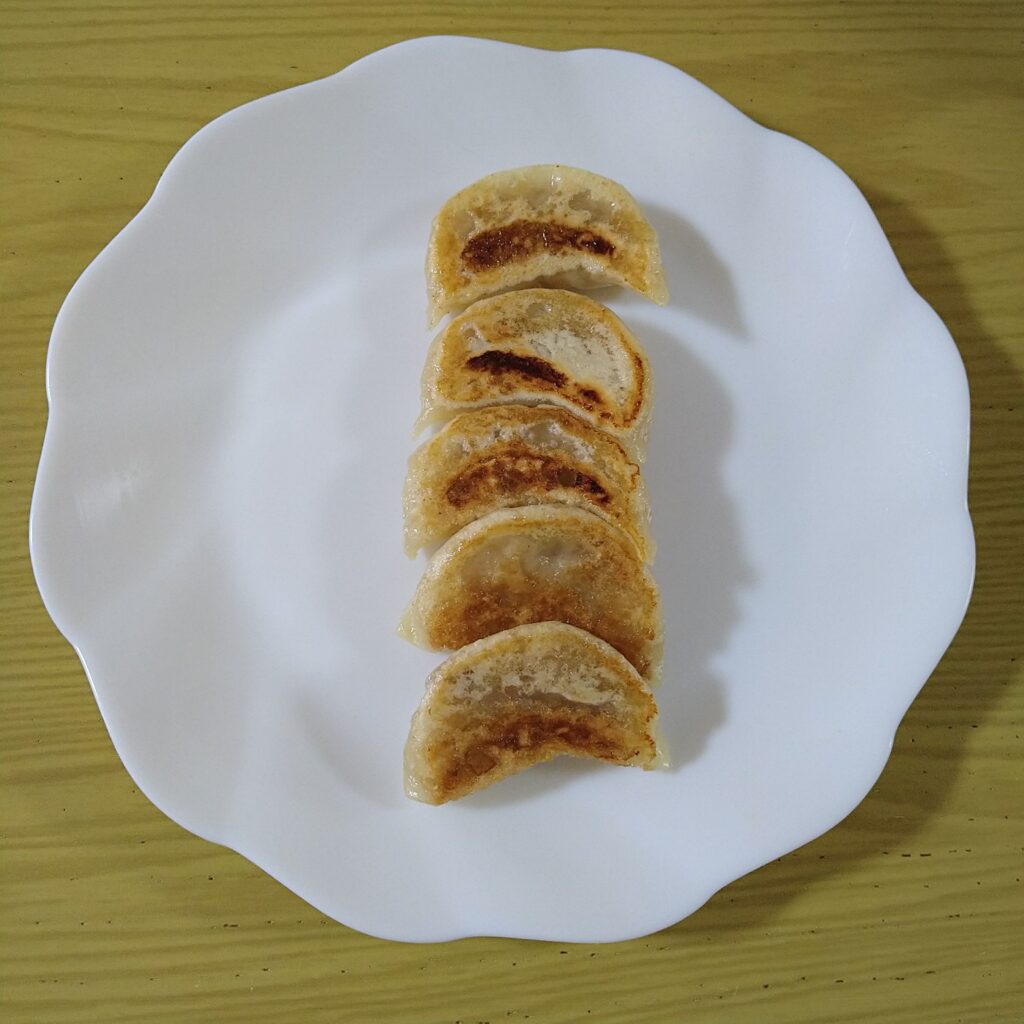
Gyoza with soft, high-moisture wrappers were a different story.
They stuck more, the edges would release but the center stayed bonded, and the act of releasing them was itself enough to tear the skin.
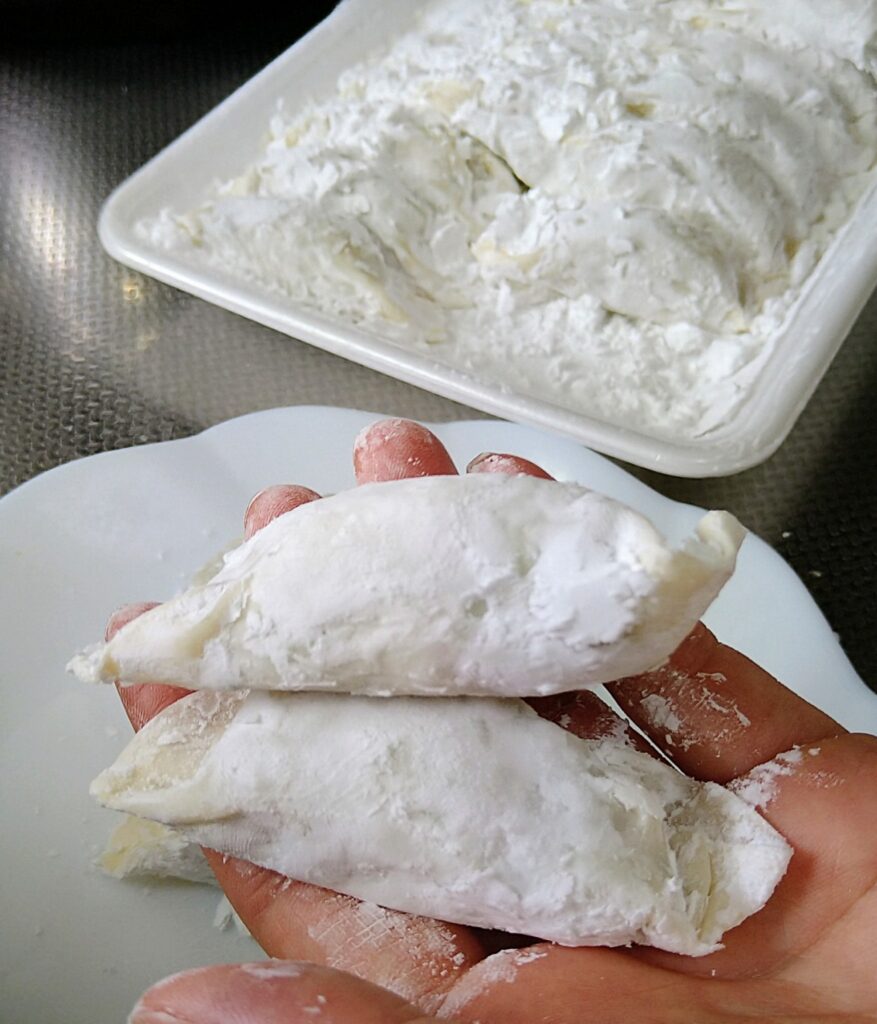
Soft, high-moisture wrappers tend to hold onto excess flour.
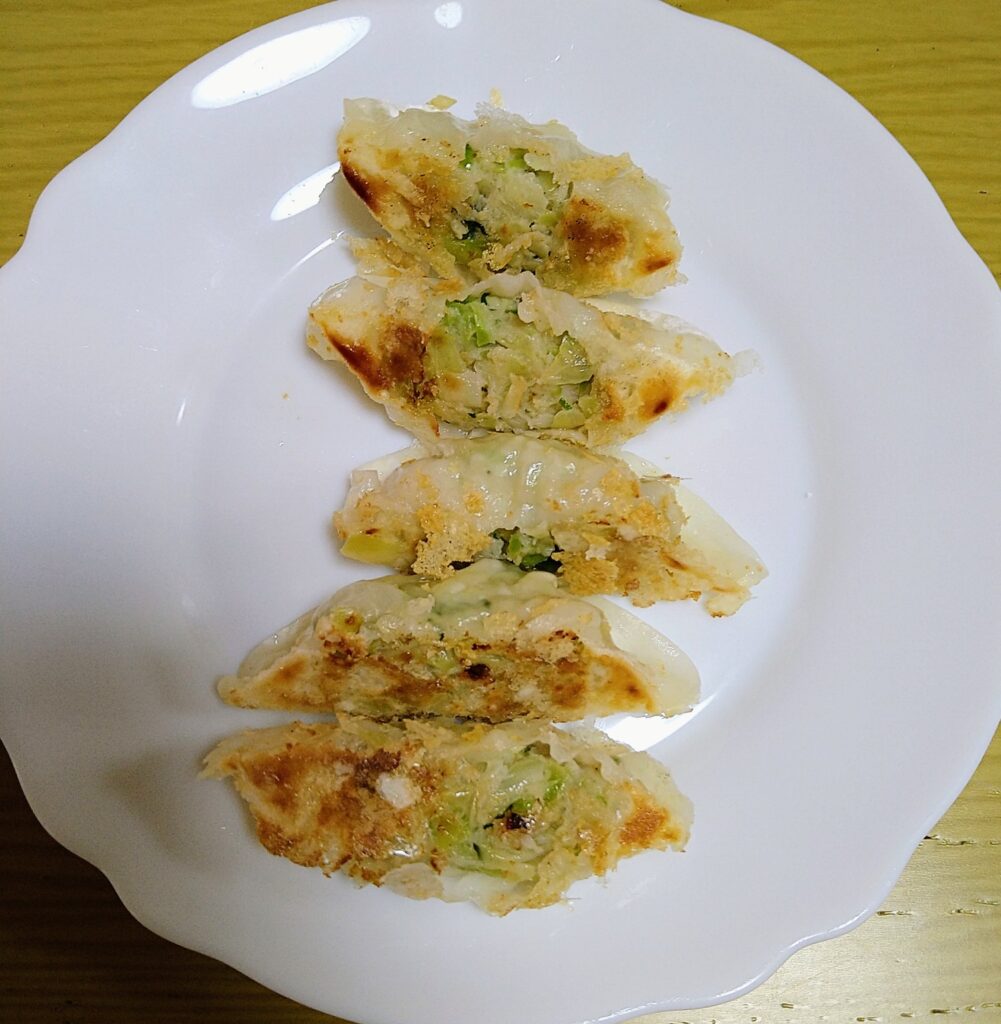
The wrappers tend to tear in the center where moisture is highest.
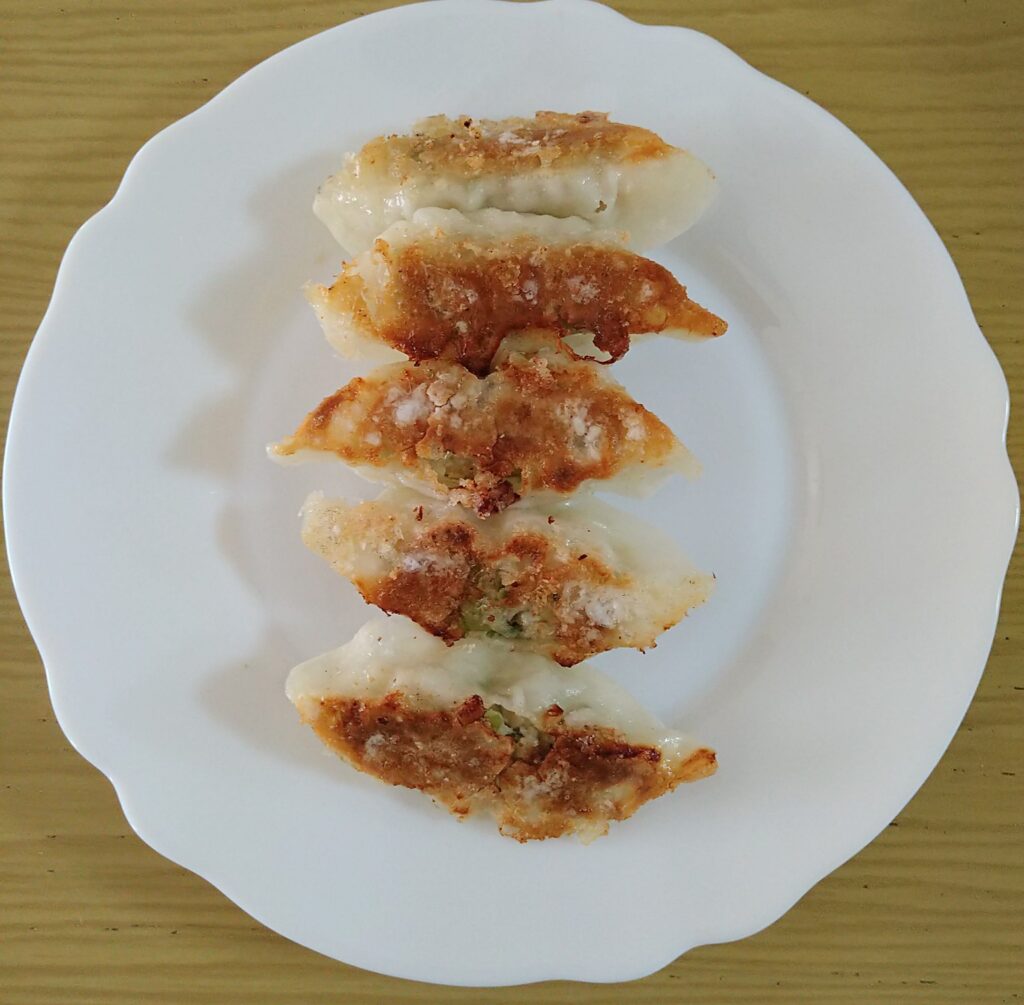
Nicely browned, but three wrappers tore.
A silicone turner couldn’t get under the wrapper or the crispy edges. I tried more oil. I tried hot water instead of cold for steaming. Nothing changed. Even with heat, oil, and moisture well managed, the final act of releasing the gyoza was the hardest part. That’s where the tool makes the difference.
A stainless steel turner could slide under where silicone couldn’t. With force concentrated at the edge and minimal resistance, it got under the wrapper without tearing it. The moment I switched turners, the struggle was over.
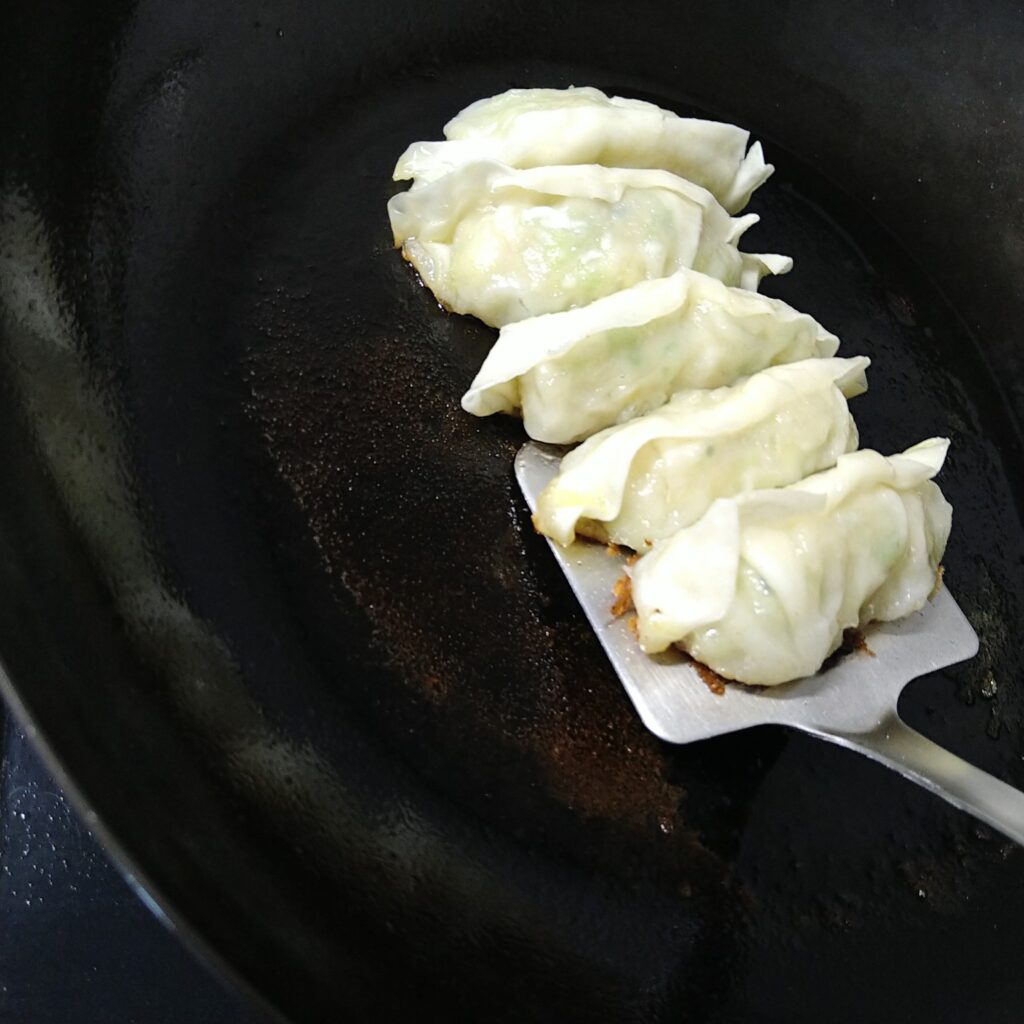
A thin stainless steel turner can slide under the wrapper and break the bond with the pan.
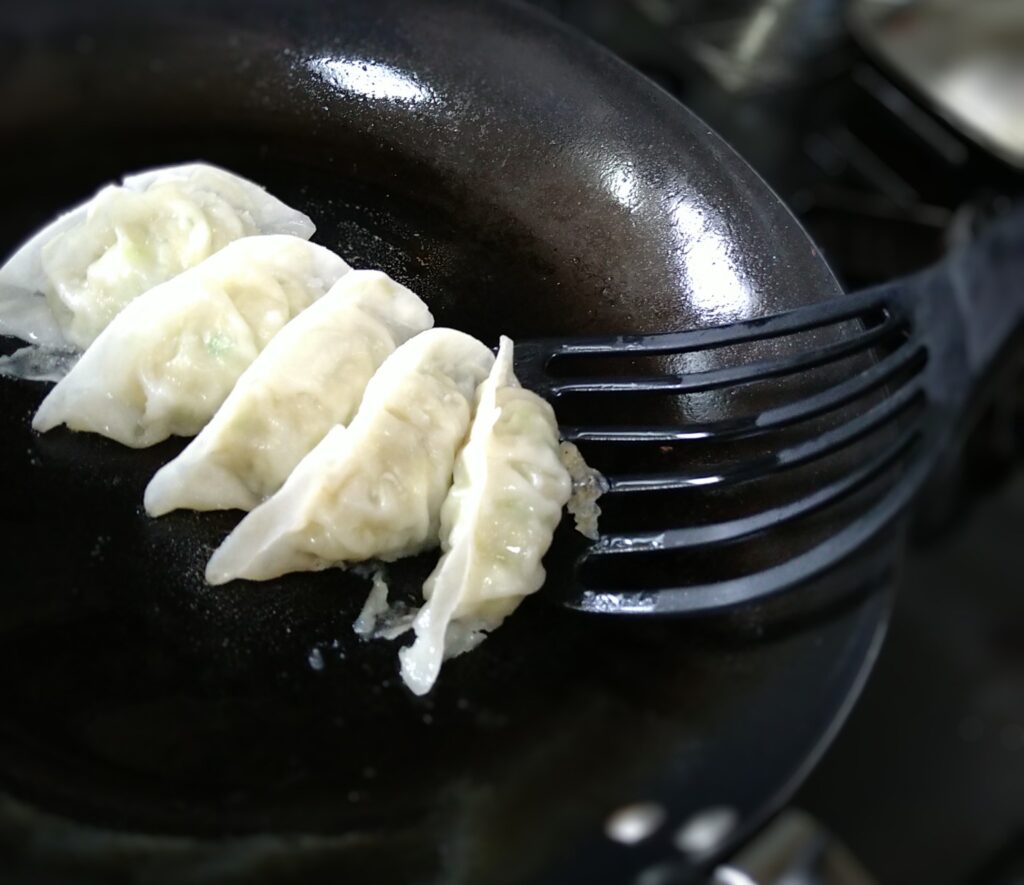
A flexible silicone turner bends easily and cannot break the bond between the gyoza and the pan.
How to Cook Gyoza
Preheat the pan
Heat over medium until just before it starts to smoke. If you see a faint wisp of smoke, lower the heat slightly.
Add oil
Swirl to coat the entire surface, with just a little left over. For a 26cm pan, about 1/2 to 1 tablespoon. When the pan is properly preheated, the oil will spread quickly and smoothly. As the pan becomes more seasoned over time, less oil will be needed.
Add the gyoza
Place them flat side down. Cook until the bottoms are lightly golden. Lower the heat slightly here to avoid burning while the first pieces are still going in.
Add water
Pour in enough to reach about 1/4 to 1/3 of the height of the gyoza. For crispy wings, mix in a little potato starch or flour.
Cover and steam
Cover with a lid and steam until most of the water has evaporated.
Remove the lid and dry the pan
When you hear a crackling, sizzling sound, remove the lid and let the remaining moisture evaporate completely. Cook until the wings and edges of the gyoza are golden. Adding a small drizzle of oil at this stage seems to make them crispier, though it’s not necessary. Medium to low heat is safer here — high heat makes it easy to burn.
Release and plate
Slide the turner under the wrapper and crispy edges, and release the gyoza carefully.
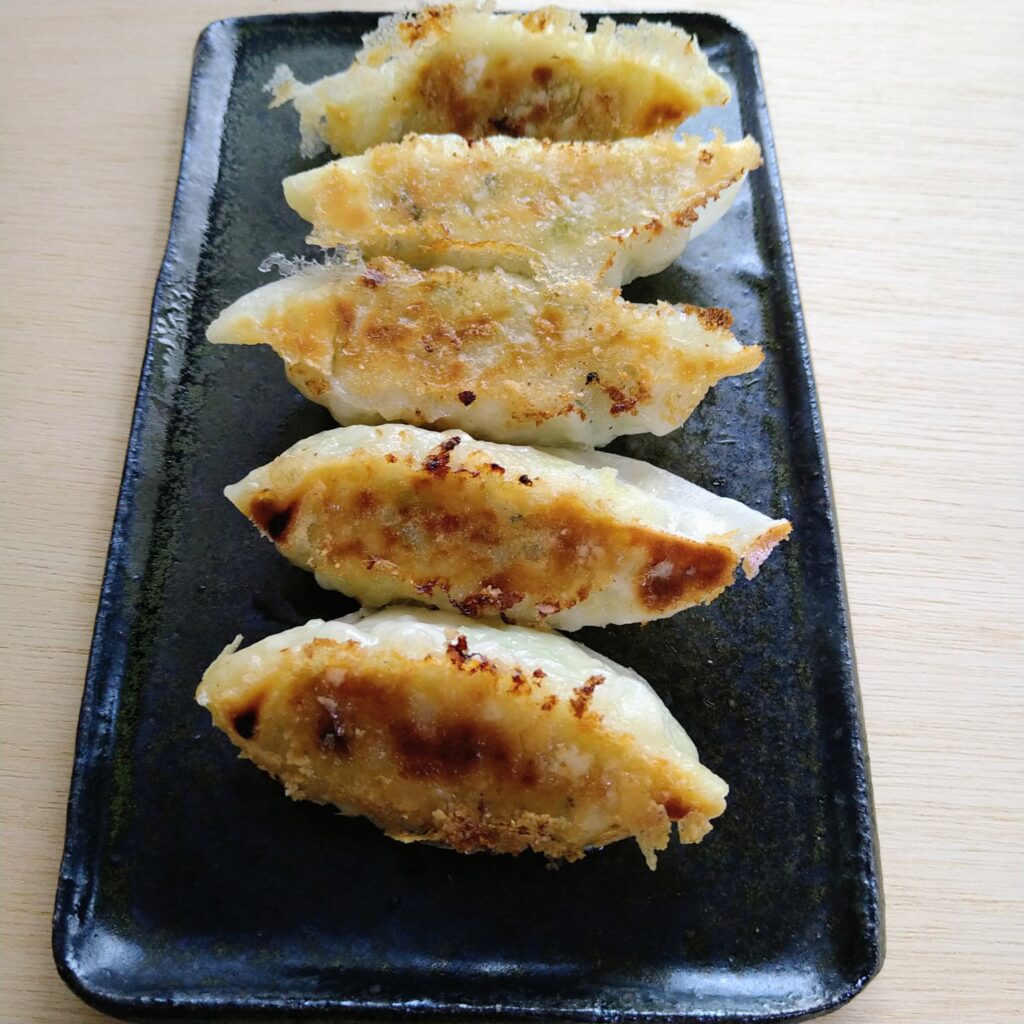
No tearing with soft, high-moisture wrappers.
Final Thoughts
At first, I was looking for a way to cook gyoza without it sticking. Maybe a professional cook could pull that off. But for an amateur like me, it wasn’t happening.
So I changed my approach. I accepted that gyoza is a food that sticks — and focused on keeping the bond as weak as possible through heat, oil, and moisture management, then relied on the right tool to finish the job.
The moment I switched to a stainless steel turner, the gyoza that had given me so much trouble came off the pan cleanly. It might not be the perfect method. But for me, it was enough.
Gyoza cooked in cast iron has a flavor and crispiness that other pans can’t quite match. I think it’s worth the effort.
Related Articles
→River Light Iron Frying Pan Review — A Japanese Pan I Keep Using → Why Food Sticks to Cast Iron — And How to Prevent It
→ How to Care for a Cast Iron Pan
→ Wood, Silicone, or Stainless? Choosing a Turner for Cast Iron Cooking
→ Is Tamagoyaki (Japanese Rolled Omelette) Difficult with a Cast Iron Pan?
→How I Made Fried Rice in a Cast Iron Pan — What Gyoza Taught Me
Leave a Reply