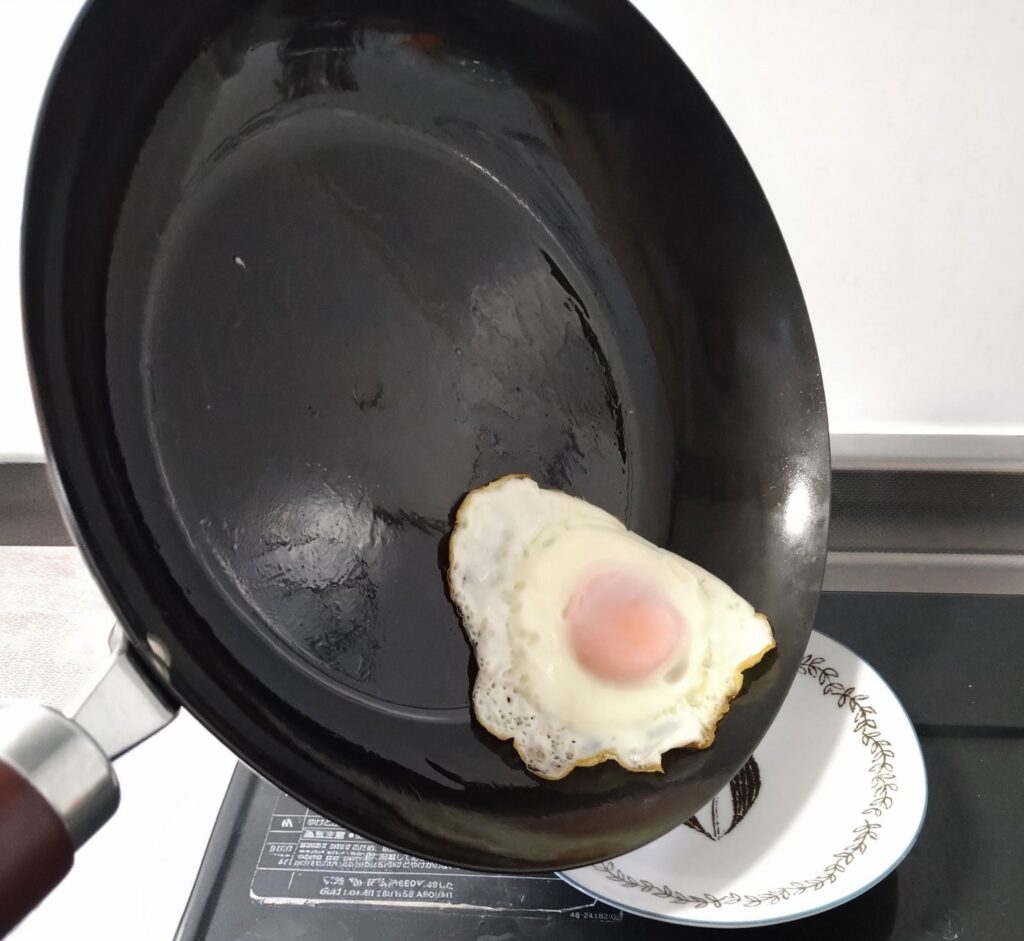
Why Food Sticks
Food sticks when the pan isn’t preheated enough or when there isn’t enough oil. Without enough heat, food bonds to the surface before it has a chance to set. Too little oil exposes the metal, making sticking more likely.
The Shield — Heat and Oil
The foundation of cast iron cooking is the shield — keeping food from bonding directly to the metal surface. Heat and oil create it together.
A properly preheated pan instantly sears and sets the surface of the food the moment it makes contact. Oil gets between the food and the pan, preventing direct contact. Neither works alone — only together do they form the shield.
Heat the pan until just before it starts to smoke — if you see a faint wisp, lower the heat slightly — then add the oil. When the pan is properly preheated, the oil spreads quickly and smoothly. That’s a sign the temperature is right.
Protein vs. Carbs — Different Behavior
Food behaves very differently in a cast iron pan depending on what you’re cooking.
Protein
Protein contracts as heat gets through. Even if it sticks at first, it will usually release on its own as the surface sets — as long as the shield is working. Patience is key.
If it still sticks, add a small splash of water, cover with a lid, and let the steam help release it. If needed, turn off the heat and wait. Don’t force it.
Carbs
Starch gelatinizes when exposed to heat and moisture, bonding to the surface of the pan. Unlike protein, the more heat and moisture it gets, the more it sticks.
The shield alone isn’t enough. Two more things are needed.
Moisture Management — Maintaining the Shield
Too much moisture lowers the pan’s temperature and weakens the shield. Keep the surface of the food as dry as possible. Get this wrong, and even the right tool won’t be able to help.
The Right Tool — The Spear
To release carbs that have bonded to the pan, a thin, rigid stainless steel turner is the tool for the job. Silicone is too soft and lacks a sharp edge. Wood is hard but too thick. Neither can cut through the bond between the food and the pan.
Breaking In and Oil Priming
For a new pan, it helps to do an initial oil treatment. Heat a generous amount of oil in the pan, swirl it to coat the entire surface, then pour the excess back into an oil pot. Oil priming before cooking works the same way. It creates an even film of oil across the surface and helps prevent sticking. I only did this in the early days.
It doesn’t have to be perfect. What matters is building up layers over time through regular use.
Closing
Cast iron isn’t difficult. The basics are heat, oil, and a little patience.
For carbs, moisture management and the right tool matter just as much. Once you understand how different foods behave, cast iron becomes much easier to use.
Related Articles
→ River Light Cast Iron Pan from Japan — A Simple Pan I Keep Using
→ How to Care for a Cast Iron Pan
→ How to Cook Gyoza in a Cast Iron Pan — Why It Sticks and What to Do About It
→How I Made Fried Rice in a Cast Iron Pan — What Gyoza Taught Me
Leave a Reply