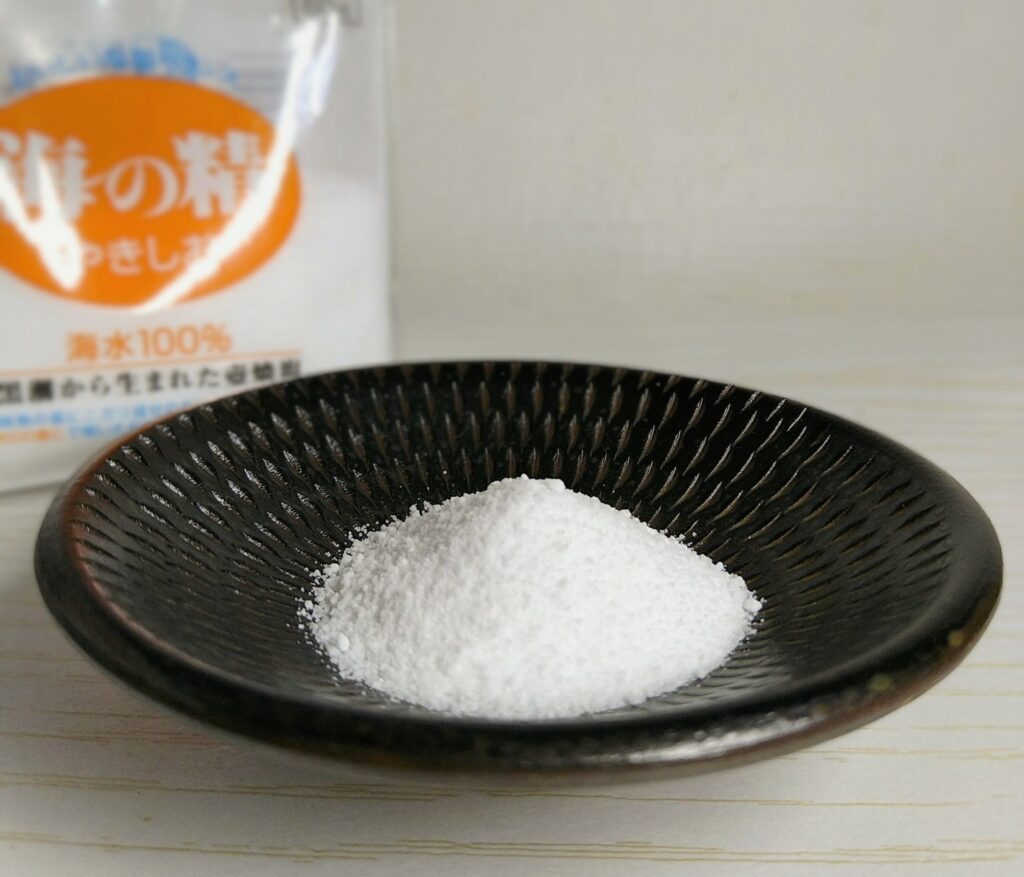
Umi no Sei is a Japanese sea salt known for its mineral-rich content and traditional production methods.
It is often used in macrobiotic cooking, where unrefined natural salts are preferred.
This time, I tried the yakishio variety for the first time.
How It’s Made
Made using only seawater from around Izu Oshima, the brine is first concentrated using a net-flow salt bed powered by sun and wind, then crystallized in flat kettles.
The resulting salt is fired at high heat to create yakishio — a dry, free-flowing roasted salt.
Flavor and Character
The grains are fine and dry, making it easy to sprinkle evenly.
It feels light and smooth when picked up with your fingers.
The saltiness is direct, with a clear, defined taste.
How I Use It
I found it better suited for seasoning during cooking — where it has time to blend into the ingredients — rather than as a finishing salt sprinkled at the table.
When used as a base seasoning for meat or fish, it helps the flavor settle in clearly without adding extra character, bringing out the natural taste of the ingredients.
Where to Buy
Key Details
- Made from 100% Izu Oshima seawater
- Produced using a traditional net-flow salt bed, flat kettle, and high-heat firing
- Naturally rich in minerals
- No additives
- Fine, dry, free-flowing texture
Closing
I usually reach for salts that are slightly moist and coarser, so this fine, dry texture felt especially easy to handle.
Even small differences in texture and saltiness can change how a salt works in cooking, which is something I noticed again here.
Other Japanese sea salts I use
→ Aguni Salt
→ Nuchimasu
→ Toppenn Salt
→ Four Japanese Natural Salts Compared
Leave a Reply