I was worried the potato galette would stick to the iron pan.
It didn’t. It fell apart instead.

I cut the potatoes into thin strips, salted them, and squeezed out the moisture. No soaking in water — I didn’t want the starch to wash away. I’d read that the starch alone would hold everything together without adding potato starch.
I preheated the pan as usual, added oil, and spread the potatoes out into a round shape. Covered it and let it steam. When the potatoes looked translucent, I slid a spatula underneath.

Almost no resistance.
The potatoes hadn’t stuck to the pan.
They also hadn’t stuck to each other.
Everything was falling apart.
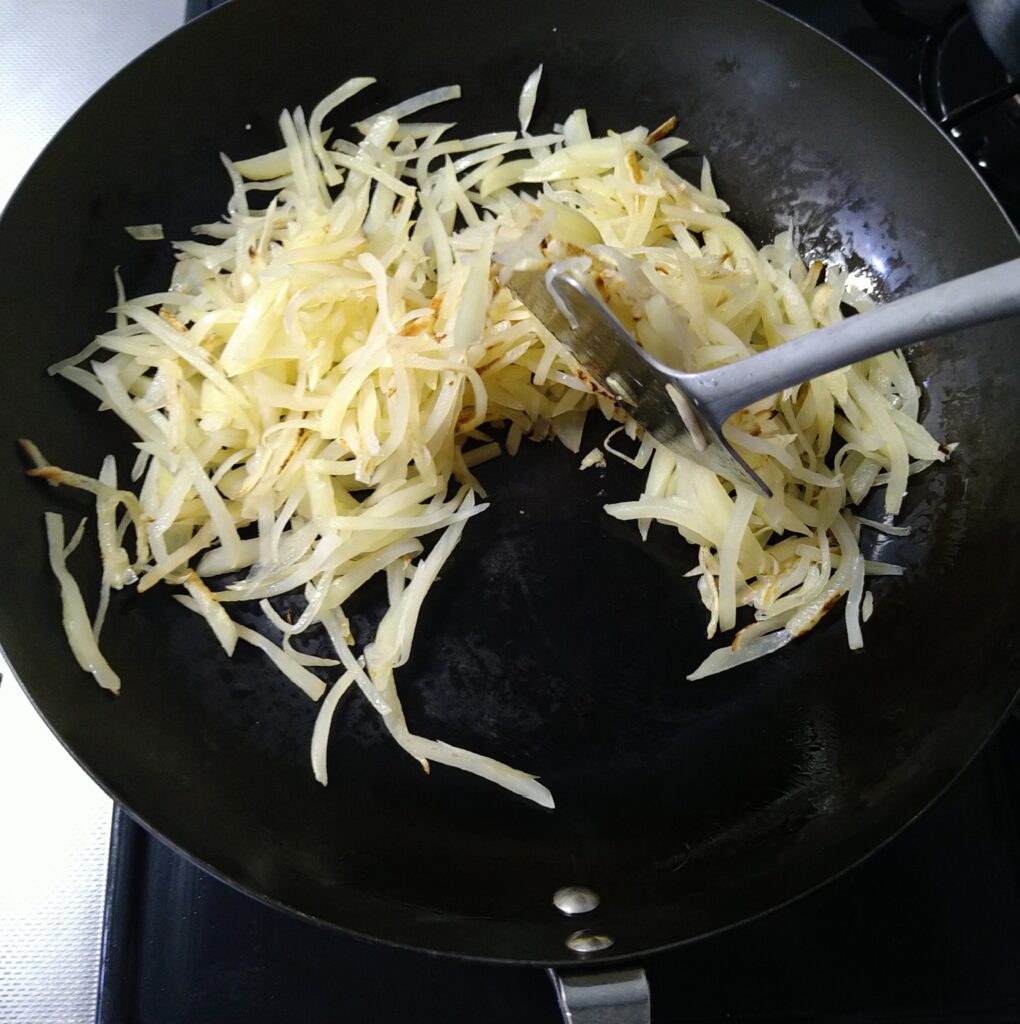
For the second attempt, I microwaved the potatoes first. My theory was that gelatinizing the starch would help them bind together. The potatoes felt stickier than before. Maybe this would work.
Same result.
Falling apart. It looked like a bean sprout stir-fry.

Analysis
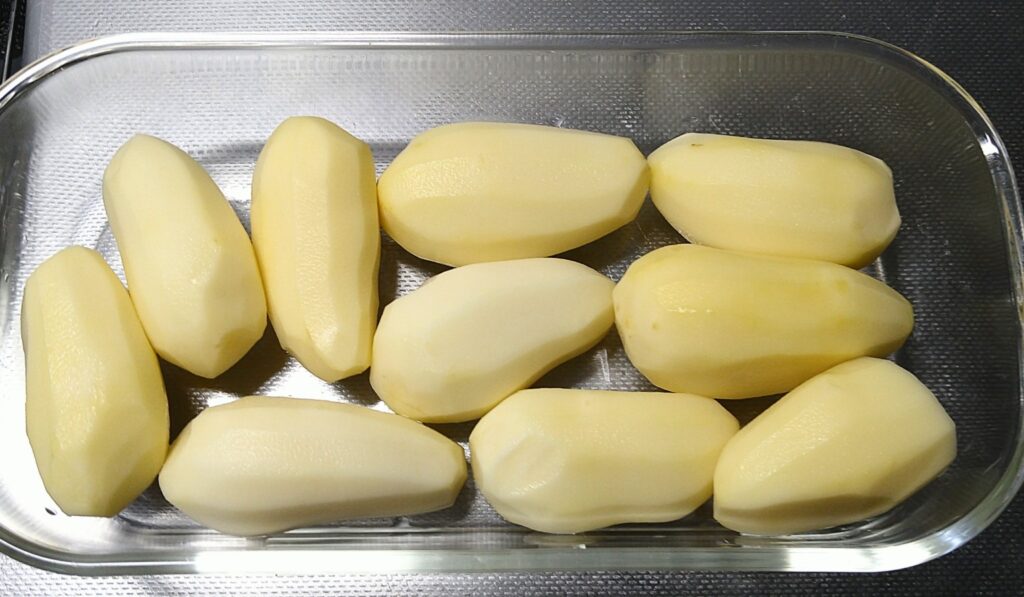
The problem may have been the potato variety.
I used waxy potatoes, which are lower in starch and don’t bind as well. They may simply not be the best choice for galette.
I also wonder whether adding some grated potato would have acted as a natural glue.
Another possibility is that I simply didn’t press the potatoes together firmly enough while cooking.
I ran out of potatoes before I could test any of these theories.
After
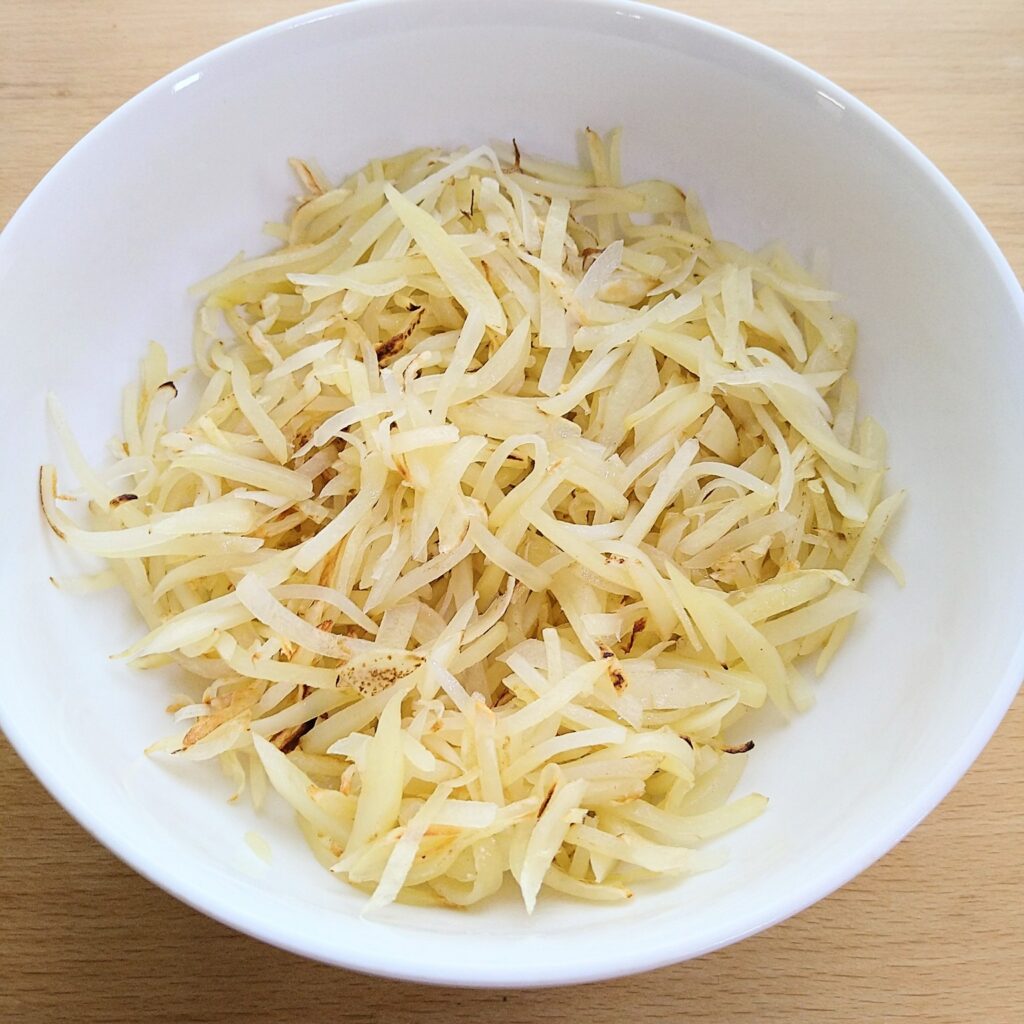
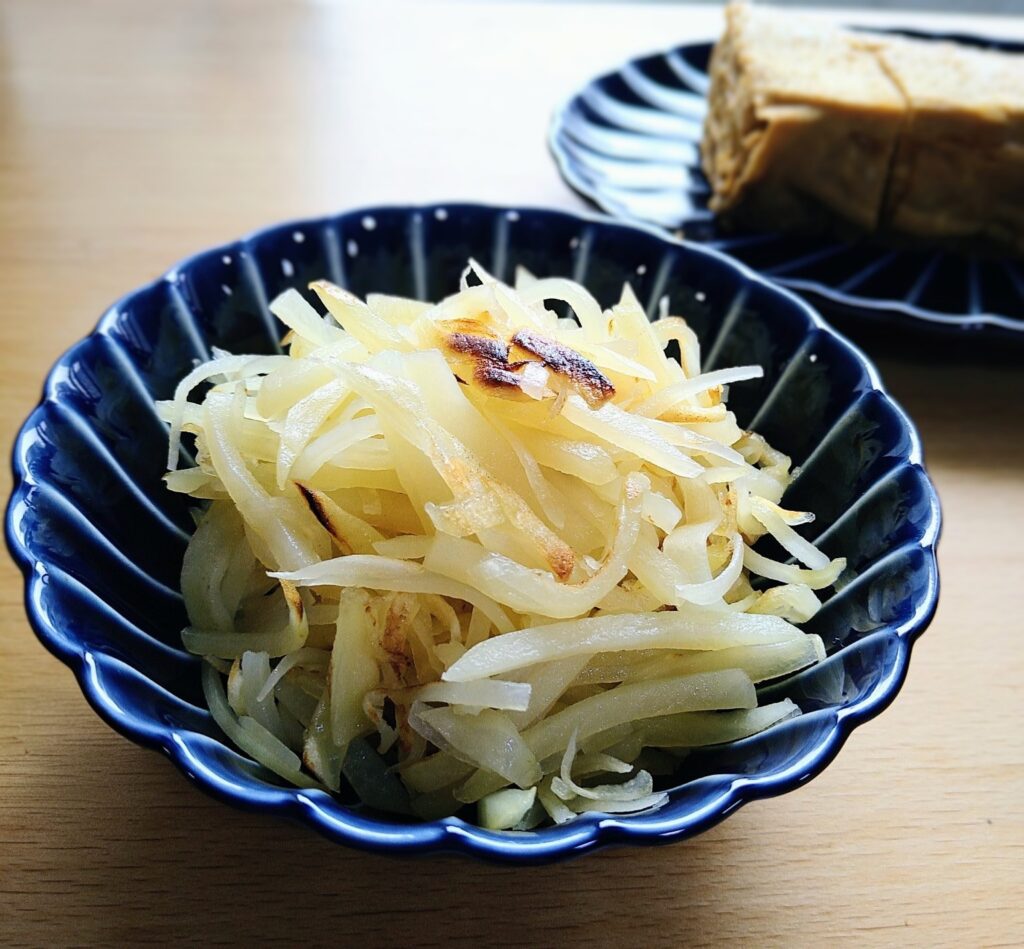
I plated the collapsed potatoes on two dishes — a plain white plate and a Giyaman plate.
On the white plate, they still looked like failed potatoes.
On the Giyaman plate, they somehow came back to life.
Same food. Different plate.
Conclusion
I tried to make a potato galette in an iron pan.
It didn’t stick to the pan.
The potatoes didn’t stick to each other either.
Without meaning to, I ended up proving that Giyaman makes food look better.
Next time, I’d like to make a proper round galette.
One that doesn’t need the plate to save it.
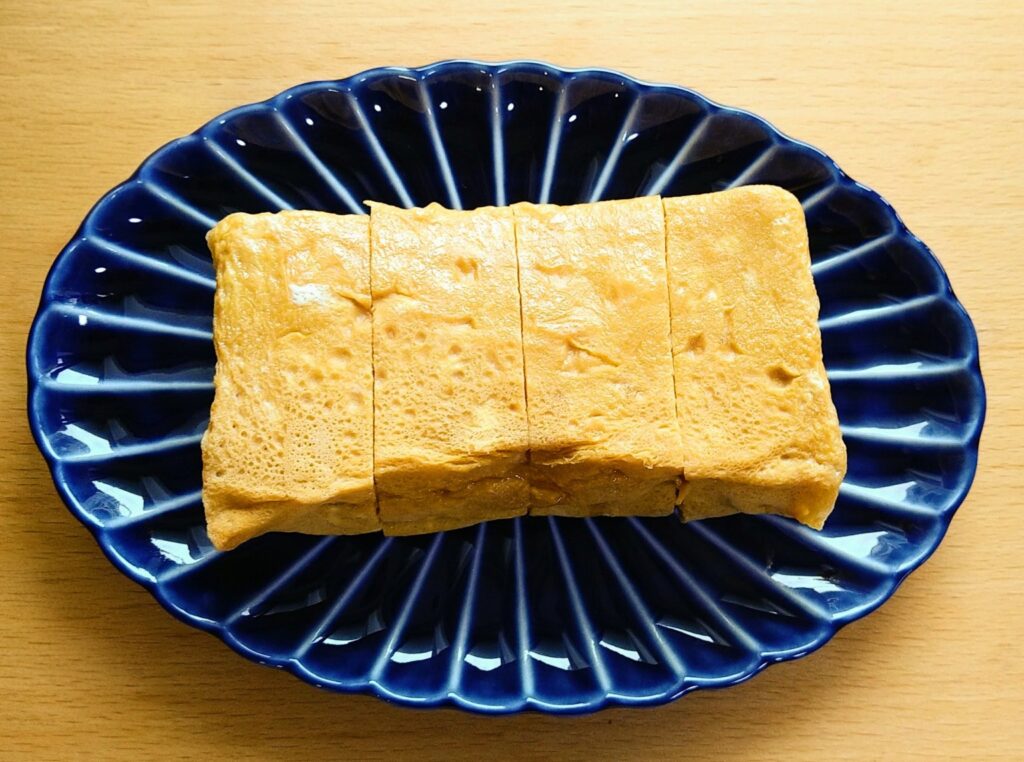
The tamagoyaki and Giyaman behind the potato stir-fry.
Leave a Reply