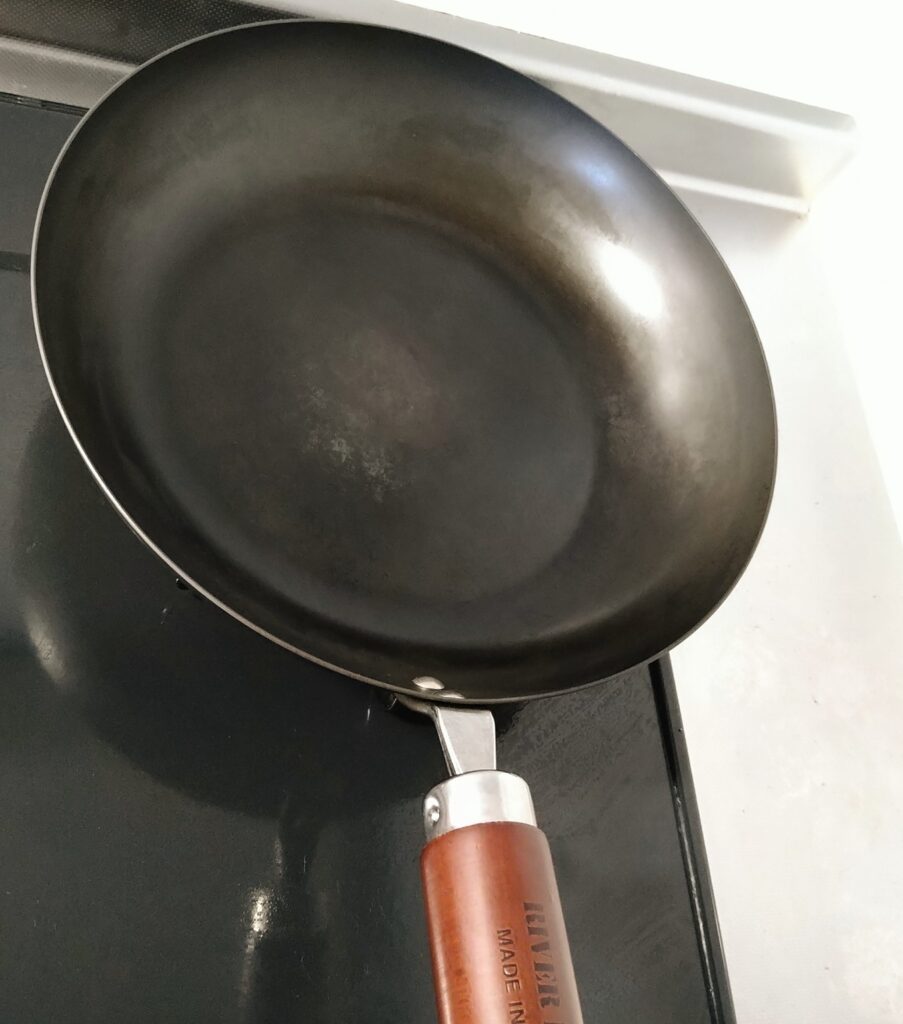
A while back, I wiped my iron pan with a tissue before cooking.
It came out dark.
My first instinct was that something was wrong. But after looking into it, I found it was completely harmless.
What’s Actually on That Tissue
There are two main culprits.
The first is carbonized oil and food particles — residue that builds up on the surface with every cook. It sits on top of the pan, and it washes off.
The second is iron particles. These come from the surface of the pan being physically abraded. If you’ve been washing with something abrasive like a steel wool scrubber, that’s likely the cause. As the polymer layer develops, this tends to decrease over time.
I couldn’t tell which it was in my case, but once I started washing with a small amount of dish soap, the tissue stopped coming out black. That part of the mystery was solved.
But One Question Remained
When I started using dish soap, I worried I was stripping away the layer of oil I’d been building up over time. In practice, though, the pan’s performance barely changed.
Why? Because the black that remained on the pan’s surface was something else entirely — something that dish soap can’t touch.
What the Polymer Layer Actually Is
When an iron pan is used repeatedly at high heat, the oil undergoes a reaction called oxidative polymerization. The oil molecules bond together, forming a solid, stable layer on the surface. This is what’s commonly called seasoning — the same process that happens in cast iron skillets and woks.
This layer doesn’t wash off with a light scrub. As long as you’re not scrubbing aggressively or soaking the pan for extended periods, dish soap won’t break it down. That’s why changing how I washed the pan made almost no difference to how it cooked.
Why Iron Pans Develop a Polymer Layer — When Others Don’t
Pans with non-stick coatings or stainless steel don’t develop the same kind of layer. The reason comes down to the nature of iron as a material.
Iron has a porous, microscopically rough surface. Oil molecules can work their way in, and at high heat, oxidative polymerization causes them to bond and form a solid layer that actually stays put.
Non-stick coatings (like PTFE/Teflon) are chemically inert — nothing adheres to them, including oil. There’s no surface for a polymer layer to form on, and that’s by design. The whole point is that things don’t stick.
Stainless steel has a smoother, denser surface than iron. Oil doesn’t penetrate as easily, and while some polymerization can occur, it doesn’t build up into a stable layer the way it does with iron.
In short, iron pans are uniquely suited to developing seasoning because of their rough, oil-absorbing surface combined with the chemical reaction that heat makes possible.
The Black Follows the Heat
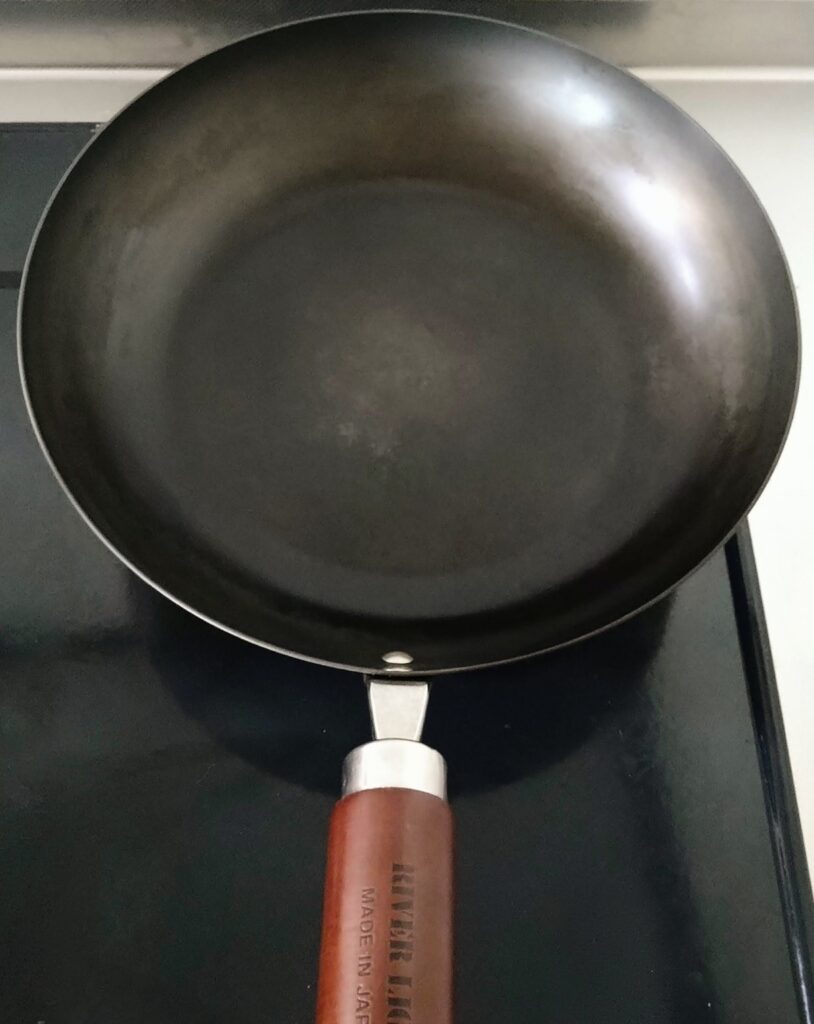
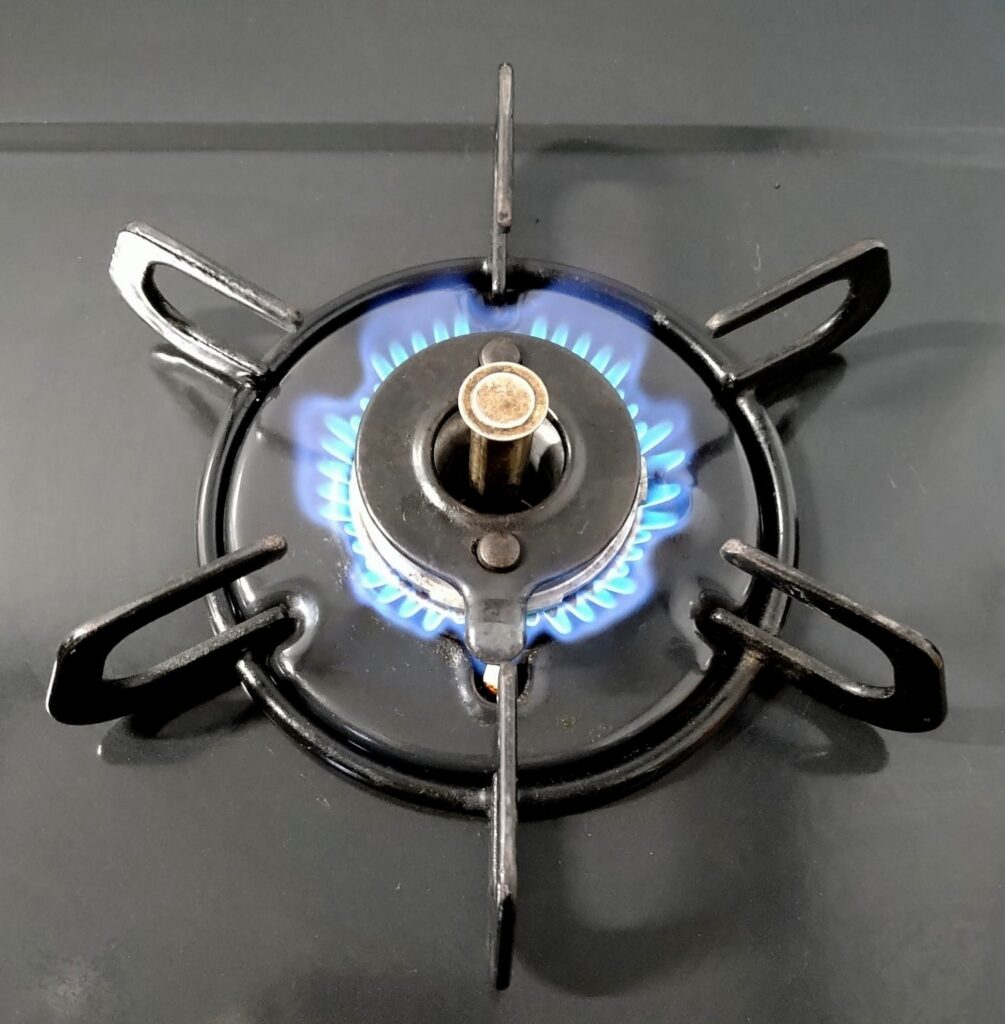
The darkening isn’t uniform. Looking at the bottom of my pan, the black appears not in the center, but in a ring — a donut shape. That’s because gas burners release flame in a ring, so the heat concentrates where the flame actually touches. Polymerization accelerates at higher temperatures, so the layer builds there first.
In other words, the black on your pan is a heat map.
With regular use, the seasoning gradually spreads outward from there.
Telling the Difference from Rust
The polymer layer and rust can be distinguished by how they look and feel.
Polymer layer
- Appearance
- Even black to dark brown
- Texture
- Smooth, matte
Rust
- Appearance
- Reddish-brown, patchy
- Texture
- Rough, flaky
As the polymer layer develops, it fills in the microscopic gaps on the surface, leaving less room for rust to take hold. If rust does appear, it’s usually a sign that the layer is still thin — or has been damaged.
Final Thought
I’ve never done any kind of deliberate seasoning — no oven treatments, no multiple rounds of heating oil. I’ve just been cooking with it regularly, using a small amount of oil each time, and washing it simply when needed.
And yet, the pan has gradually darkened and performs better than when it was new. I’m curious to see where it goes from here.
Leave a Reply