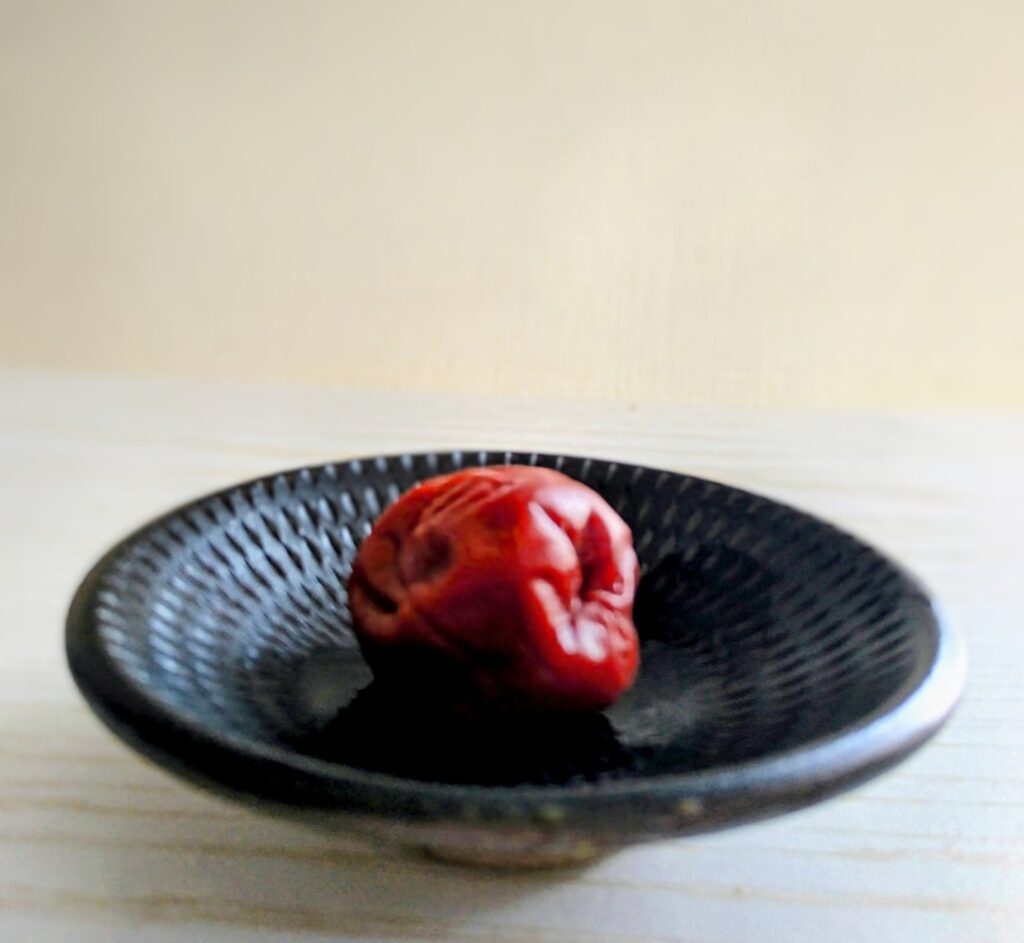
Salted and sun-dried ume plums, a traditional part of everyday Japanese meals.
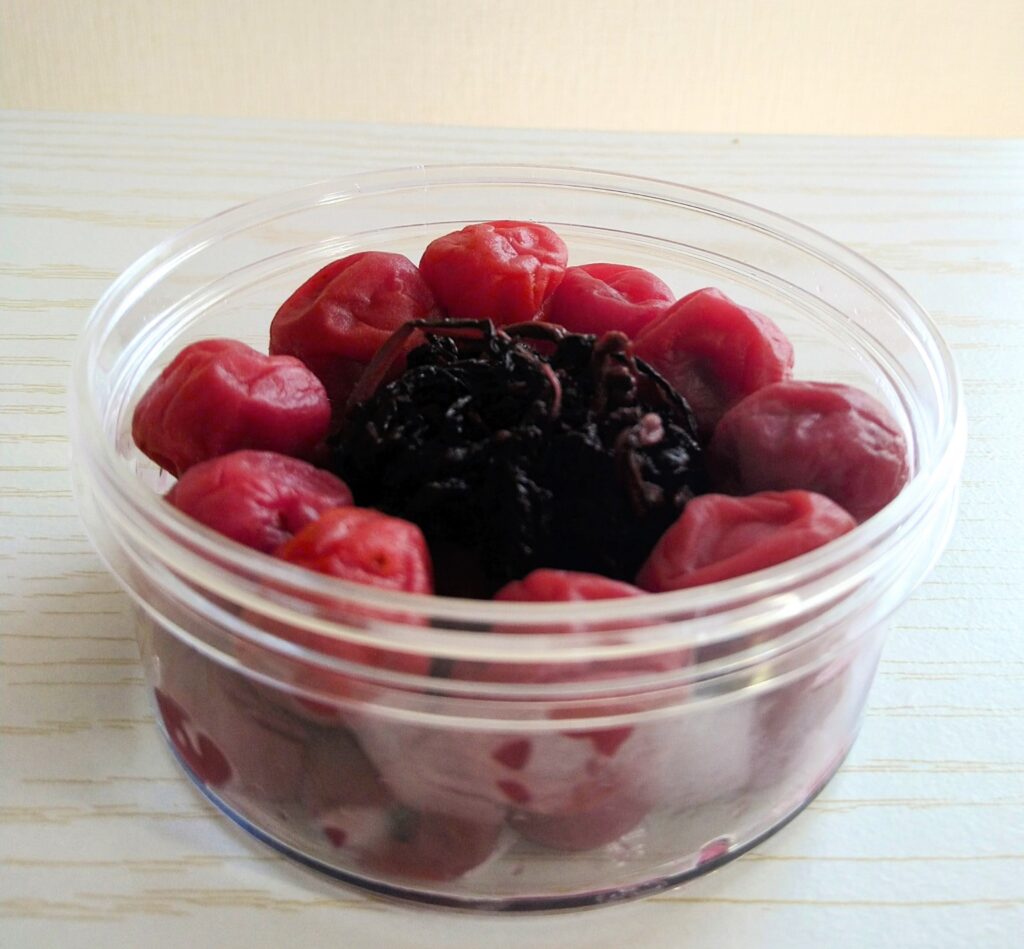
There is always a small container of umeboshi in my refrigerator.
I keep them mainly for bento lunches — umeboshi are known for their natural preservative properties, which helps keep the rice fresh.
Not a luxury item. Just something that has always been there.
What They Are Like
Umeboshi are made from ume, salted and dried slowly in the sun. Some are gently sweet, others intensely sour.
The salt level and drying process can change the flavor quite a bit. Over time, you naturally find the kind that suits you.
Varieties
Large Nanko ume are soft, with thick, tender flesh.
Some are made with honey, milder and easier to eat.
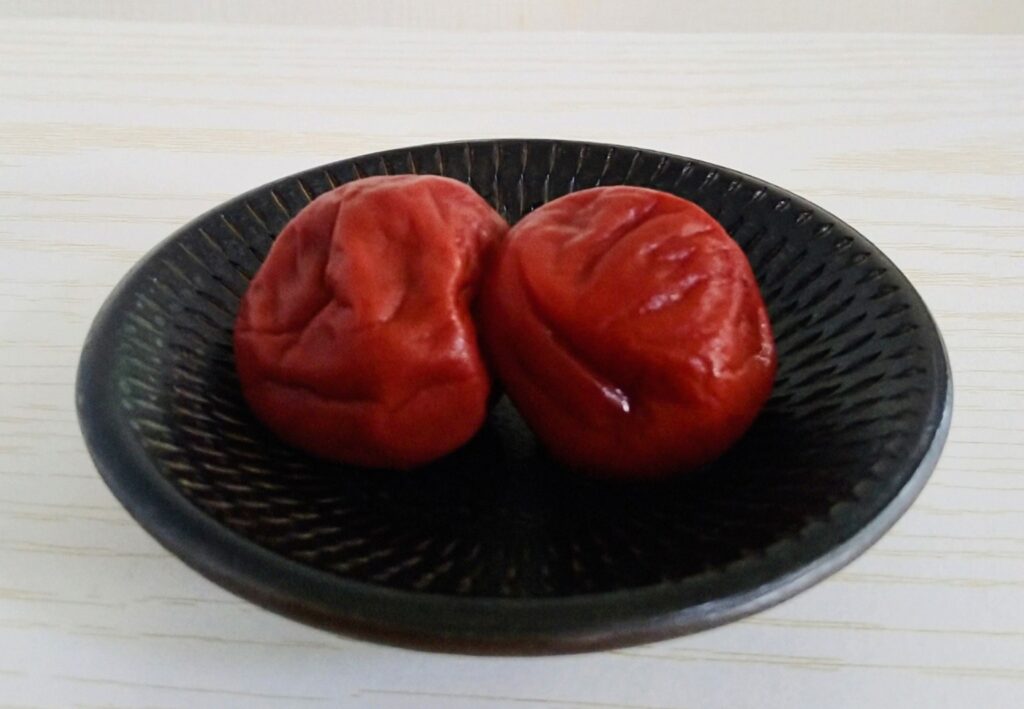
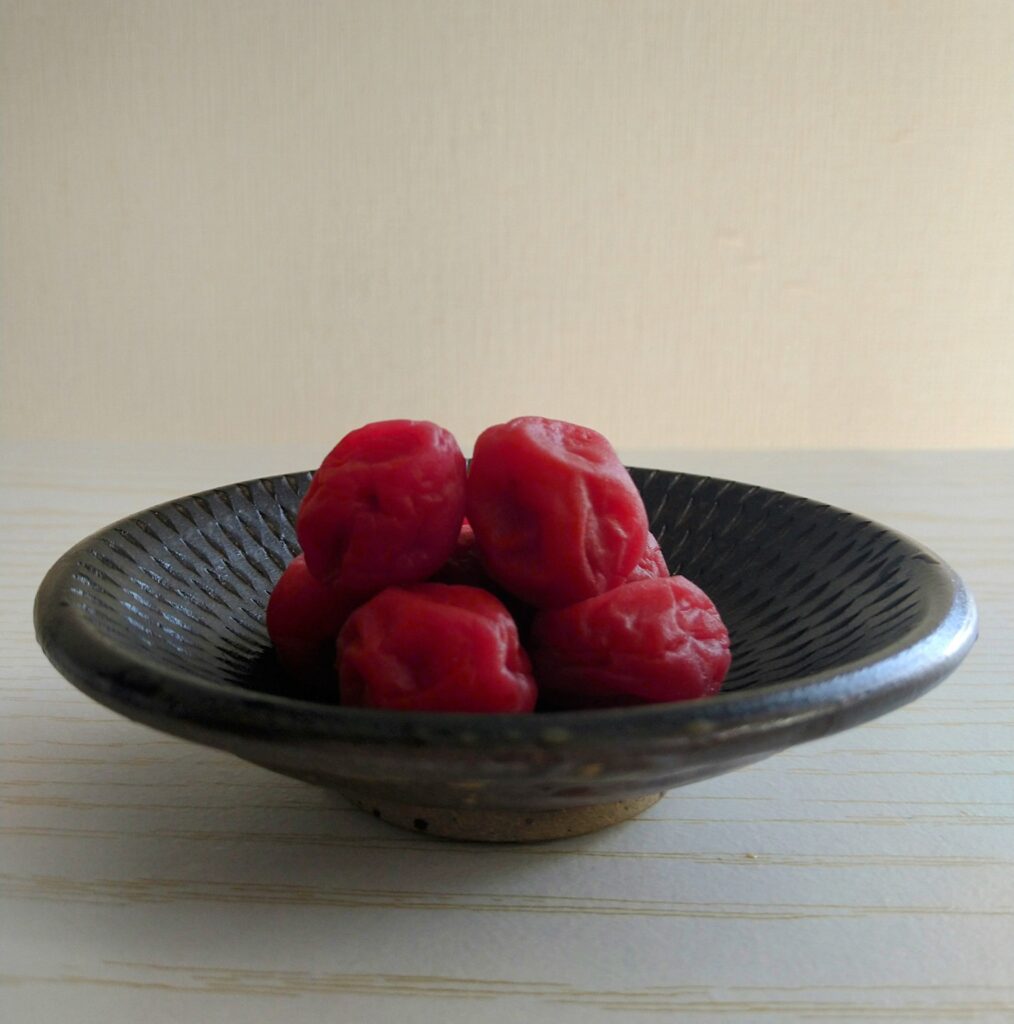
Smaller ume tend to be sharper, with textures ranging from firm and crisp to soft.
Their size makes them easy to place into bento lunches.
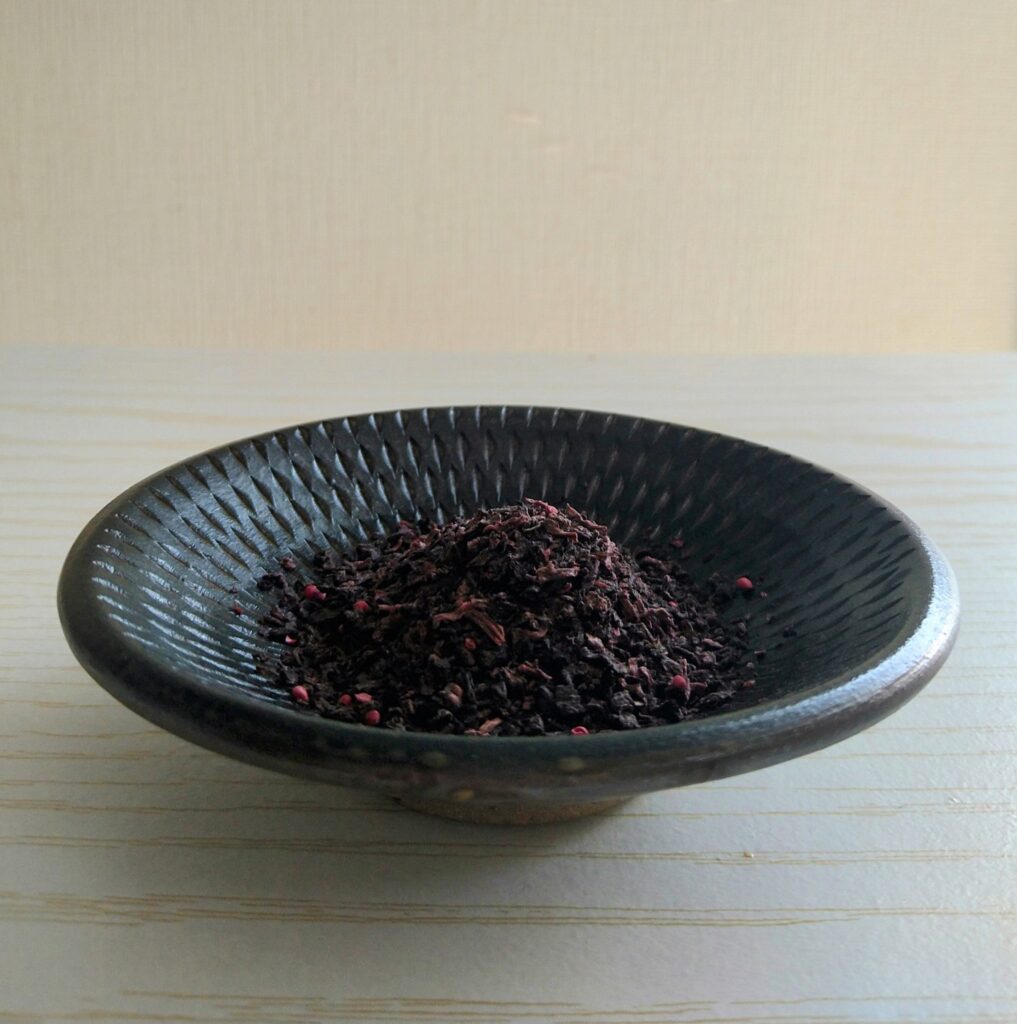
Red shiso flakes are even simpler — just sprinkle them over rice when there isn’t much time.
How to Choose
Many commercially available umeboshi today contain additives and preservatives. It is worth checking the ingredient list before buying.
A simple umeboshi should contain only ume, salt, and possibly red shiso.
If you are new to umeboshi, a honey variety is a gentle starting point — the sweetness softens the sourness and makes it easier to eat.
How I Use Them
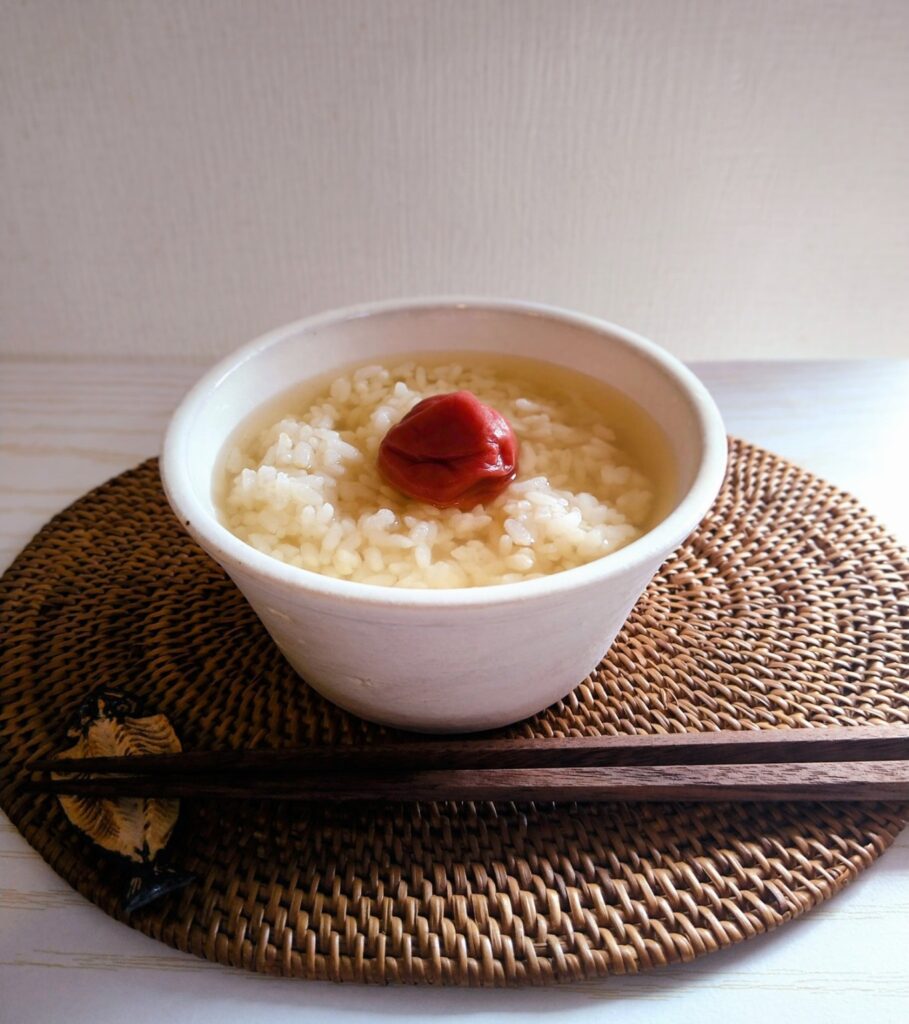
Most often, I place one inside onigiri or serve it with warm rice. It also works well in ochazuke, or finely chopped with chicken or fish. Sometimes I roll it inside before cooking or mix it into dressings for a bright, sharp note.
On hot summer days, or when I feel slightly tired, I often reach for one. The sourness comes from citric acid, which helps restore energy. Combined with the salt, it refreshes the mouth and gives the body a quiet boost.
Closing
Sometimes the main feature, sometimes just a small accent.
Not flashy. Just always there.
Leave a Reply