Author: misato

  • Dashi — A Quiet Foundation of Japanese Cooking

    What Is Dashi?

    Dashi is the basic broth of Japanese cooking, made from ingredients such as bonito flakes, kombu, dried sardines, and dried shiitake mushrooms.
    It is used in everyday dishes like miso soup, tamagoyaki (rolled omelet), udon, and rice bowls. Sometimes, I pour a little into a cup, add a small pinch of salt, and taste it as it is.


    About Umami

    The true charm of dashi lies in its umami.
    There are three main types of umami:

    • Glutamic acid (found in kombu, tomatoes, onions, cheese, green tea, and more)
    • Inosinic acid (found in bonito flakes, dried sardines, and meats)
    • Guanylic acid (found in dried shiitake mushrooms and other dried fungi)

    Each has its own character, but when combined, they create a deeper, more rounded flavor. With good dashi, strong seasoning becomes unnecessary. The dish simply feels complete.

    When I skip dashi and make miso soup, it still tastes fine. But with dashi, it feels completely different. The depth — and even the aroma — are not the same.


    How It Differs from Western Broth

    Western broths add richness and strength to a dish.
    Dashi works differently. Rather than standing out, it supports from underneath, bringing balance and allowing the natural flavors to come through.


    Basic Method

    Dashi is simpler than it may seem.

    Soak kombu in water for several hours, ideally up to a day.
    Heat it gently and remove it just before boiling, when small bubbles begin to appear. Add bonito flakes to boiling water, let them steep for a few minutes, and strain.

    Dried shiitake can be soaked in water, then gently heated for a deeper broth.


    An Easier Way

    You can keep kombu or dried shiitake soaking in water in the refrigerator. This way, dashi is always ready to use. You can also freeze dashi in ice cube trays and use only what you need.
    Bonito-based dashi, however, loses its aroma over time, so it is best prepared fresh whenever possible.


    An Even Simpler Way

    For everyday cooking, dashi packets are an easy option.
    They come in different types, including blends and plant-based versions.


    Closing

    If you are used to stronger flavors, dashi may feel subtle at first.
    But after tasting it a few times, you begin to notice its quiet depth.

  • What Is Umeboshi? A Guide to Japan’s Everyday Pickled Plum

    Salted and sun-dried ume plums, a traditional part of everyday Japanese meals.

    There is always a small container of umeboshi in my refrigerator.
    I keep them mainly for bento lunches — umeboshi are known for their natural preservative properties, which helps keep the rice fresh.
    Not a luxury item. Just something that has always been there.

    What They Are Like

    Umeboshi are made from ume, salted and dried slowly in the sun. Some are gently sweet, others intensely sour.
    The salt level and drying process can change the flavor quite a bit. Over time, you naturally find the kind that suits you.


    Varieties

    Large Nanko ume are soft, with thick, tender flesh.
    Some are made with honey, milder and easier to eat.

    Smaller ume tend to be sharper, with textures ranging from firm and crisp to soft.
    Their size makes them easy to place into bento lunches.

    Red shiso flakes are even simpler — just sprinkle them over rice when there isn’t much time.


    How to Choose

    Many commercially available umeboshi today contain additives and preservatives. It is worth checking the ingredient list before buying.
    A simple umeboshi should contain only ume, salt, and possibly red shiso.
    If you are new to umeboshi, a honey variety is a gentle starting point — the sweetness softens the sourness and makes it easier to eat.


    How I Use Them

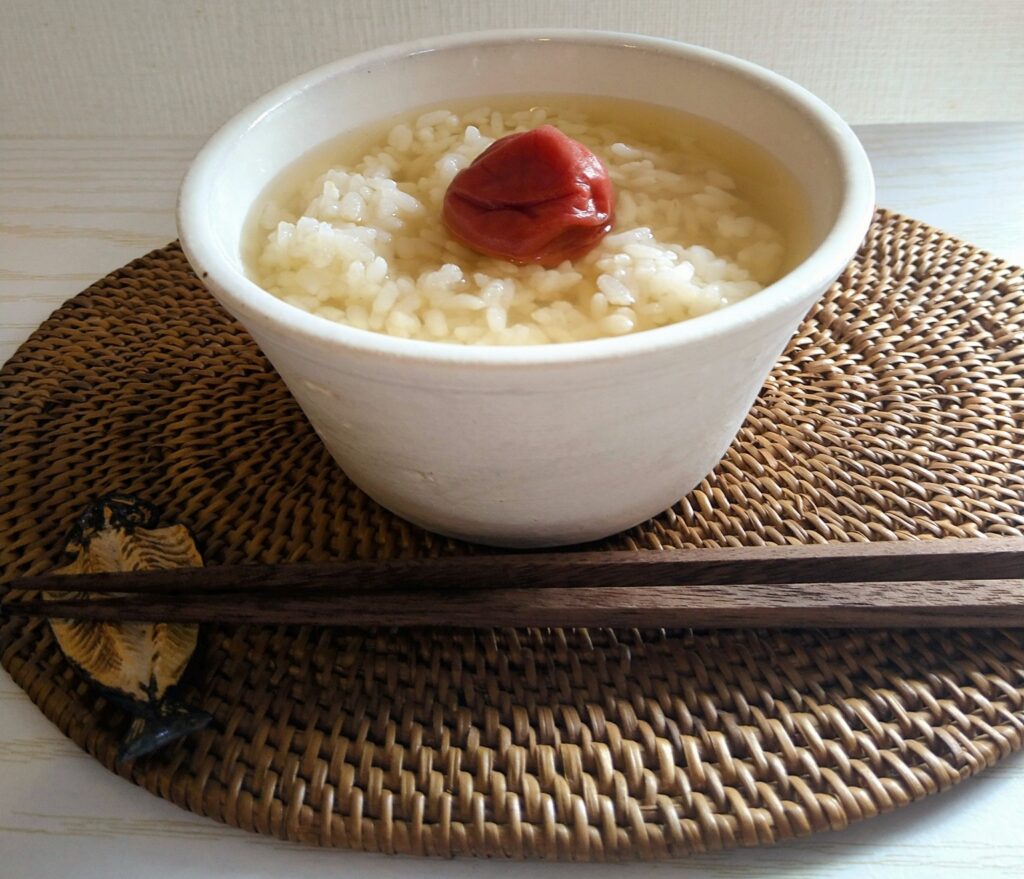
    Most often, I place one inside onigiri or serve it with warm rice. It also works well in ochazuke, or finely chopped with chicken or fish. Sometimes I roll it inside before cooking or mix it into dressings for a bright, sharp note.

    On hot summer days, or when I feel slightly tired, I often reach for one. The sourness comes from citric acid, which helps restore energy. Combined with the salt, it refreshes the mouth and gives the body a quiet boost.


    Closing

    Sometimes the main feature, sometimes just a small accent.
    Not flashy. Just always there.

  • Toppen Salt Review — A Rare Japanese Sea Salt for Everyday Cooking

    About

    A traditional Japanese sea salt made on the Goto Islands in Nagasaki. “Toppenn” comes from a local dialect meaning “the very top” — a quiet wish to create something truly good.


    How It’s Made

    Rather than relying on high heat or efficiency, the salt is made slowly using only the power of sunlight and sea breeze.
    It follows the natural rhythms of the environment.


    Flavor

    Rich in naturally occurring minerals, the taste is mild and rounded, without a sharp saltiness. Among the salts I use, it’s one of the mildest, similar to Nuchimasu.


    How I Use It

    In my kitchen, this is the salt I reach for most often.
    It works well with vegetables, fish, and simple preparations where the flavor of the ingredients matters.
    Because of its mild saltiness, it works both as a seasoning during cooking and as a finishing salt sprinkled at the table.


    Who It’s For

    A good fit for anyone looking for an all-purpose salt for everyday cooking, or anyone who prefers a salt that lets ingredients speak for themselves.
    Because it’s made in small batches, it can be hard to find — but worth keeping on hand when you do.


    Where to Buy

    Available on Rakuten → 【Rakuten link here】


    Key Details

    • Made from 100% Japanese seawater
    • Produced using sunlight and sea breeze only
    • Naturally rich in minerals
    • Small-batch production

    Closing

    Some ingredients are worth seeking out even when they’re hard to find. This is one of them.


    Other Japanese sea salts I use

    Aguni Salt
    Nuchimasu
    Umi no Sei Yakishio
    Four Japanese Natural Salts Compared

  • Fumiko Fresh Yuzu Kosho — A Traditional Japanese Condiment

    About

    Yuzu kosho is a traditional Japanese condiment made from yuzu peel, chili peppers, and salt.
    Fumiko Fresh Yuzu Kosho is made in Munakata, Fukuoka, with no artificial additives or preservatives.


    How It’s Made

    The yuzu and chili peppers are grown in Kyushu, Japan.
    Each yuzu peel is checked by hand, and only the outer peel — where the fragrance is most concentrated — is used. After preparation, it is quickly frozen to preserve its color and aroma. Even when frozen, it remains soft enough to scoop, so you can use only what you need.


    Flavor and Aroma

    What stands out first is its clear, fresh aroma. The natural fragrance of yuzu gently opens and spreads.
    The saltiness is mild, with no bitterness or off-notes, and the finish is clean.A gentle heat adds depth without overpowering the dish.


    How I Use It

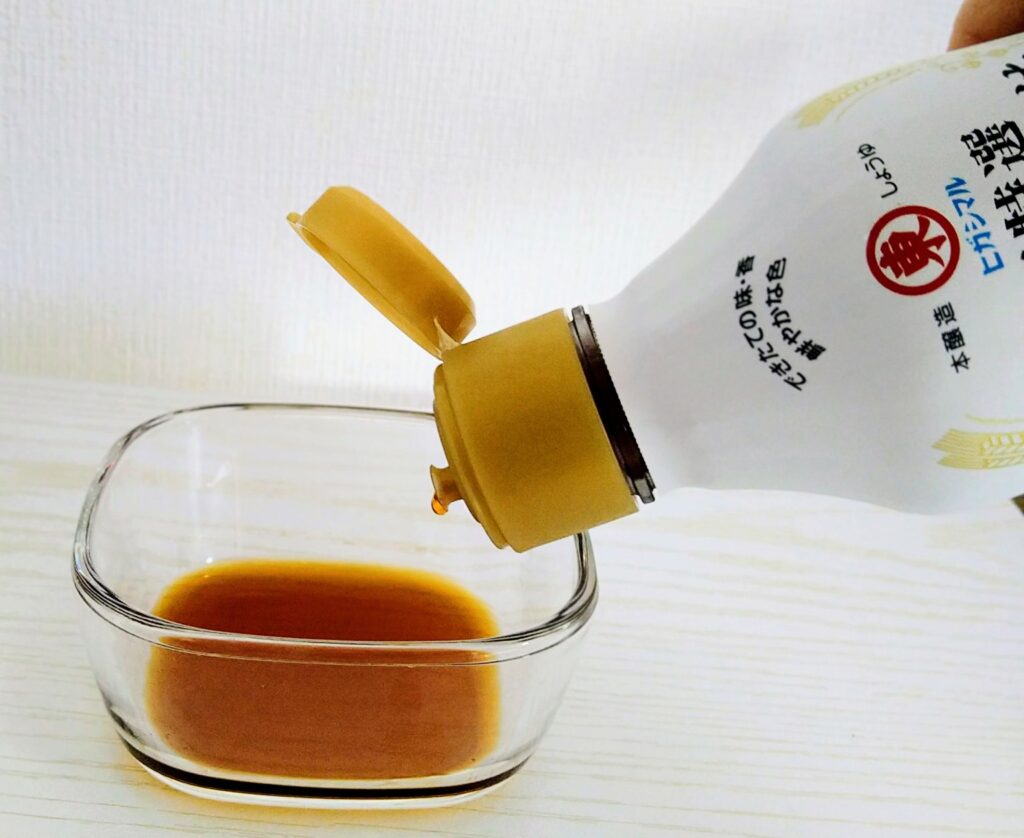
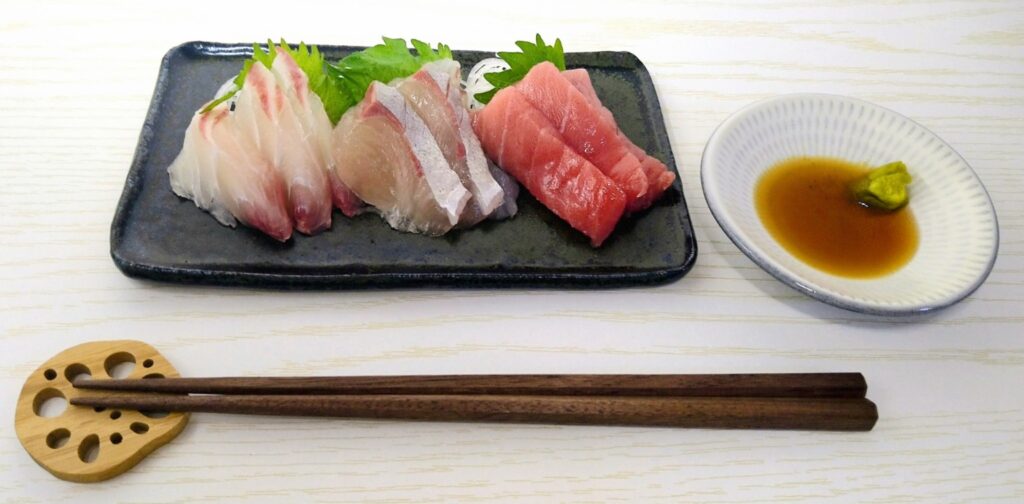
    My favorite way is to mix it with soy sauce and use it in place of wasabi with sashimi. The yuzu fragrance and gentle heat work beautifully with fresh fish.

    It also works well as a dipping sauce alongside boiled pork or chicken, or with potage. For something a little more complex, I mix it with soy sauce and black vinegar, or with miso, to make a dipping sauce.

    It pairs well with noodles, soups, and even mild cheeses. When something feels a little missing, a small amount adds a subtle accent and helps it feel complete. It adds well to condiments you already have on hand, and feels especially at home with mild, simply prepared dishes.


    Where to Buy

    Available at Fumiko’s official store → fumikonoyuzukosho.stores.jp


    Key Details

    • Made in Munakata, Fukuoka
    • No artificial additives or preservatives
    • Varieties: green, yellow, red, black
    • Sold frozen, stays soft enough to scoop
    • Store frozen

    Closing

    Even a small amount can add depth.
    It’s the kind of ingredient that quietly brings a dish into balance.


    Related Articles

    A simple salt that quietly supports everyday cooking.
    Read more

    A soy sauce I use in everyday cooking.
    Read more

  • Chikazawa Lace Handkerchiefs from Japan

    Delicate in appearance, yet easy to use every day.

    Chikazawa Lace handkerchiefs are not made to be saved for special occasions, but to be carried and enjoyed as part of daily life.

    A playful pizza motif, neatly finished even on the back.

    Pizza and the word “buono,” expressed in lace.

    What makes them special

    Founded in 1901 in Motomachi, Yokohama, Chikazawa Lace has long been known for its craftsmanship.

    While staying true to that solid foundation, they continue to explore new expressions.

    When people think of lace, they often imagine white floral patterns, but Chikazawa Lace offers designs that feel a little unexpected — motifs like food, words, and small touches of humor that gently catch your eye.

    New designs are released regularly, and many people look forward to what comes next.

    Approachable in price and easy to choose, they work beautifully as a small gift or simply something to enjoy for yourself.

    They’re also made to last — even after washing, the lace holds its shape.

    Made from soft cotton, they’re absorbent and easy to use every day.


    From top: smelt fishing, a roll cake, origami (crane), and rock climbing.

    Traditional motifs from Itsukushima Shrine, delicately expressed in lace.

    Closing

    This is what drew me to Chikazawa Lace —
    a quiet kind of beauty that slips naturally into daily life.


  • Karukaya Brush for Cast Iron Pans — A Natural Scrubber from Japan

    A traditional brush used in everyday Japanese kitchens.

    Cooking with cast iron is simple, but cleaning can be a little confusing. Food can stick, using metal scrubbers can damage the surface, and using a sponge on a hot pan can cause it to burn, melt, or release a chemical smell.

    That’s where a brush like this becomes useful.


    What is a Karukaya brush?

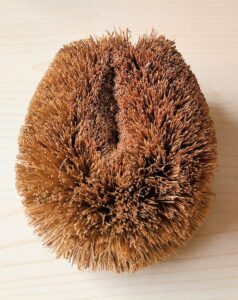
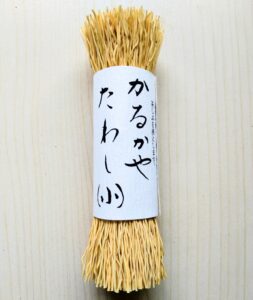
    A karukaya brush is made from the roots of a grass plant and shaped into a slim, stick-like scrubber.
    Because the fibers are firm but not abrasive, it removes residue without stripping the seasoning too aggressively.

    Since it doesn’t absorb oil, it works well for cleaning and doesn’t feel sticky after washing.

    It also dries quickly after use, making it clean and easy to handle.


    Size and Design

    Two sizes are available, both comfortable to hold even for smaller hands.

    As the tips wear down or start to feel worn, the wire binding can be removed and the fibers can be trimmed slightly to continue using it.

    It also has a loop, so it can be hung to dry — a small detail that keeps it clean.


    Key details

    • Made in Japan
    • Stick shape
    • 100% natural plant fibers — firm but not abrasive
    • Doesn’t absorb oil easily
    • Dries quickly after use

    A few small notes on using it

    For cast iron, I mostly just use water and the brush — soap only when I really need it.

    One of the biggest advantages is that it can be used while the pan is still hot. Unlike a sponge, it doesn’t burn, melt, change shape, or release strange smells. The stick shape also keeps hands at a safe distance from the heat.

    At first, some fibers may come loose, but this settles down over time.

    After use, I usually rinse it in warm water, shaking it lightly to release anything caught between the fibers.


    Where to Buy

    Available on Amazon US. → karukaya brush on Amazon


    Related Articles

    A Cast Iron Pan for Everyday Cooking
    River Light Iron Frying Pan Review — A Japanese Pan I Keep Using
    Why Food Sticks to Cast Iron Pan — And How to Prevent It
    How to Care for a Cast Iron Pan


    Closing

    If you cook with cast iron, having a brush like this makes daily cleaning much easier.
    This is the one I use in my own kitchen.


  • River Light Iron Frying Pan Review — A Japanese Pan I Keep Using

    The River Light cast iron pan is a Japanese-made iron frying pan designed for everyday use. Simple, durable, and made to last.


    Why I Chose River Light

    I started looking for a new pan when I began to worry about PFAS — chemicals used in non-stick coatings that have raised concerns about health and the environment.

    That’s when I came across River Light.
    What drew me to the brand was their approach to materials.
    They use steel made by Japanese steelmakers, with strict checks on raw materials, and that kind of transparency felt trustworthy.

    The reviews backed that up, with many people pointing to its rust resistance and durability, which is what made me choose it.
    And in all the time I’ve been using it, it has never rusted.


    Key Details

    Made in Japan
    Each pan is made in River Light’s own factory in Japan, with care from skilled craftsmen.

    Materials
    Uses steel manufactured by Japanese steelmakers only, with strict control over the raw materials used.

    Rust-resistant
    Thanks to a special heat treatment, it is far more resistant to rust than ordinary iron pans, even without coating.

    Easy to start using
    No initial high-heat burning process needed. After simple oil seasoning, it can be used right away.

    Made to last
    The pan itself is solidly made, and the handle and fixing parts can be replaced if they wear out.

    Handle
    The wooden handle fits comfortably in the hand and stays cool during cooking.

    Size
    Available in multiple sizes. I use the 26cm.

    Heat sources
    Compatible with all heat sources, including IH.


    What It’s Like to Use

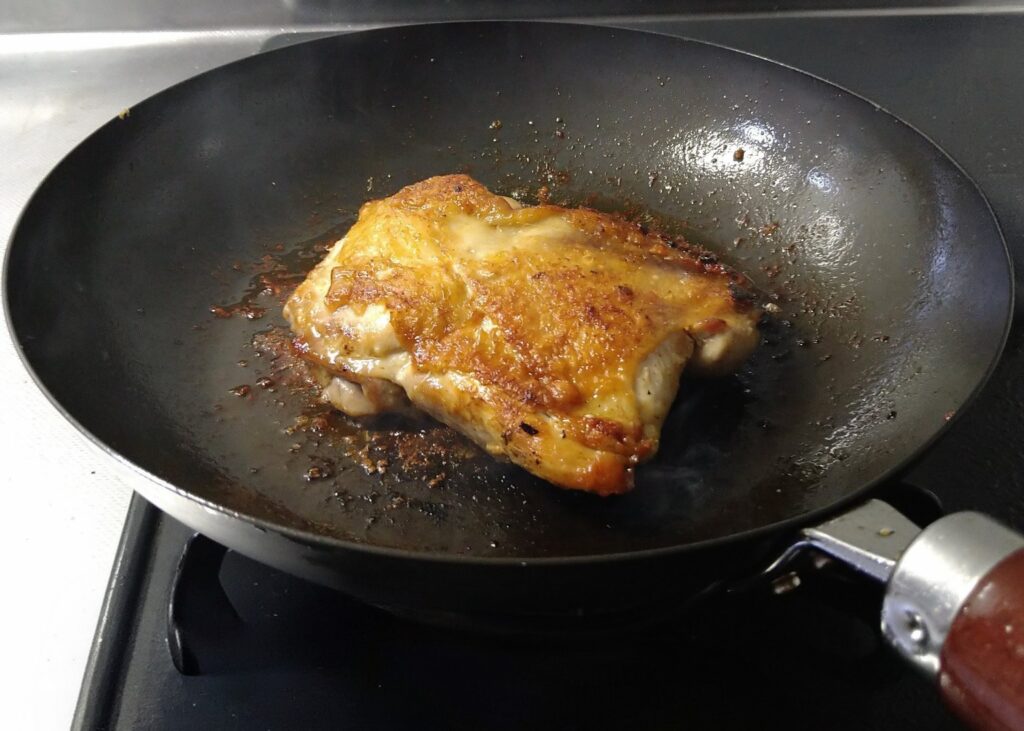
    crispy chicken thigh in cast iron pan

    It’s heavier than a non-stick pan, and it takes a little longer to heat up.
    But once it’s hot, it holds heat well and distributes it evenly, so cooking becomes quicker.
    Even at higher temperatures, the wooden handle stays cool, so there’s no need for oven mitts.

    More than anything, what surprised me most was the difference in how the food turned out.
    I noticed it most in simple dishes.

    Stir-fried vegetables turn out crisp and fragrant, chicken develops a golden, crispy surface while staying juicy inside, and eggs come out soft. Fish also turned out clean in flavor, without that strong fishy taste, even when I used frozen fish.

    I’m not sure if it’s the material itself, but food cooked in this pan seems to taste a little richer — there’s a depth to it that I don’t quite get with other pans.


    What I Learned About Using It

    At first, things did stick.
    The key was preheating — heating it until it was just about to smoke. Once I got the hang of that, it stopped sticking and became much easier to cook with.

    If you’ve struggled with sticking, you can read more here:
    Why Food Sticks to Cast Iron — And How to Prevent It

    Slid right off

    I also realized I was being too gentle when washing it, trying not to scratch the surface. Because of that, some residue remained, and those areas became more prone to burning.

    After changing how I cared for it — using a natural fiber brush and occasionally burning off residue — sticking became less of an issue, and it’s been easier to keep the pan clean.

    If you’re interested, you can read more here.
    How to Care for a Cast Iron Pan


    Where to Buy

    River Light Cast Iron Pan on Amazon


    Related Articles

    A Cast Iron Pan for Everyday Cooking
    Why Food Sticks to Cast Iron — And How to Prevent It
    How to Care for a Cast Iron Pan
    Is Tamagoyaki (Japanese Rolled Omelette) Difficult with a Cast   Iron Pan?


    Closing

    It’s not the easiest pan to use — but it’s one you grow into.
    And over time, it becomes a pan you keep reaching for.

  • A Cast Iron Pan for Everyday Cooking

    Crispy, juicy chicken — cooked in a cast iron pan.

    For a long time, I used non-stick pans.
    They were lightweight, required little oil, and were easy to use without much care.
    However, over time, I began to question using them.
    One of my concerns was PFAS — a group of chemicals used in non-stick coatings that has raised questions about long-term health and environmental impact.
    I’m not saying non-stick pans are dangerous, but for something I use every day, I wanted to feel more comfortable.
    I eventually chose a cast iron pan.


    Why Cast Iron

    With a cast iron pan, I can cook over high heat without worrying about the coating wearing out. It’s durable and can be used for many years.

    At first, I chose it simply for how it felt to use, but after using it, I noticed a difference in how the food turned out.

    A cast iron pan retains heat well, so even after adding ingredients, the temperature doesn’t drop much, and food browns evenly. Vegetables stay crisp, and meat develops a nicely browned surface while remaining juicy inside.
    This difference is especially noticeable in simple dishes.

    I’m not sure if it’s the material itself, but food cooked in a cast iron pan seems to taste a little richer — there’s a depth to it that I don’t quite get with other pans.

    The pan I’ve been using is the River Light iron frying pan.
    River Light Cast Iron Pan on Amazon


    Getting Used to It

    With cast iron, proper preheating is important.
    If the pan isn’t hot enough, food tends to stick, especially protein.
    But over time, a natural layer of oil builds up on the surface, making the pan easier to use.

    → Why Food Sticks to Cast Iron Pan— And How to Prevent It


    Care

    Wash with water and scrub with a tawashi.
    It’s usually washed without detergent, which helps avoid removing too much of the oil layer.

    → How to Care for a Cast Iron Pan

    Just water and a karkaya brush — nothing else.


    Related Articles

    River Light Iron Frying Pan Review — A Japanese Pan I Keep Using

    Is Tamagoyaki (Japanese Rolled Omelette) Difficult with a Cast Iron Pan?

    Why Food Sticks to Cast Iron Pan— And How to Prevent It
    How to Care for a Cast Iron Pan


    Closing

    It takes some getting used to — but once you do, it’s a pan for life.