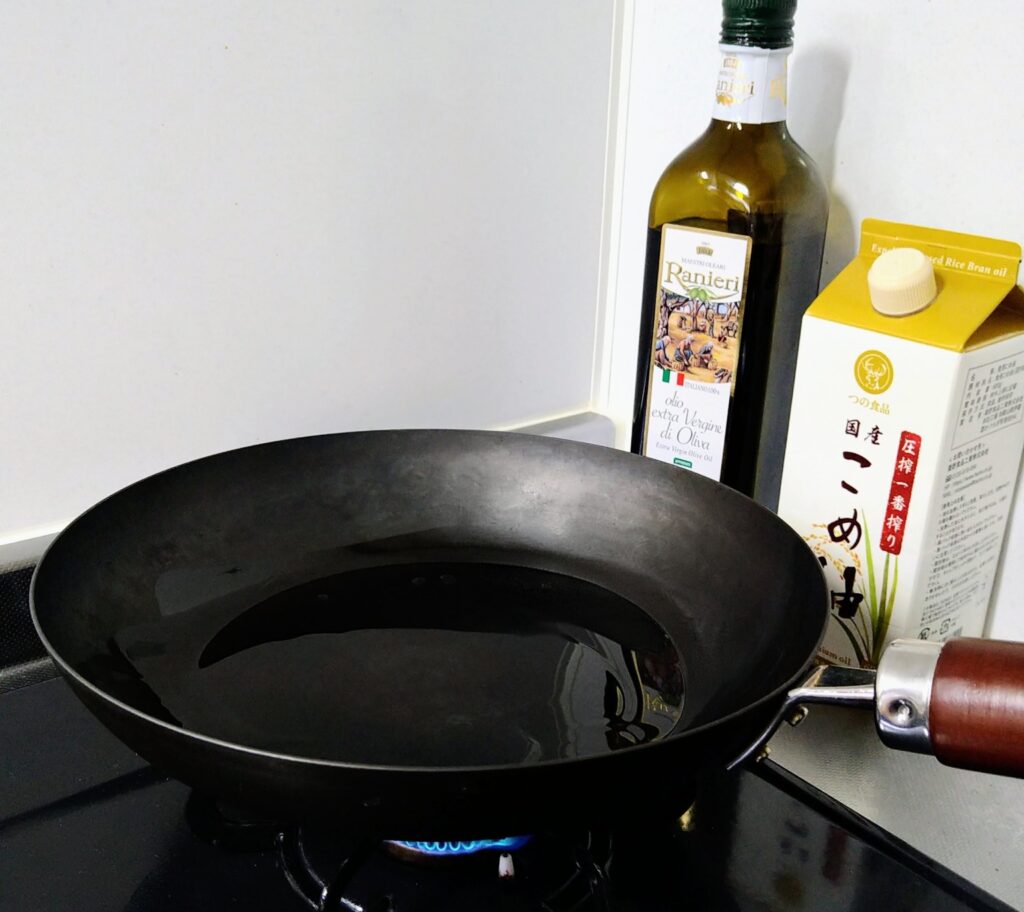
For a while, I’d noticed that heating olive oil at high temperatures left my throat feeling irritated afterward.
I searched “cast iron pan throat pain” but couldn’t find anything relevant. I assumed it was just my imagination and let it go. But the feeling kept coming back, so I decided to look into it properly.
It wasn’t my imagination.
The Culprit: Acrolein
Every oil has a smoke point — the temperature at which it starts to break down and produce visible smoke. When oil exceeds its smoke point, it undergoes chemical decomposition and produces a compound called acrolein. Acrolein forms with any oil, but oils with a lower smoke point reach that threshold faster.
Acrolein is a strong irritant to the mucous membranes of the eyes, nose, and throat. The irritation I’d been feeling was most likely from inhaling it.
Why Olive Oil Is Especially Prone to This
Smoke points vary significantly depending on the type of oil.
| Oil | Smoke Point |
|---|---|
| Butter | ~150°C |
| Extra virgin olive oil | ~160–190°C |
| Grapeseed oil | ~215°C |
| Canola oil | ~200–230°C |
| Sunflower oil | ~230°C |
| Rice bran oil | ~230°C |
| Ghee | ~250°C |
| Avocado oil | ~270°C |
Extra virgin olive oil has one of the lowest smoke points on the list — around 160–190°C. It reaches its threshold faster than most other oils.
I had been using extra virgin olive oil. And I had a habit of preheating my cast iron pan until it just started to smoke. That means I was regularly heating the oil past its smoke point. The conditions for acrolein production were there every time.
Refined olive oil has a higher smoke point of around 240°C, so the same cooking style would produce less irritation.
That said, extra virgin retains more flavor and health benefits.
It may be worth using different oils for different purposes.
Oils That Work Better with Cast Iron
Cast iron pans are often used at high heat, so oils with a higher smoke point tend to work better. Based on the table above, rice bran oil, sunflower oil, canola oil, and avocado oil are all solid options.
Rice bran oil
A staple in Asian cooking, long used in cast iron pans and woks. Neutral in flavor, so it won’t affect the taste of your food. A practical choice for everyday use.
Avocado oil
One of the highest smoke points available. Mild flavor and easy to use — though it tends to be more expensive.
Canola oil / Sunflower oil
Widely available and affordable. Neutral flavor and high smoke point make them reliable for everyday cooking.
Extra virgin olive oil
Rich in flavor and health benefits, but not well suited for high-heat cast iron cooking. Better saved for low-heat finishing or uncooked uses like dressings.
Final Thoughts
I’d read that heating a cast iron pan until it smokes was the right way to preheat it. With no PTFE coating to worry about, high heat seemed like a non-issue. And the pan itself was fine. But I didn’t realize that the oil you use can turn that into a problem.
Now I use rice bran oil for cast iron cooking and save the extra virgin olive oil for dishes that don’t involve high heat.
I also stop preheating before the smoke appears. If I see the faintest wisp, I lower the heat right away to keep the pan from getting hotter than it needs to be.
I’m glad I didn’t just ignore the feeling. If you’ve noticed something similar, it might be worth checking the smoke point of the oil you’ve been using.
Leave a Reply