A tawashi is a traditional Japanese scrubbing brush used for cleaning cookware, vegetables, and kitchen tools.
The oval-shaped Kamenoko tawashi was invented in 1907 by Nishio Shoten in Tokyo, and is still widely used today.
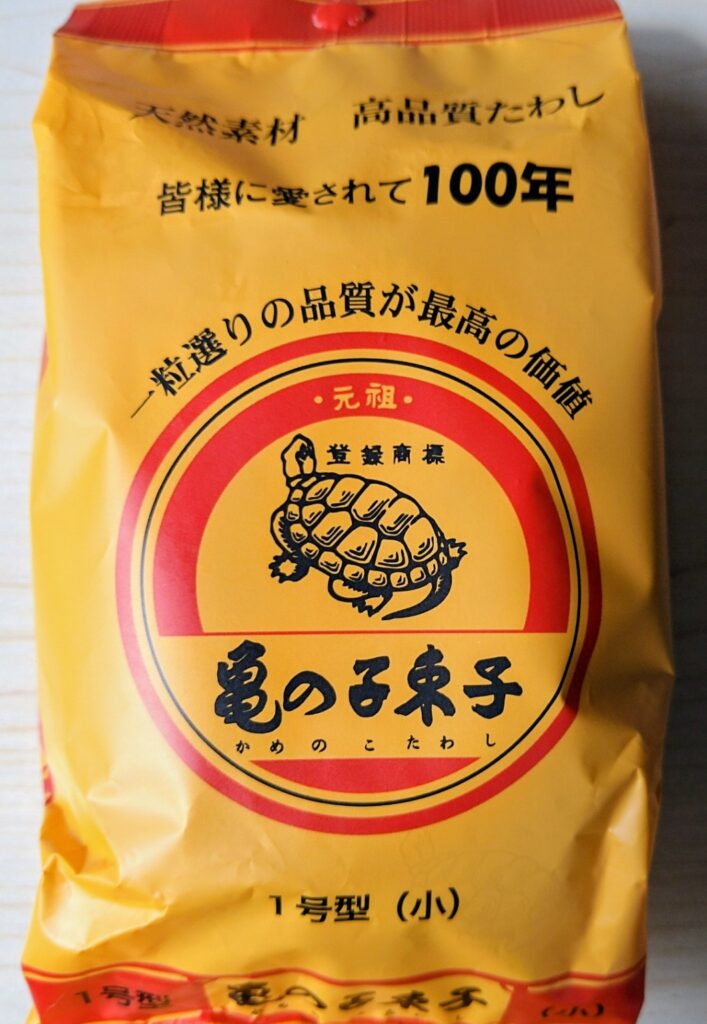
Kamenoko tawashi literally means “baby turtle tawashi.”
The oval shape was said to resemble a small turtle.
How it differs from Western scrubbers
In many Western kitchens, natural fiber brushes are used too — but they tend to be purpose-specific. A vegetable brush for produce, a dish brush for cookware, a nail brush for hands.
A tawashi is a little different.
One brush can move from cast iron pan to root vegetables to sink drain — without skipping a beat.
That versatility, combined with its durability, is what has kept it in Japanese kitchens for over a century.
Types of tawashi
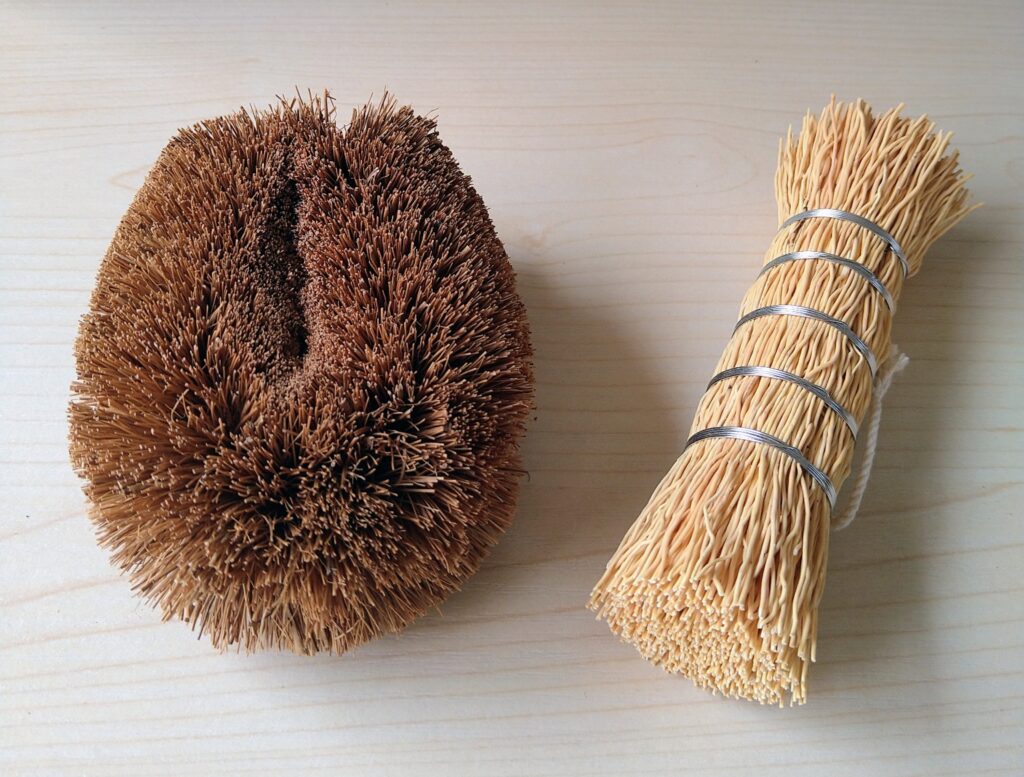
Kamenoko Tawashi and Karukaya Tawashi
Palm (coconut fiber)
The firmest and most durable.
Firm, springy fibers remove burnt-on residue and oily buildup from iron plates and grills.
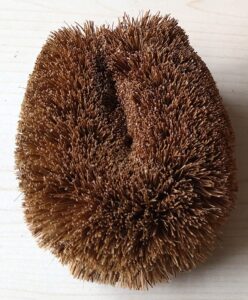
Shuro (palm bark fiber)
Balanced in firmness, with resilient yet flexible fibers. Gentle on surfaces, it cleans without scratching.
Suitable for glass, ceramics, and non-stick pans.
Sisal
The softest fibers among the four. Gently wipes away residue rather than scraping it off.
Suitable for non-stick pans, plastic containers, sinks, and bathtubs.
Karukaya
Thick, firm, and durable fibers that don’t absorb oil easily. Removes burnt-on and stuck-on food from cast iron pans.
Dries quickly after use.
How to Use Tawashi
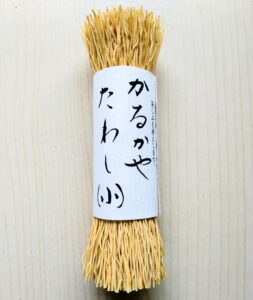
I mainly use a karukaya brush for my cast iron pan.
Because it’s made from natural fibers, it doesn’t strip away too much of the oil layer, and it’s less likely to scratch the surface.
Its slim shape also makes it easy to hold.
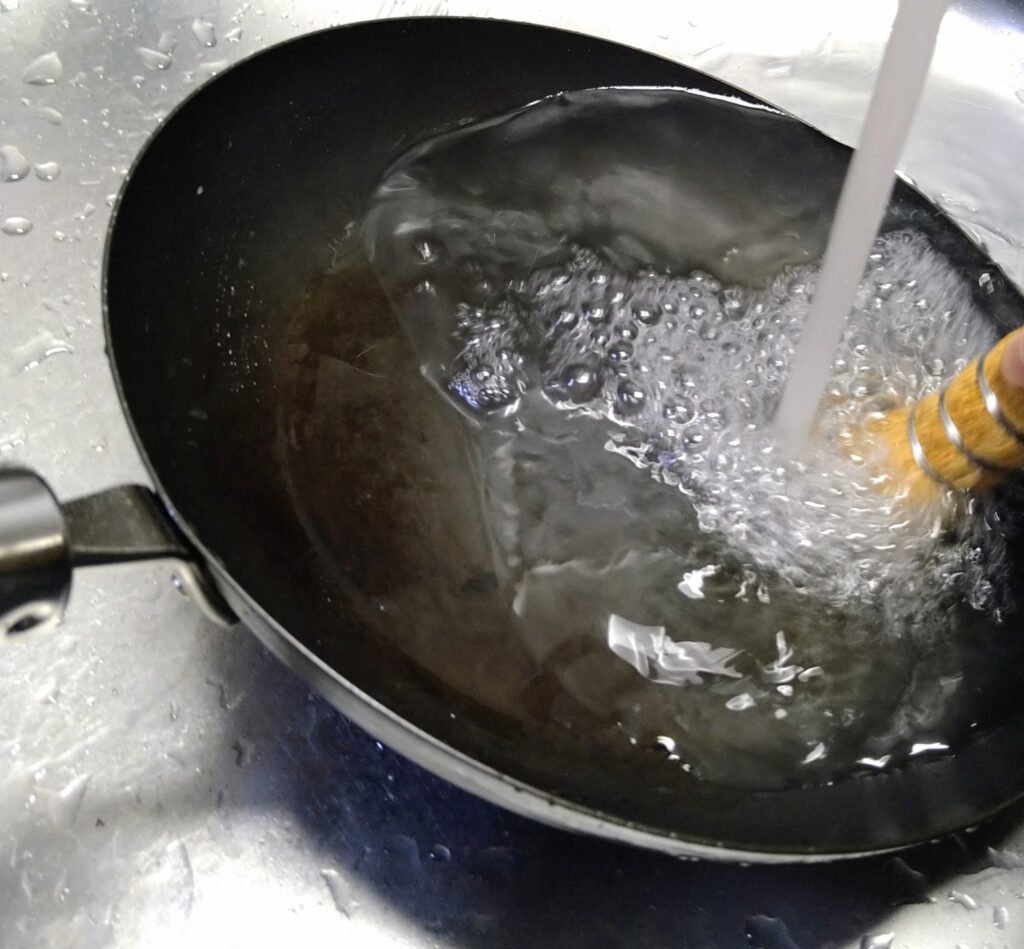
Pots and pans are often washed
with just water and a tawashi.
For root vegetables such as burdock and potatoes, I use the oval-shaped tawashi.
The firm fibers help remove dirt effectively, and using natural materials feels more suitable for something that comes into direct contact with food.
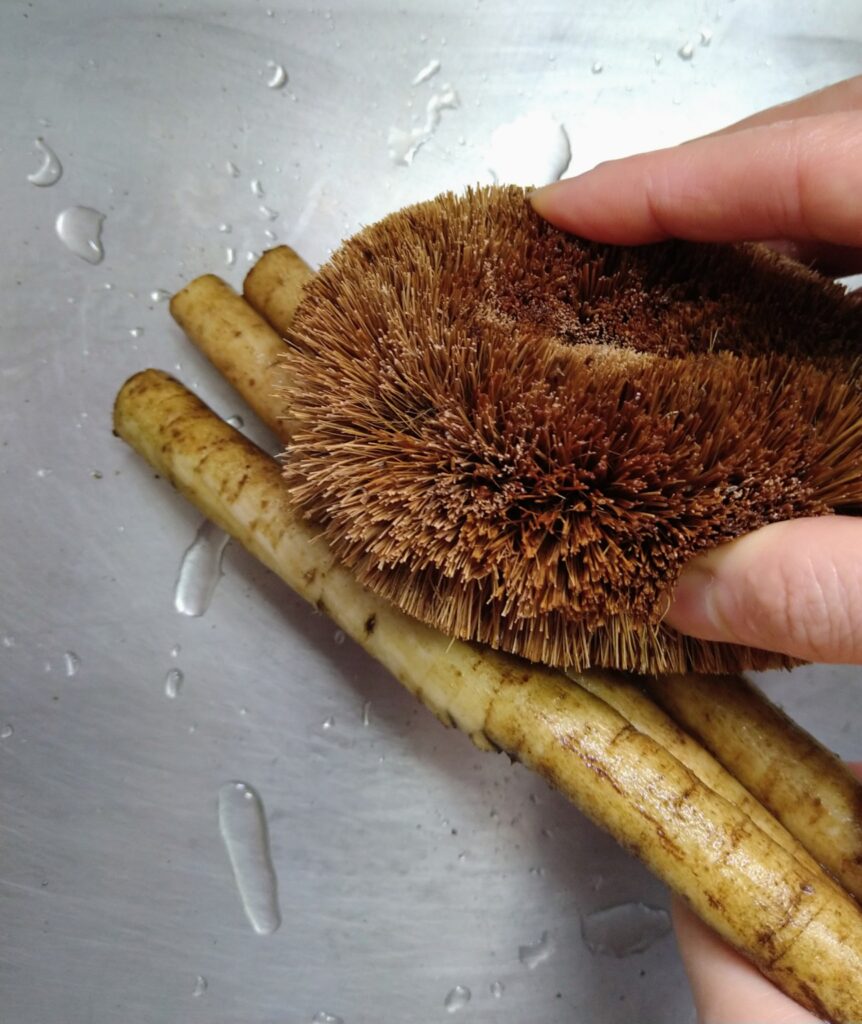
A tawashi is perfect for cleaning
soil-covered vegetables like burdock root.
Tawashi are also useful beyond the kitchen.
They work well for cleaning stove grates, drains, shoes, and even outdoor surfaces.
Because they are durable and versatile, they rarely get thrown away after kitchen use — they simply move on to the next job.
Where to Buy
Available on Amazon US.
→ the palm tawashi on Amazon
→ the karukaya tawashi on Amazon
Related Articles
→ A Cast Iron Pan for Everyday Cooking
→ River Light Iron Frying Pan Review — A Japanese Pan I Keep Using
→ How to Care for a Cast Iron Pan
→ Karukaya Brush for Cast Iron Pans — A Natural Scrubber from Japan
Closing
A simple tool, quietly used in everyday life.
Leave a Reply