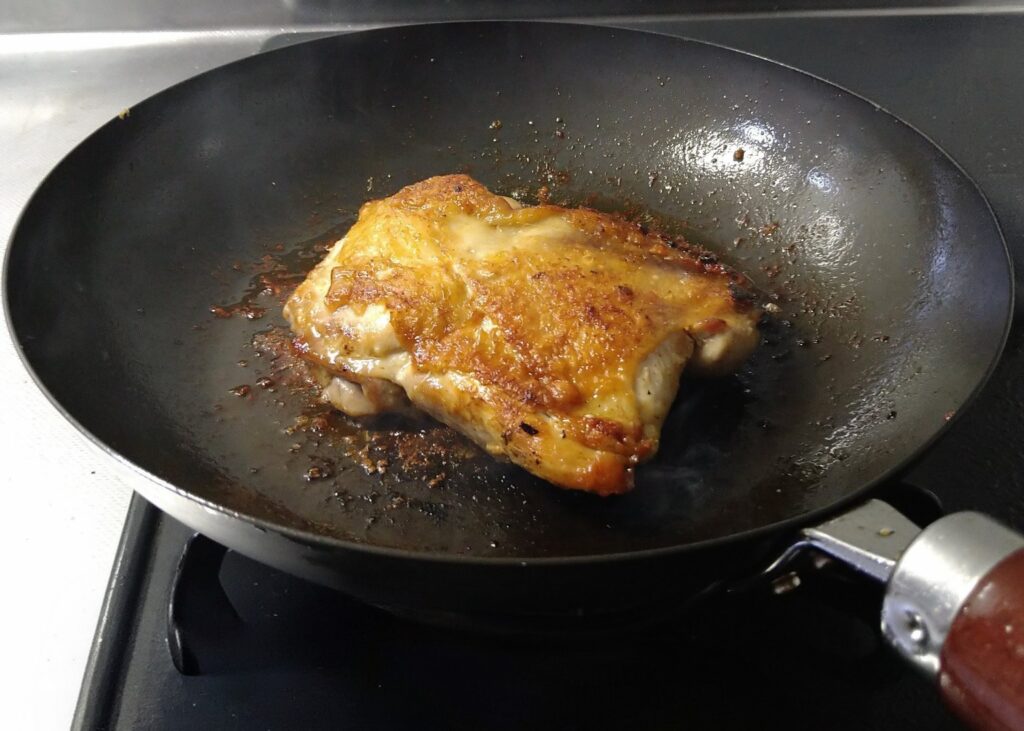
Crispy, juicy chicken — cooked in a cast iron pan.
For a long time, I used non-stick pans.
They were lightweight, required little oil, and were easy to use without much care.
However, over time, I began to question using them.
One of my concerns was PFAS — a group of chemicals used in non-stick coatings that has raised questions about long-term health and environmental impact.
I’m not saying non-stick pans are dangerous, but for something I use every day, I wanted to feel more comfortable.
I eventually chose a cast iron pan.
Why Cast Iron
With a cast iron pan, I can cook over high heat without worrying about the coating wearing out. It’s durable and can be used for many years.
At first, I chose it simply for how it felt to use, but after using it, I noticed a difference in how the food turned out.
A cast iron pan retains heat well, so even after adding ingredients, the temperature doesn’t drop much, and food browns evenly. Vegetables stay crisp, and meat develops a nicely browned surface while remaining juicy inside.
This difference is especially noticeable in simple dishes.
I’m not sure if it’s the material itself, but food cooked in a cast iron pan seems to taste a little richer — there’s a depth to it that I don’t quite get with other pans.
The pan I’ve been using is the River Light iron frying pan.
→ River Light Cast Iron Pan on Amazon
Getting Used to It
With cast iron, proper preheating is important.
If the pan isn’t hot enough, food tends to stick, especially protein.
But over time, a natural layer of oil builds up on the surface, making the pan easier to use.
→ Why Food Sticks to Cast Iron Pan— And How to Prevent It
Care
Wash with water and scrub with a tawashi.
It’s usually washed without detergent, which helps avoid removing too much of the oil layer.
→ How to Care for a Cast Iron Pan
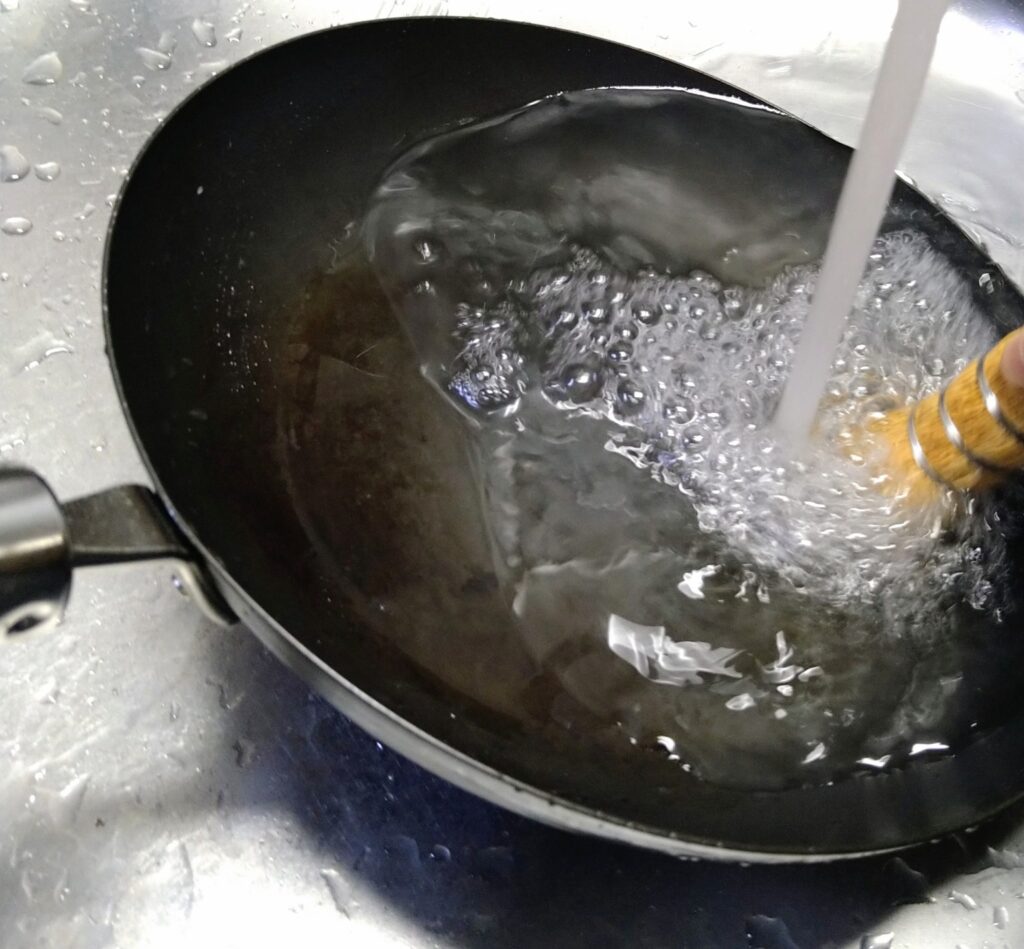
Just water and a karkaya brush — nothing else.
Related Articles
→ River Light Iron Frying Pan Review — A Japanese Pan I Keep Using
→ Is Tamagoyaki (Japanese Rolled Omelette) Difficult with a Cast Iron Pan?
→ Why Food Sticks to Cast Iron Pan— And How to Prevent It
→ How to Care for a Cast Iron Pan
Closing
It takes some getting used to — but once you do, it’s a pan for life.
Leave a Reply