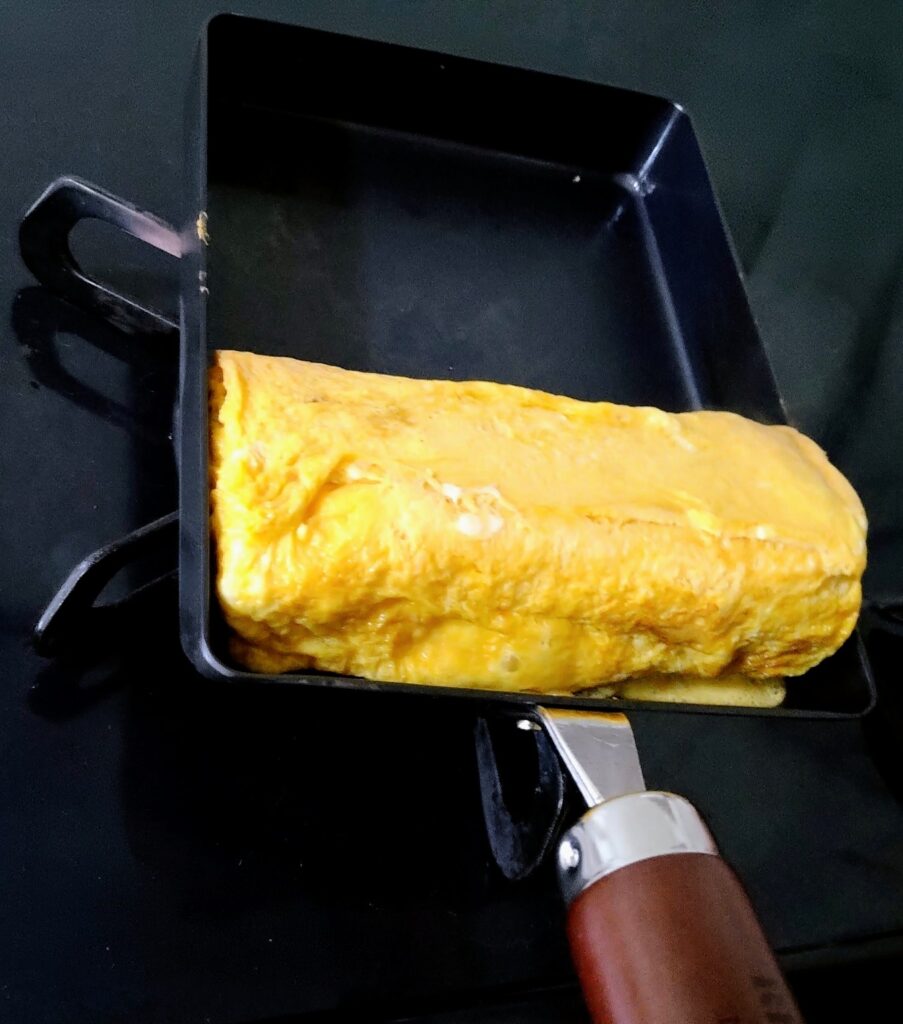
Tamagoyaki made in a cast iron pan.
I expected the worst — egg sticking everywhere, burning badly.
It wasn’t like that at all.
Even with a brand new pan, almost nothing stuck, and the tamagoyaki came out soft and juicy.
Tips
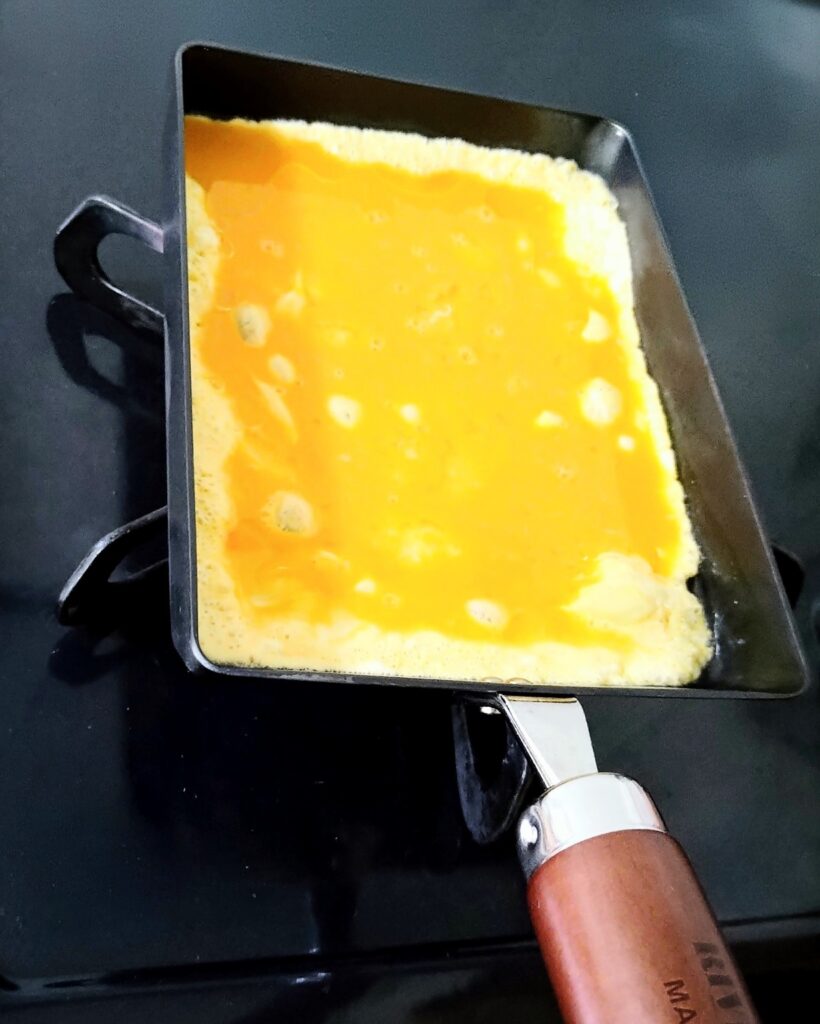
Pouring a small amount of egg and spreading it thinly.
Heat the pan thoroughly, just before it starts to smoke. Lower the heat, then add about 1/3 to 1/2 tablespoon of oil and tilt the pan to spread it to every corner and up the sides.
A well-heated pan lets the oil flow easily across the surface.
Pour in the egg mixture in 5 to 6 small batches, rolling each layer while the surface is still half-set. Smaller amounts are easier to roll and harder to mess up.
Keep the heat low throughout.
Cooking It
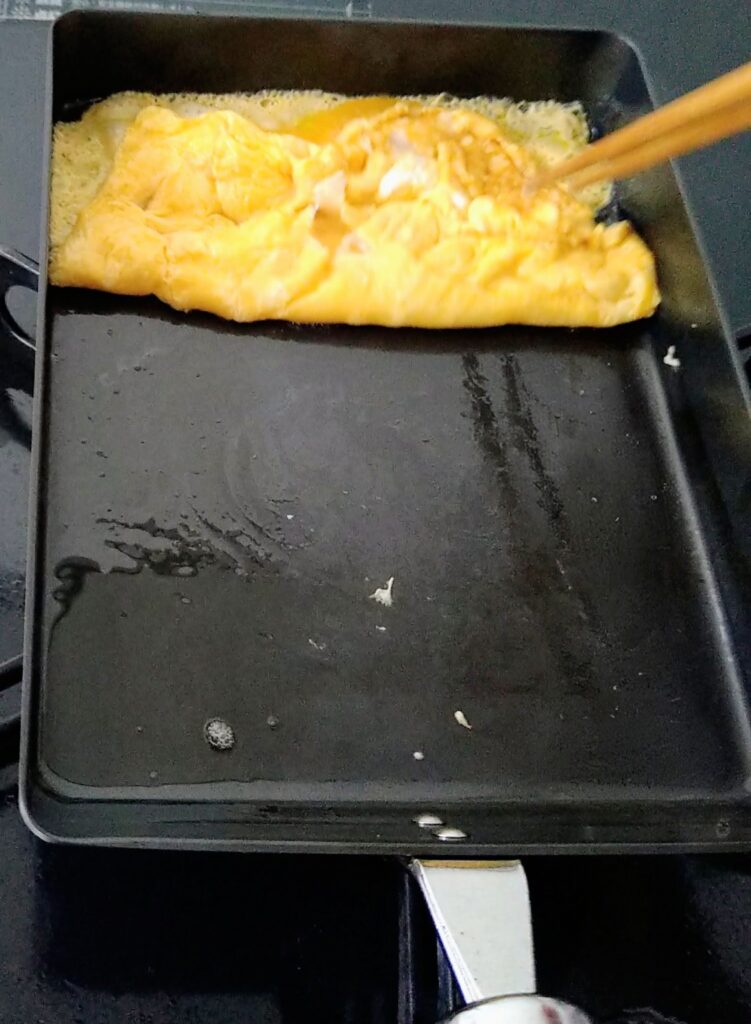
With just a light push from the chopsticks, the egg released cleanly.
I switched to a spatula partway through to finish rolling.
When I used to make tamagoyaki with a non-stick pan, I would add more oil along the way. With the iron pan, the oil I added at the start was enough — nothing stuck until the end.
The mixture had sugar in it, and the pan was well heated, so I expected burning. But it barely burned at all.
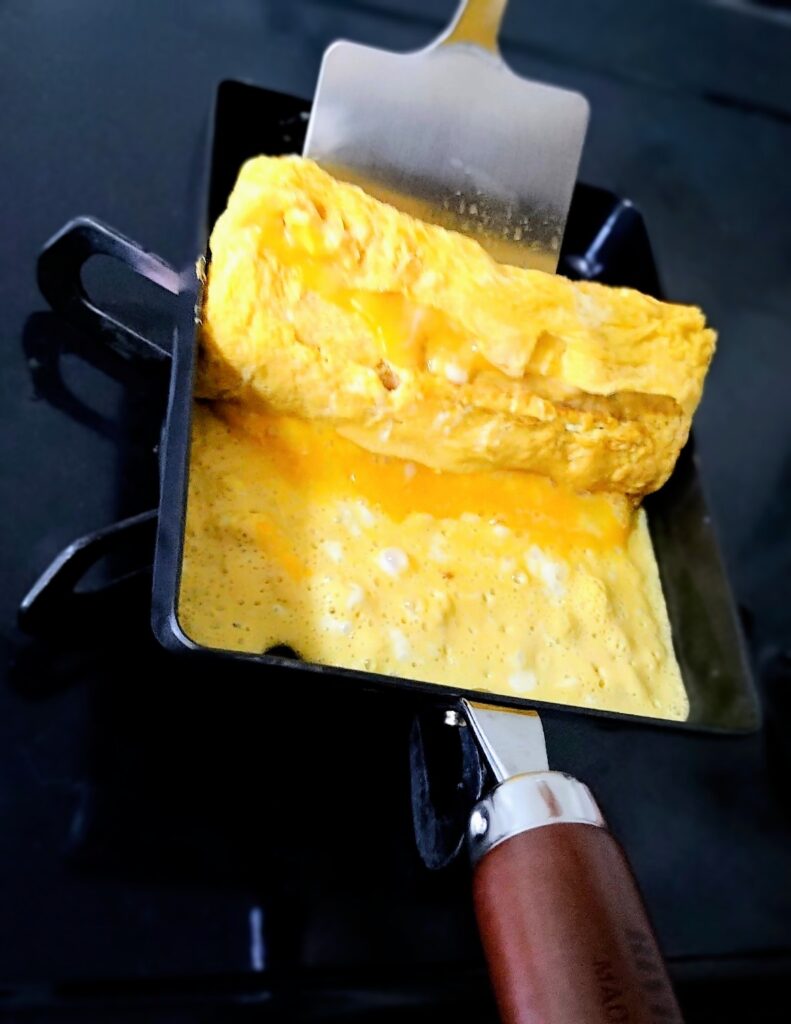
Cooking in thin layers,
keeping the inside soft and slightly runny.
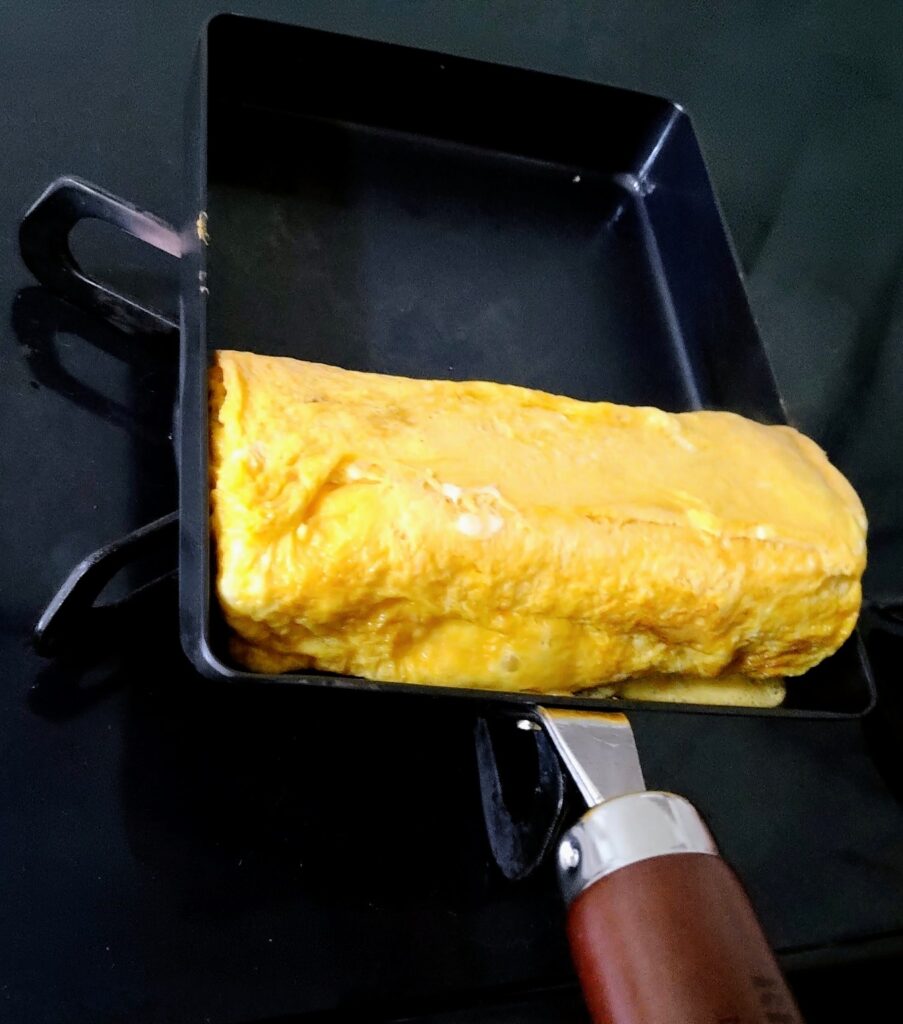
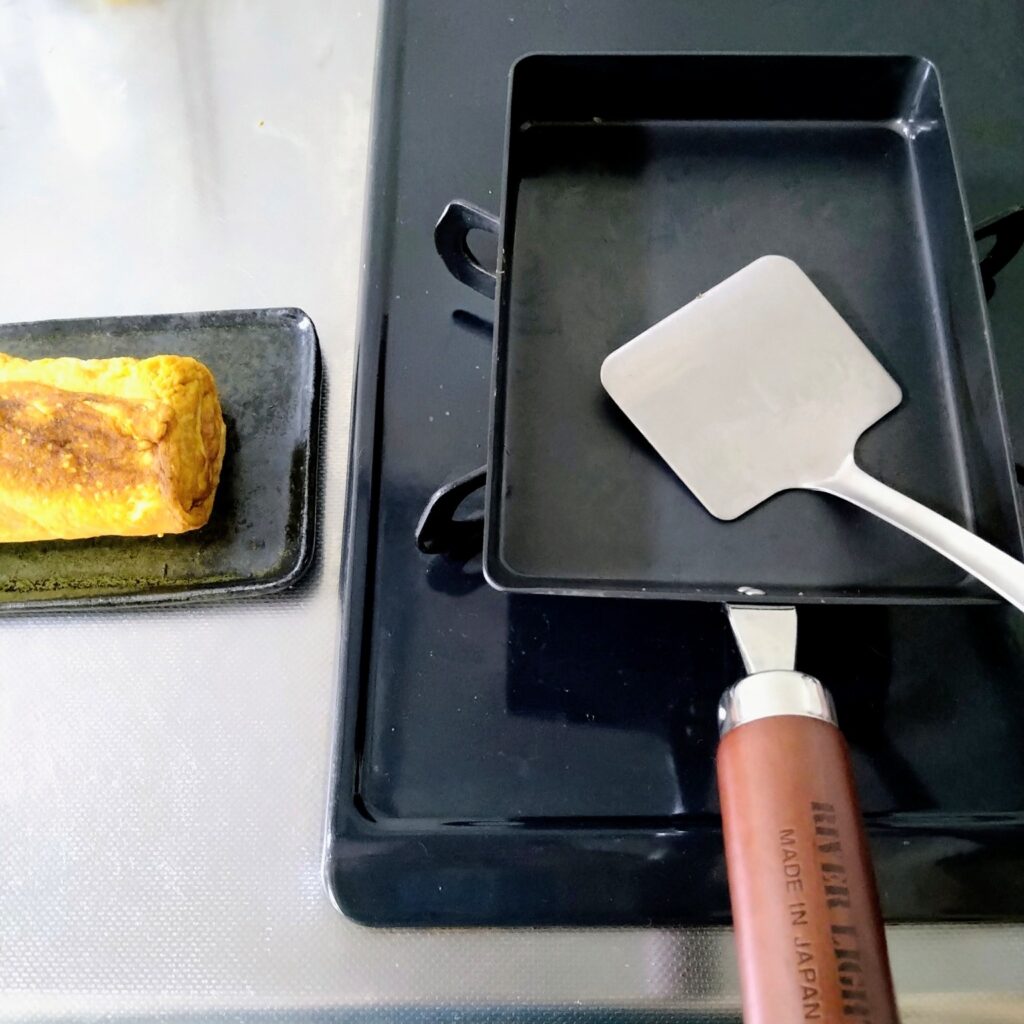
Finished tamagoyaki,
with the pan still clean after cooking.
Side Note
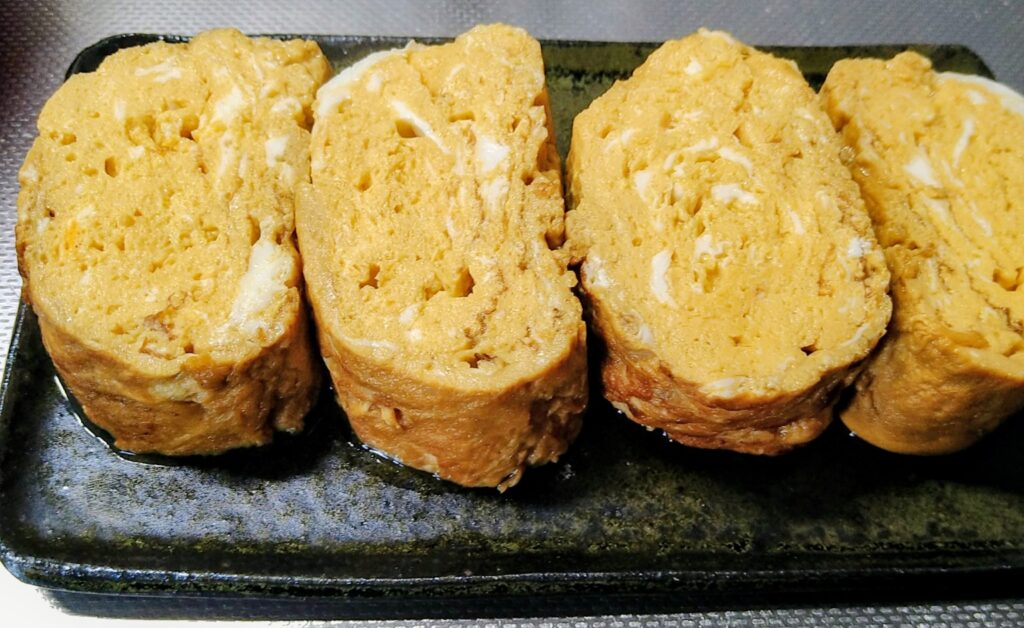
The last 2 or 3 layers are what matter most for the final shape.
The middle layers can look like scrambled eggs — that’s fine.
If you can pull it together at the end, it’s a success. By my standards, at least.
Why It Works with Iron
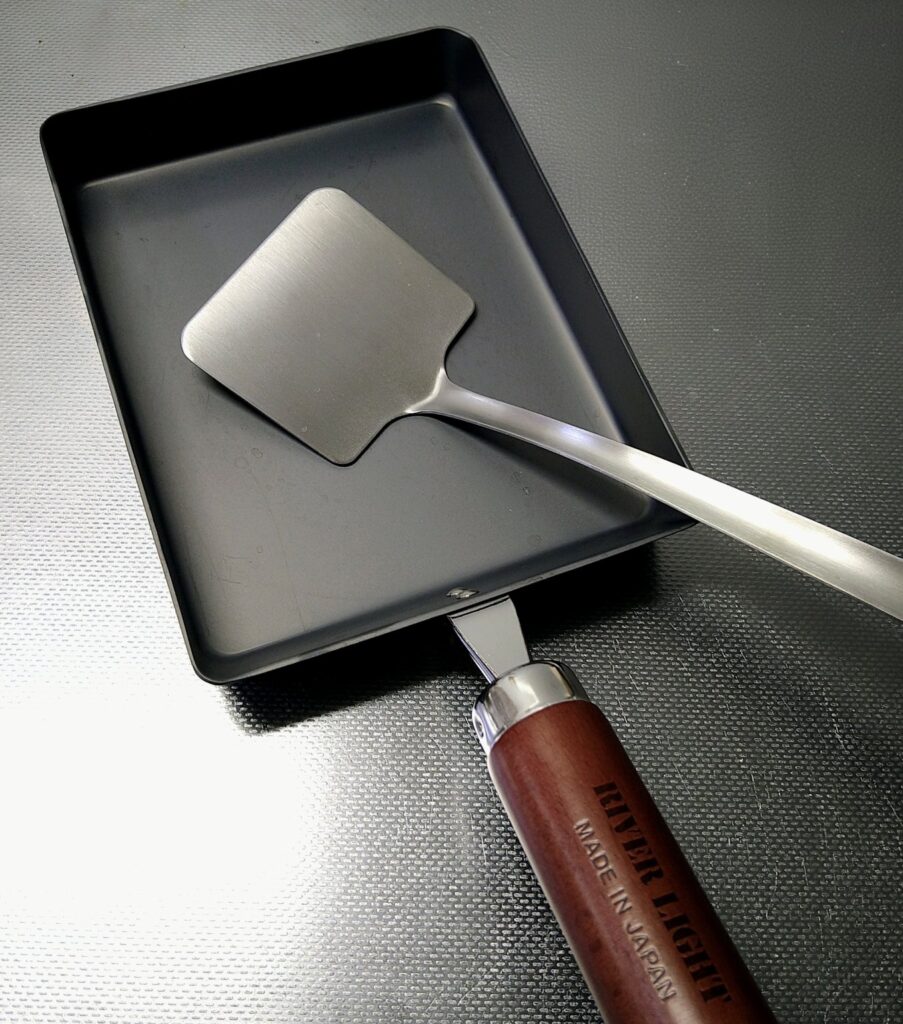
I think it comes down to the properties of the pan itself.
Iron retains heat well, so even after adding the egg mixture, the surface temperature doesn’t drop much. Its good heat conductivity may also help the outside set quickly, even over low heat.
As a result, the surface firms up before too much moisture can escape, which may be why the tamagoyaki stays soft and juicy without burning.
The microscopic texture of the iron surface may also help hold a thin layer of oil. That could explain why the oil added at the start was enough to last until the end.
Closing
The key to soft, juicy tamagoyaki is preheating, oil, and heat control. With those in mind, making tamagoyaki in an iron pan isn’t difficult. And the result is better than you’d expect.
Where to Buy
This is the egg pan I use. → River Light egg pan on Amazon
Related Articles
→ River Light Iron Frying Pan Review — A Japanese Pan I Keep Using
→ River Light Tamagoyaki Pan — A Rectangular Iron Pan for Japanese Rolled Omelette
→Why Food Sticks to Cast Iron Pan — And How to Prevent It
→ How to Care for a Cast Iron Pan
Leave a Reply