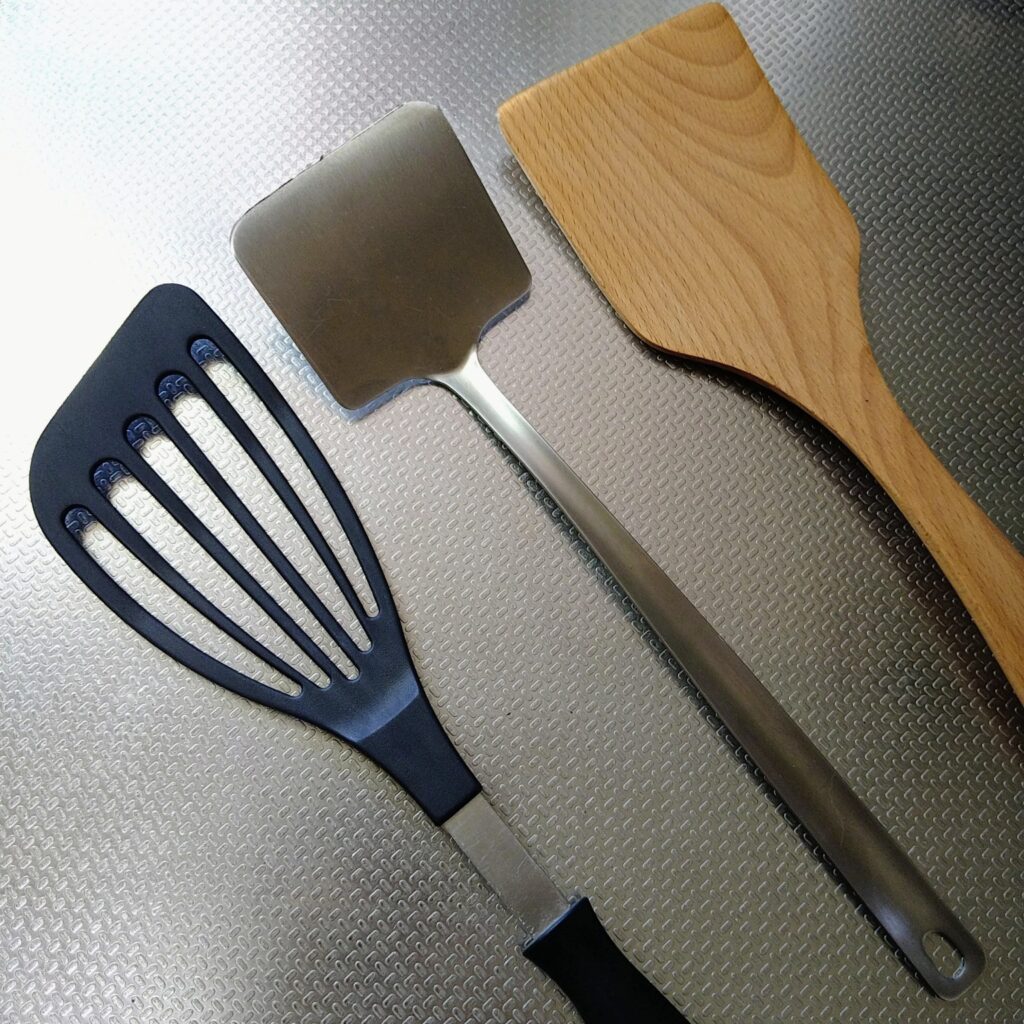
When I started cooking with a cast iron pan, I wasn’t sure which turner to use.
Wood felt too thick. Silicone would bend. Stainless steel might scratch the pan. Each seemed to have its drawbacks.
After some hesitation, I went with stainless steel.
It turned out to be the right call.
Wood Turner
Wooden turners feel gentle on the pan surface and are unlikely to cause scratches.
Over time, though, they tend to absorb oil and moisture, which can lead to lingering smells or stains. With continued use, the edge rounds off, making it harder to slide under food.
Silicone Turner
Silicone tools don’t scratch the surface and are easy to clean.
They’re heat-resistant, so melting isn’t a concern — but with continued use, the edge loses its sharpness, making it harder to slide under food cleanly. When trying to lift heavier food or scrape something stuck to the pan, the flexibility works against you — it bends when you need it to hold firm.
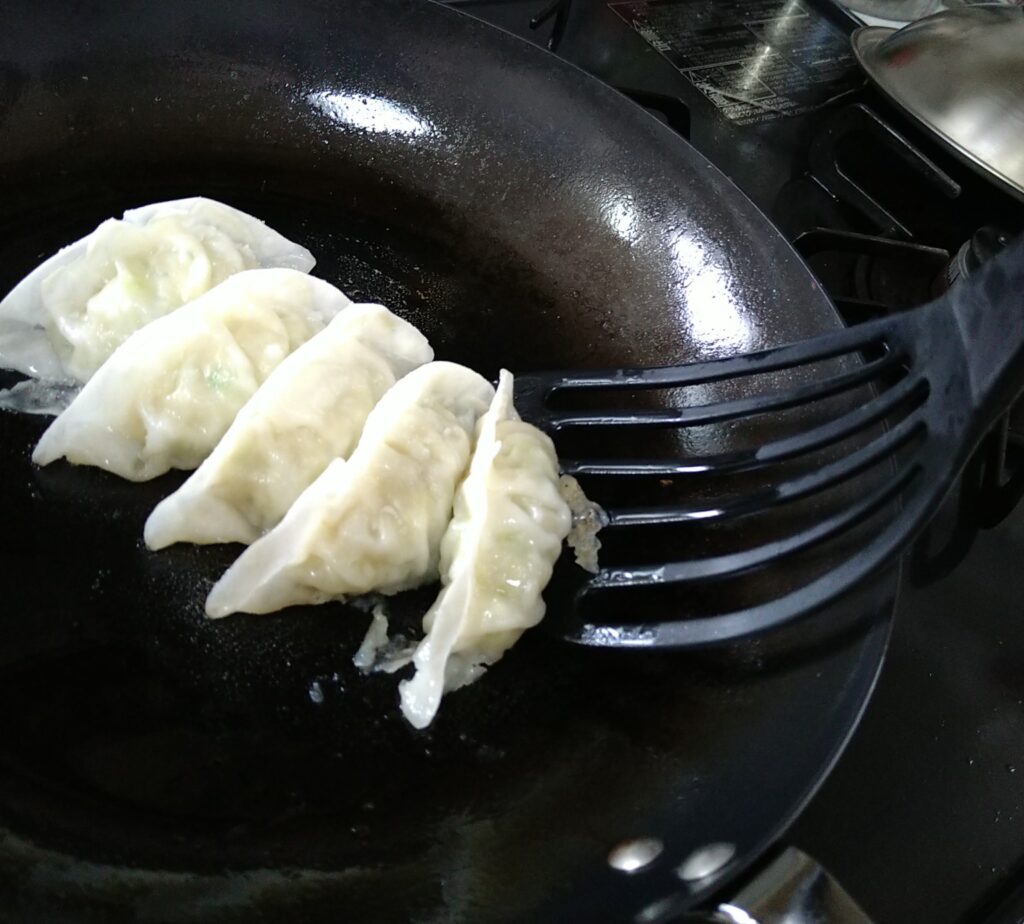
The silicone turner bends — and won’t slide under the gyoza.
Stainless Steel
It doesn’t absorb oil or moisture and dries quickly after washing.
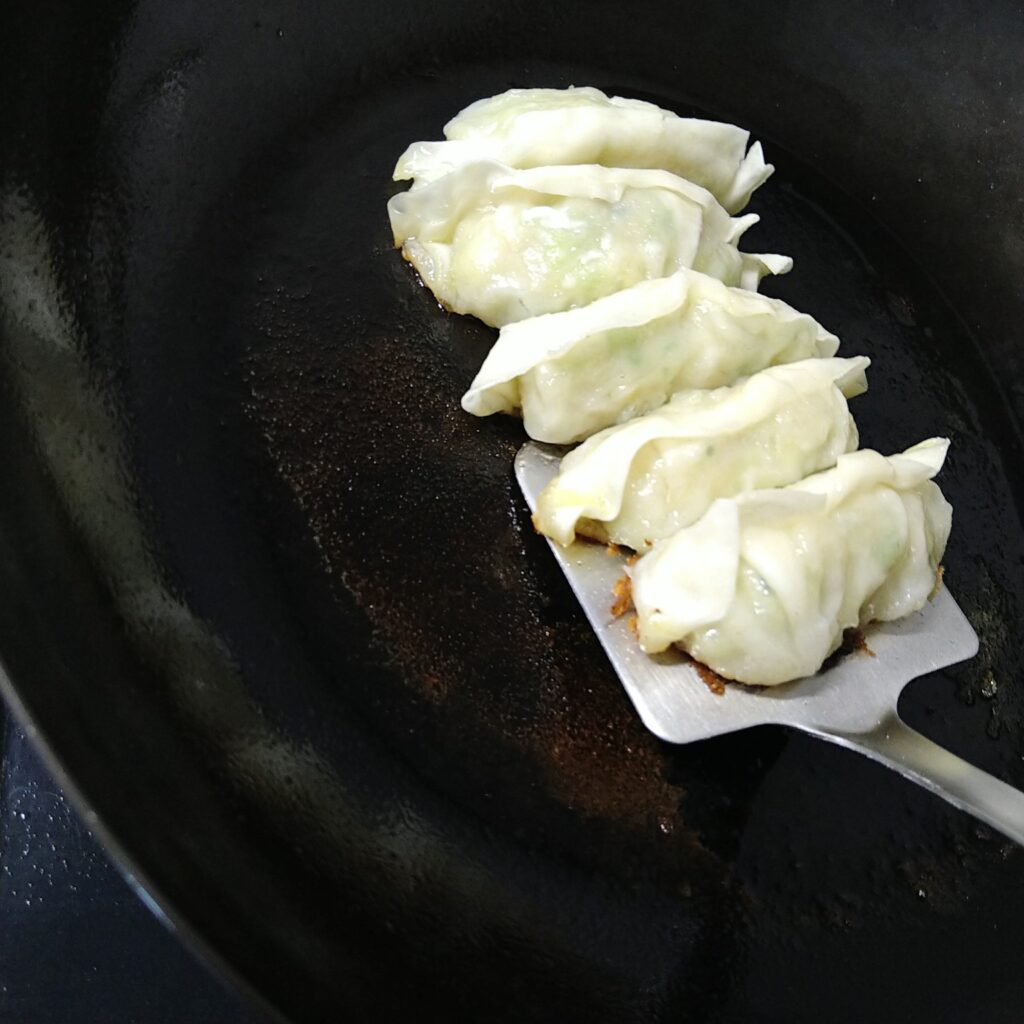
Firm and thin, so the edge slides in cleanly under food.
When gyoza skin was stuck flat against the pan, I was able to slide the edge between the skin and the pan. At one point I scraped a little harder than intended — but no visible marks on the surface.
This was my biggest concern going in, and it turned out to be a non-issue.
Related Articles
→ River Light Iron Frying Pan Review — A Japanese Pan I Keep Using
→ How to Cook Gyoza in a Cast Iron Pan — Why It Sticks and What to Do About It
→ Why Food Sticks to Cast Iron — And How to Prevent It
Closing
None of these are wrong — but stainless steel is the one I settled on.
Thin, firm, and unbothered by heat.
I reach for it every time without thinking.
Leave a Reply